
Fertilizers move through production, filling, storage, transport and distribution before reaching the customer. Packaging problems at any stage can create spillage, contamination, moisture pickup, caking, dust and product loss. Well-specified fertilizer packaging bags, whether PP woven sacks or FIBC bags, can make this journey efficient, but the construction must match the fertilizer formulation, bulk density, filling equipment, handling system and storage environment. This guide focuses on the design factors that reduce avoidable handling losses.
Table of Contents
ToggleWhy fertilizer packaging bags need a specification
Fertilizers may be granular, crystalline, powdered or blended. Some products are moisture-sensitive, while others are abrasive or generate dust. Fertilizer packaging bags must retain the product during filling and lifting while providing the level of protection needed for the expected storage and transport conditions.
PP woven sacks vs FIBC fertilizer packaging bags
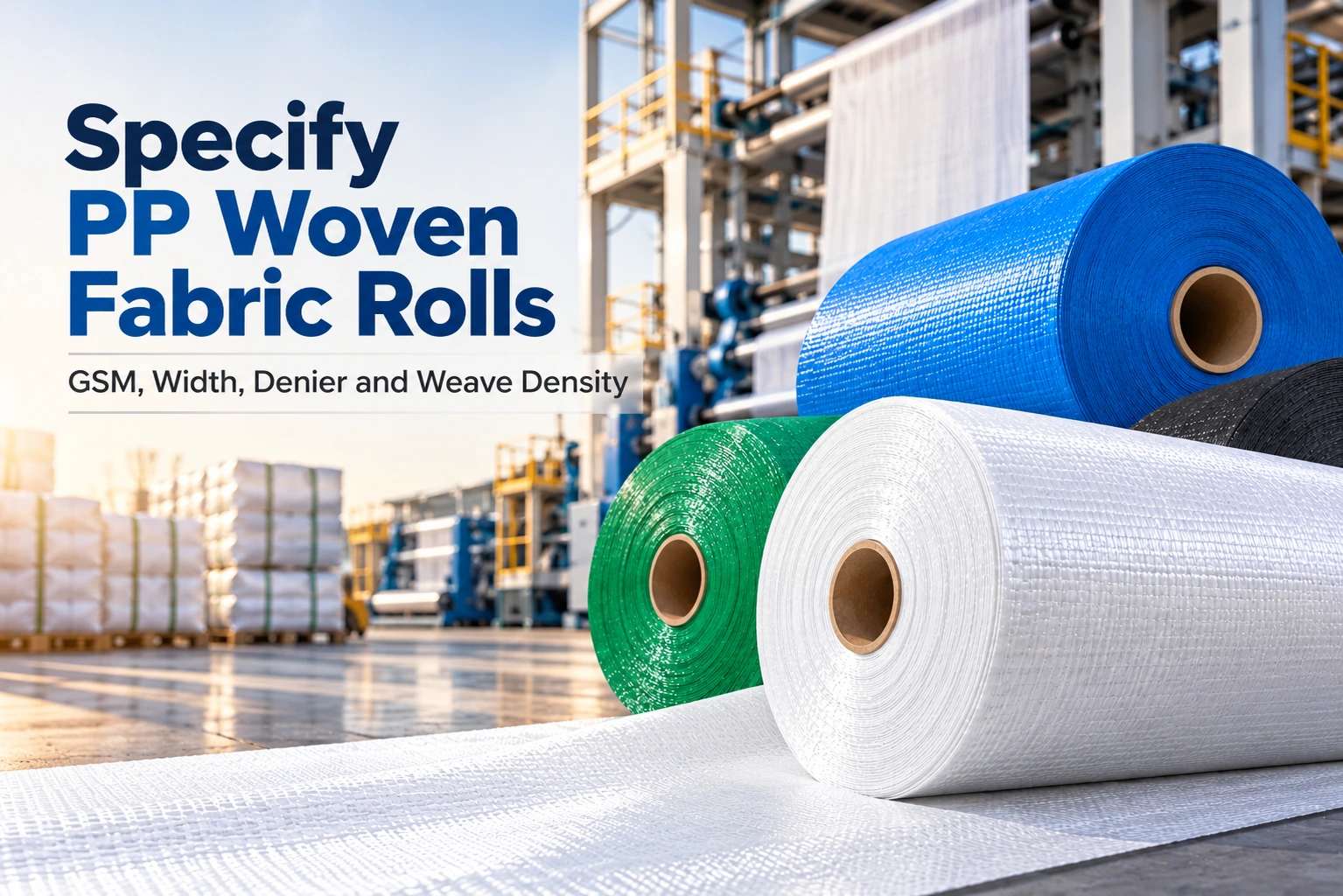
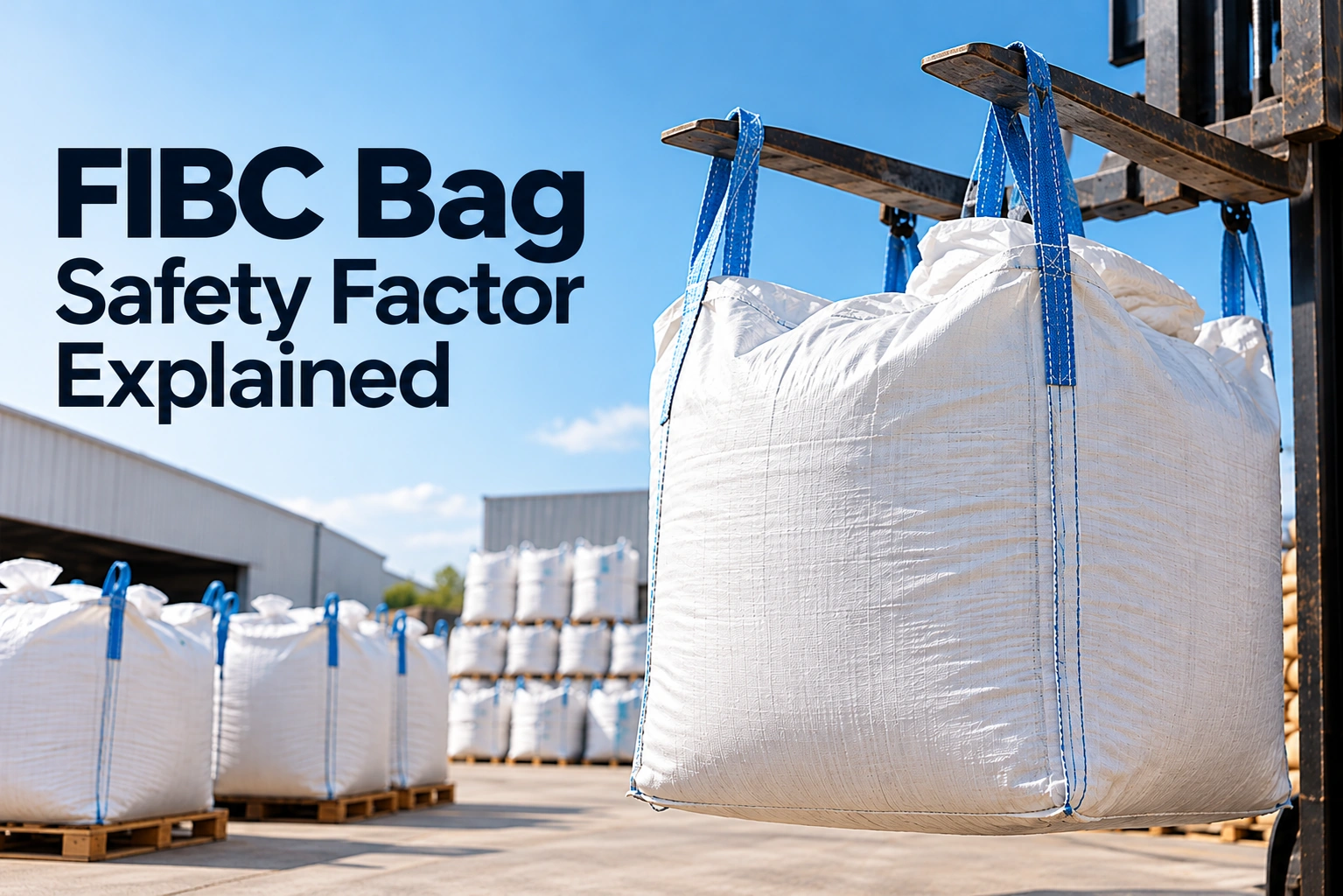
PP woven sacks are commonly used for smaller pack weights and palletized distribution. FIBC bags allow much larger quantities to be moved per unit and can be configured with filling spouts, discharge spouts, liners and different lifting systems. The decision should begin with the target pack weight and handling equipment.
Design factors that reduce loss in fertilizer packaging bags
- SWL and dimensions: Match maximum product weight and bulk density to the declared capacity. Our FIBC safety factor guide explains how 5:1 and 6:1 ratings affect this choice.
- Fabric and seams: Specify construction that withstands filling, lifting and movement.
- Moisture management: Use lamination, coating or liners when the fertilizer and storage environment require a barrier.
- Filling system: Select the top construction to suit the filling machine and reduce dust and spillage.
- Discharge system: Match the bottom to the receiving equipment and required flow control.
- Shape and stacking: Use appropriate dimensions or baffles where warehouse stability matters.
- Identification: Clear printing supports product identification, batch information and handling instructions.
When do lamination or liners matter?
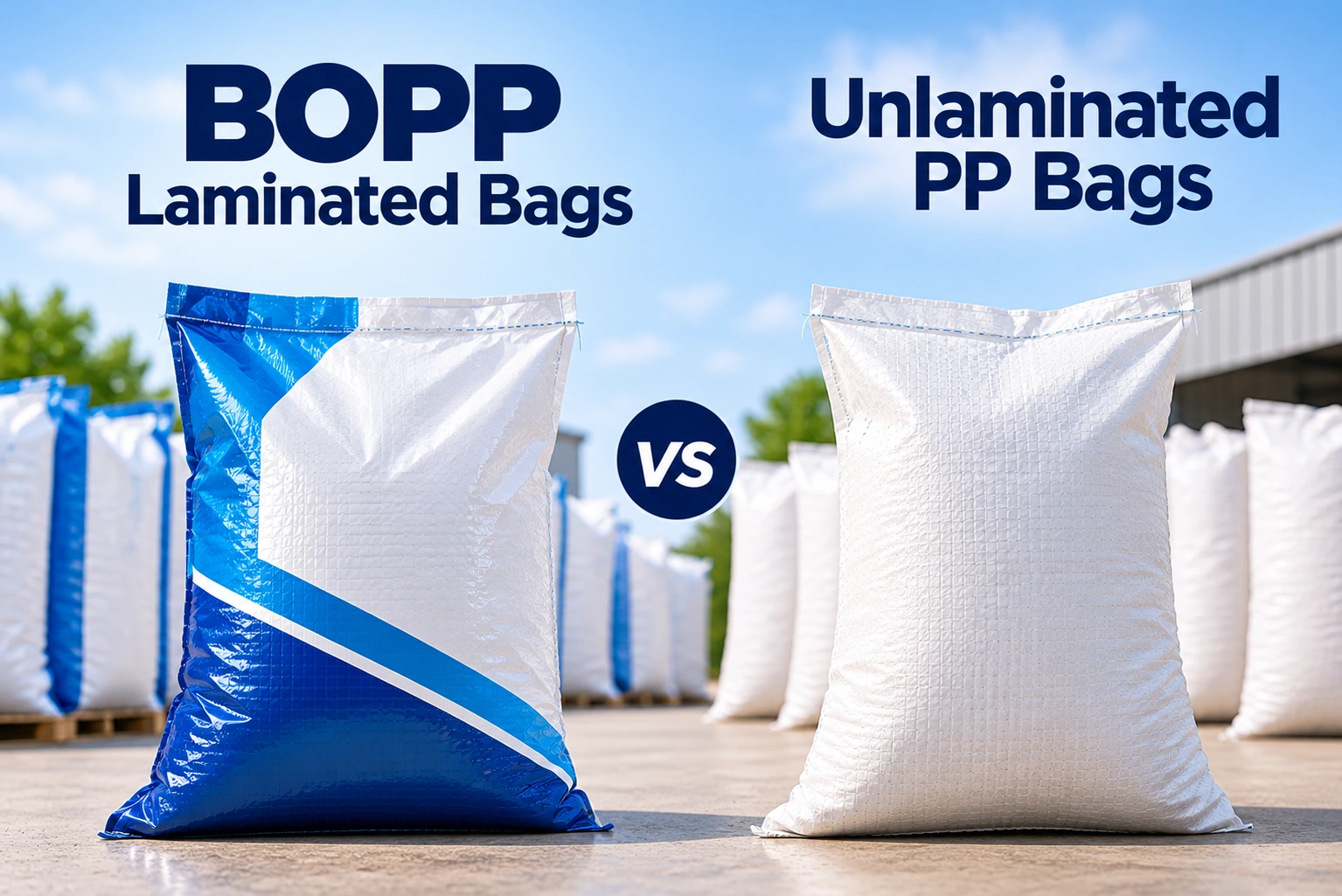
Humidity can affect fertilizer condition and flow. Lamination, as used in BOPP laminated woven bags, can reduce moisture penetration through woven fabric, while an inner liner can provide an additional barrier. Neither should be specified automatically; the right choice depends on formulation, exposure, storage duration and required barrier performance.
FIBC construction choices for fertilizer
- U-Panel and 4-Panel bags: Provide defined shape for industrial handling.
- Circular/Tubular bags: Efficient where a continuous body meets the handling and cost requirements.
- Baffle bags: Reduce outward bulging and can improve stacking and container utilization.
- Coated or dust-proof designs: Useful for moisture or fine-particle containment.
- Conductive/static-control designs: Select only following the applicable safety assessment.
See types of FIBC bags explained for a full comparison.
Handling and storage practices for fertilizer packaging bags
Use only approved lifting loops or sleeves. Do not drag filled bags or allow hooks and forks to damage fabric, and keep bags away from sharp edges. Follow the manufacturer’s stacking guidance and protect moisture-sensitive fertilizer from rain and condensation. Check bags for holes or tears and label them clearly, as recommended in fertilizer storage and handling guidance from the University of Arizona.
Reducing loss at filling and discharge
The inlet and outlet should be compatible with the filling and unloading equipment. Controlled filling reduces overloading and dust. For fine products, sift-proof construction or liners may be necessary. During discharge, the bag should be properly supported and the closure opened using the intended procedure.
Fertilizer packaging bags procurement checklist
Specify fertilizer type, bulk density, target weight, dimensions, SWL, fabric/GSM, lamination or coating, liner, top and bottom, loops, printing, stacking, storage environment, transport route and any customer or regulatory requirements. Providing this information at the quotation stage also makes quotations from different suppliers easier to compare.
Why customization matters
Aeroflex Neu’s portfolio includes PP woven bags, laminated bags, BOPP bags and FIBCs with different panel, top, bottom and liner options. Its published FIBC catalogue lists U-Panel, circular, baffle, conductive and other designs, which is why fertilizer packaging should be specified around the process rather than ordered as a generic bag.
Sample approval and application conditions
Review a pre-production sample against the approved drawing or specification, not only by appearance. Confirm dimensions, body construction, fabric, stitching pattern, loops, top and bottom, liner or coating, printing and identification, and define acceptance criteria before the production run. Also consider the whole supply chain: a bag filled indoors may later spend days in a humid warehouse, on a truck, in a shipping container or in an outdoor staging area. Specify for the harshest reasonably expected condition, keep the approved specification with the purchase order and retain batch traceability for repeat orders.
Quick Comparison / Buyer Checklist
| Factor | Risk if underspecified | Preferred approach |
|---|---|---|
| SWL/capacity | Overloading | Match weight and bulk density |
| Moisture | Caking/degradation | Specify lamination/coating/liner as required |
| Top | Spillage/slow filling | Match filling equipment |
| Bottom | Uncontrolled discharge | Match unloading system |
| Shape | Poor stacking | Select suitable panel/baffle design |
Choose Fertilizer Packaging Bags Built for Your Product, Not Generic Stock
The right bag matches your fertilizer, filling line, storage conditions and handling equipment. Defining requirements before ordering and approving the construction in writing cuts spillage, caking and repeat procurement problems.
Need fertilizer packaging bags in PP woven or FIBC format? Share your product, pack weight, filling system and storage conditions with our team and get a recommended construction before you order. Contact Aeroflex Neu today and let Aeroflex Neu engineer packaging that protects your product from plant to field.
Frequently Asked Questions
What are the best fertilizer packaging bags?
It depends on pack weight, fertilizer type, density, filling system and storage. PP woven sacks suit many smaller packs, while FIBCs suit bulk handling.
Do fertilizer FIBCs need liners?
Not always. Liners are useful when a higher moisture or contamination barrier is required, but the need depends on the product and conditions.
Can BOPP bags be used for fertilizer?
Yes, when the added surface protection and printing are useful. The complete construction should match the fertilizer and storage conditions.
How do I choose FIBC SWL for fertilizer?
Use the maximum product weight and handling system, then confirm the complete tested construction and SWL.
How can dust loss be reduced in fertilizer packaging bags?
Use compatible filling and discharge systems, suitable seams or liners where needed and controlled handling procedures.
Are baffle FIBCs useful for fertilizer?
They can improve shape retention and stacking efficiency where warehouse or container space is important.