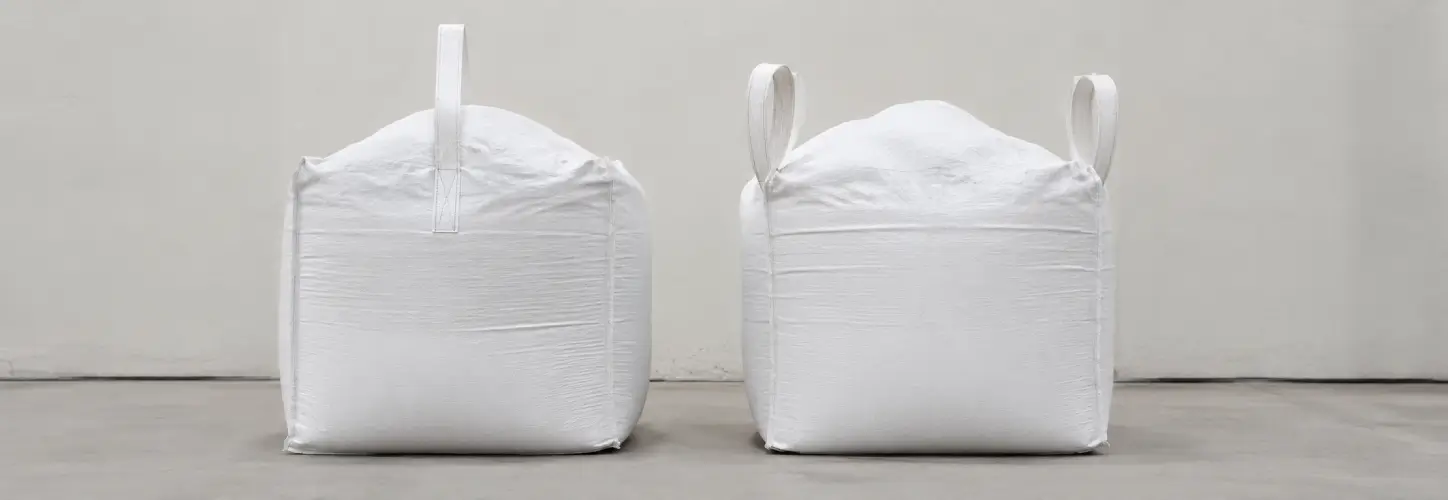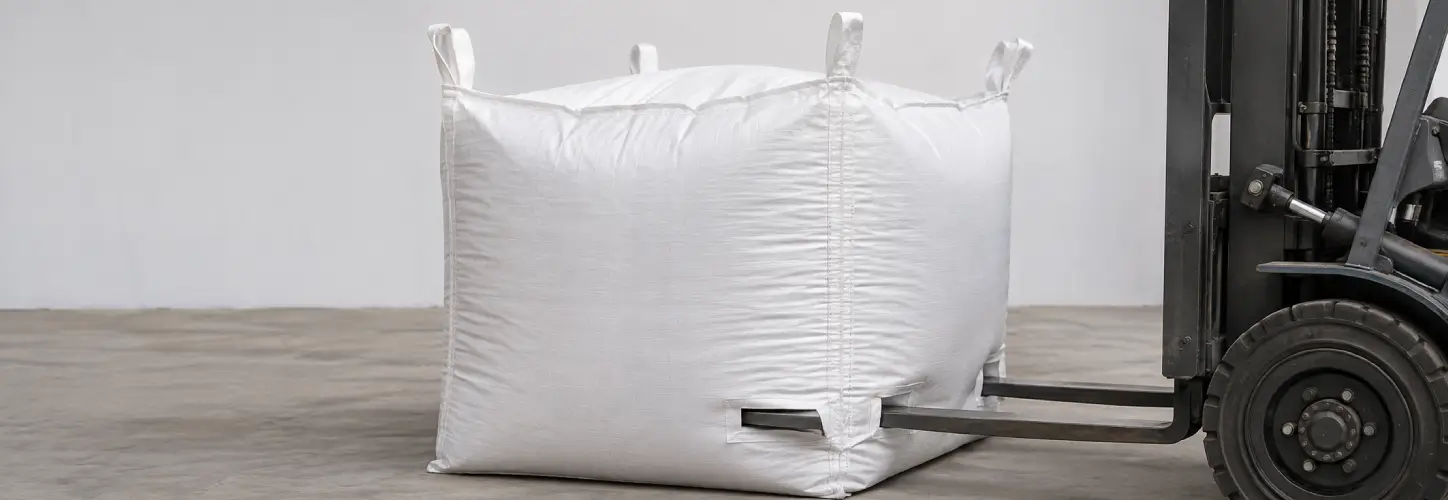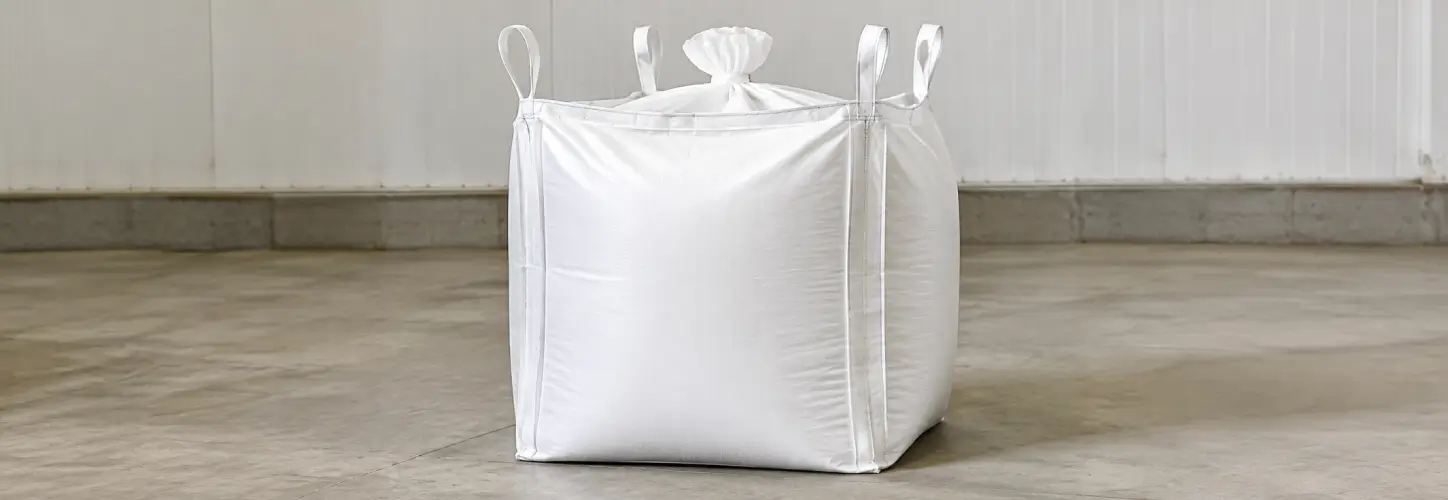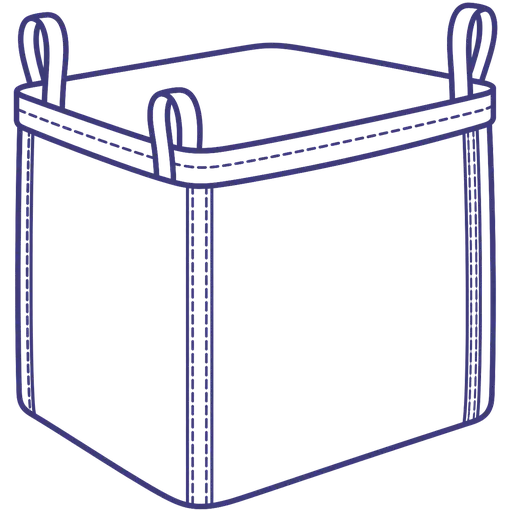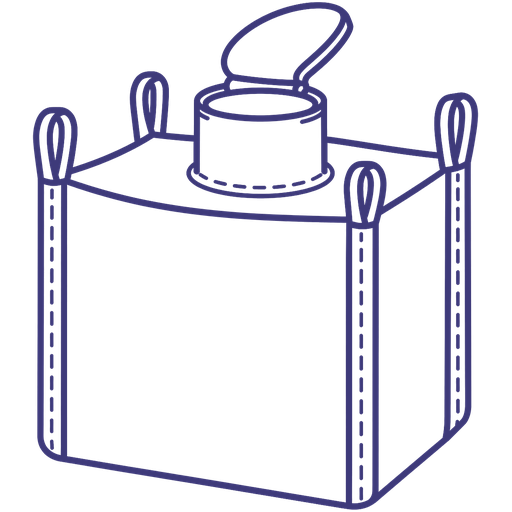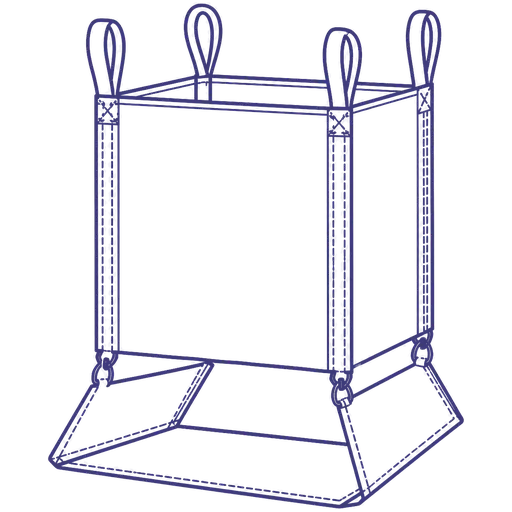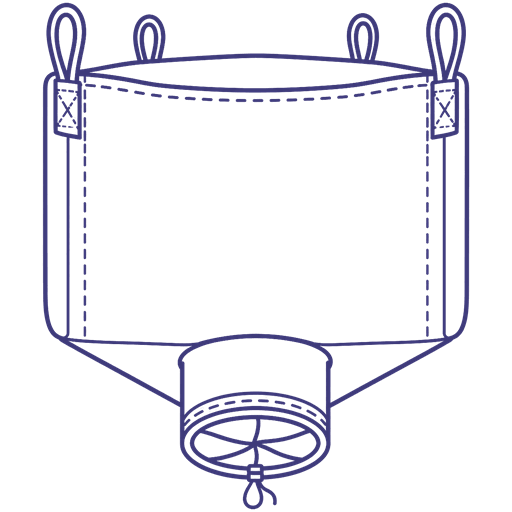
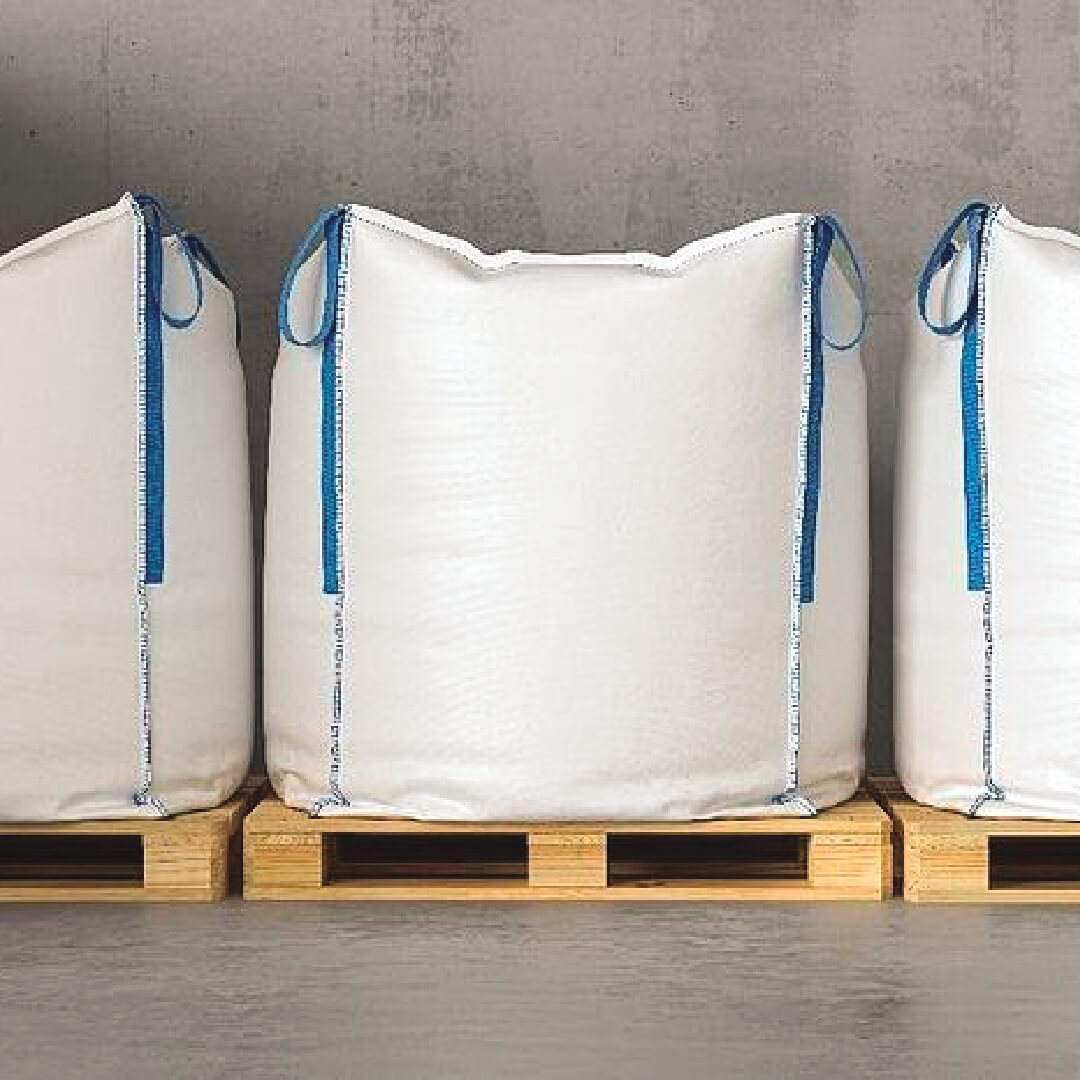
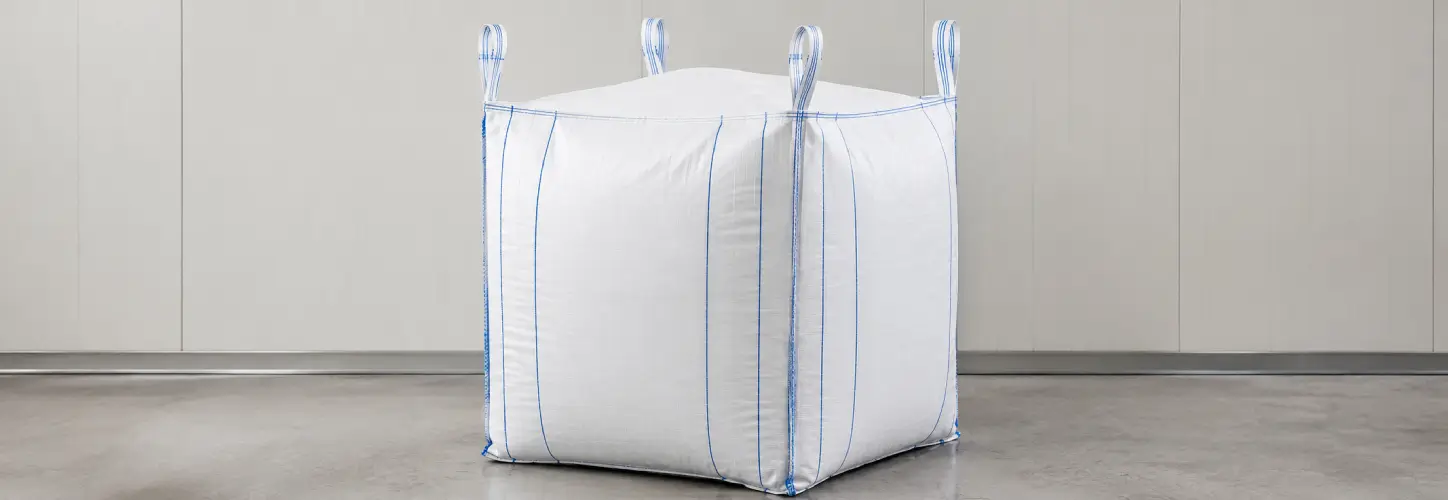
FIBC jumbo bags (Flexible Intermediate Bulk Containers) are large, flexible woven polypropylene bags used to store and transport bulk dry materials – also known as bulk bags, super sacks, or ton bags. Typically rated to carry 500 kg to 2,000 kg, they’re the standard bulk packaging format for petrochemicals, chemicals, fertilizers, minerals, food ingredients, and construction materials. Aeroflex Neu manufactures and exports FIBC jumbo bags in U-panel, 4-panel, circular, baffle, and conductive/anti-static configurations, customized to your load capacity, filling, and discharge requirements.
| Feature | PP Woven Fabric | PP Non-Woven Fabric |
|---|---|---|
| How it's made | Polypropylene tapes woven on a loom | Polypropylene fibers bonded together (spunbond) without weaving |
| Strength | Higher tensile strength, better for heavy loads | Lower strength, better for lightweight/disposable use |
| Typical use | Cement/fertilizer bags, FIBC, tarpaulins, ground cover | Shopping bags, medical drapes, masks, agricultural covers |
| Texture | Mesh-like, visible weave pattern | Felt-like, smooth surface |
| Reusability | Highly reusable, durable | Often single-use or short-term use |
FIBCs used to transport hazardous or dangerous goods require UN certification, which mandates a 6:1 safety factor and a rigorous test battery (top-lift, drop, stacking, vibration, and topple testing), recertified annually. If your application involves regulated hazardous materials, confirm UN certification requirements with our team before ordering.

Side or bottom folds that expand as the bag fills, creating a box-like, self-standing shape. Improves stacking stability and shelf presentation - a common choice for pet food, seeds, and retail-facing products.

BOPP film applied to one side only (typically the outer/print side). A cost-effective option when moisture protection is needed on one face and high-quality print is the priority.

BOPP film applied to both inner and outer surfaces, maximizing moisture resistance and dust-proofing - used for products highly sensitive to humidity, such as fertilizer and powdered chemicals.

Small, precisely placed holes that allow air to escape during filling and storage while the lamination still protects against moisture - used for products that release residual heat or moisture, like certain agricultural goods.

An inner polyethylene (PE) liner adds a second barrier against moisture and contamination - used for fine powders and moisture-sensitive chemicals.

Cut-out or stitched handles built into the bag for easier manual carrying - common for retail and mid-weight bags (10–25 kg) that end consumers handle directly.

A self-sealing valve opening for high-speed, dust-free automated filling - the standard format for cement, plaster, and powdered chemicals on rotary filling lines.

A transparent film section that lets buyers see the product inside without opening the bag - commonly used for retail-facing grain, pulses, and seed packaging where visual verification builds buyer trust.

A built-in tear feature or tape that allows the bag to be opened cleanly by hand without a knife - improves end-user convenience for retail and food-grade products.

Made from tubular woven fabric with a single back seam rather than two side seams - this reduces potential leak points and gives a cleaner, more premium printed appearance across the full bag surface.

A reinforced, folded-and-stitched top edge that increases tear resistance at the bag's most stressed point - particularly useful for heavier bags (50 kg+) handled repeatedly during transport.

Side or bottom folds that expand as the bag fills, creating a box-like, self-standing shape. Improves stacking stability and shelf presentation - a common choice for pet food, seeds, and retail-facing products.

BOPP film applied to one side only (typically the outer/print side). A cost-effective option when moisture protection is needed on one face and high-quality print is the priority.

BOPP film applied to both inner and outer surfaces, maximizing moisture resistance and dust-proofing - used for products highly sensitive to humidity, such as fertilizer and powdered chemicals.

Small, precisely placed holes that allow air to escape during filling and storage while the lamination still protects against moisture - used for products that release residual heat or moisture, like certain agricultural goods.

An inner polyethylene (PE) liner adds a second barrier against moisture and contamination - used for fine powders and moisture-sensitive chemicals.

Cut-out or stitched handles built into the bag for easier manual carrying - common for retail and mid-weight bags (10–25 kg) that end consumers handle directly.

A self-sealing valve opening for high-speed, dust-free automated filling - the standard format for cement, plaster, and powdered chemicals on rotary filling lines.

A transparent film section that lets buyers see the product inside without opening the bag - commonly used for retail-facing grain, pulses, and seed packaging where visual verification builds buyer trust.

A built-in tear feature or tape that allows the bag to be opened cleanly by hand without a knife - improves end-user convenience for retail and food-grade products.

Made from tubular woven fabric with a single back seam rather than two side seams - this reduces potential leak points and gives a cleaner, more premium printed appearance across the full bag surface.

A reinforced, folded-and-stitched top edge that increases tear resistance at the bag's most stressed point - particularly useful for heavier bags (50 kg+) handled repeatedly during transport.
WhatsApp us