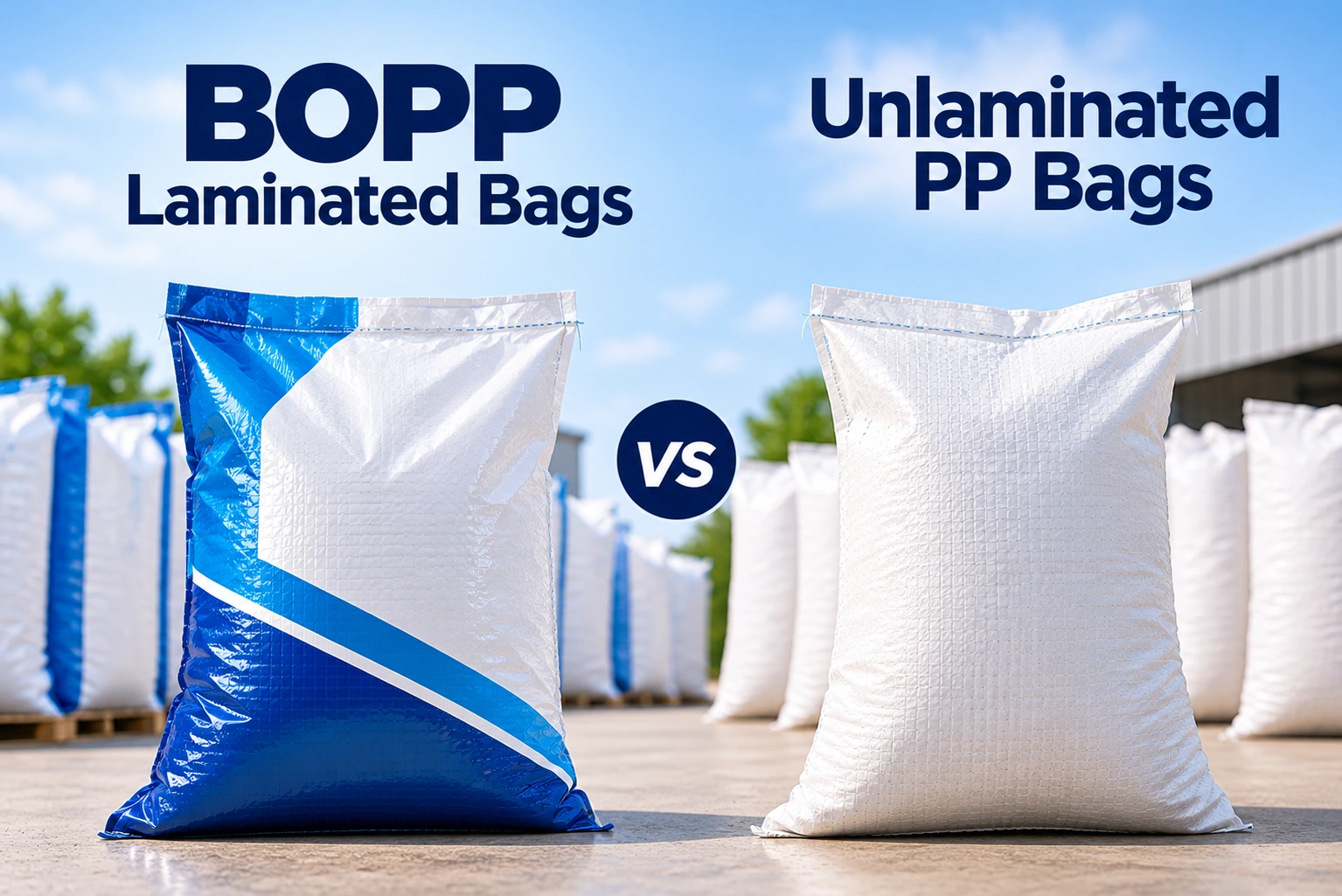
BOPP laminated woven bags and unlaminated PP woven sacks share the same basic polypropylene foundation, but they solve different packaging problems. Plain woven fabric can offer a lightweight and economical structure with useful breathability, while BOPP lamination adds a smooth, printable surface and improved resistance to surface moisture and dust. Aeroflex Neu manufactures both formats, so the better choice depends on product sensitivity, branding, storage, transport and budget rather than appearance alone.
Table of Contents
ToggleWhat are unlaminated PP woven bags?
Unlaminated PP woven bags are made from interwoven polypropylene tapes without a film layer bonded over the surface. The woven structure is strong and lightweight and can be useful for agricultural products, sand, minerals and other applications where high-resolution branding or an enhanced moisture barrier is not required.
What are BOPP laminated woven bags?
BOPP means biaxially oriented polypropylene. In a BOPP laminated bag, a film layer is bonded to woven PP fabric. The resulting surface is smoother and better suited to detailed multi-colour printing, while the film can reduce moisture and dust passage compared with an unlaminated woven surface.
BOPP laminated vs unlaminated: key differences
- Moisture: lamination can improve resistance to surface moisture, but seams, closures, perforations and the unlaminated side still matter.
- Printing: BOPP offers a smoother surface for detailed branding, product information and graphics.
- Breathability: unlaminated fabric generally allows more airflow through the weave.
- Surface protection: film provides an additional surface layer over the woven tapes.
- Cost: lamination adds material and processing, so it should be specified when it provides a real functional benefit.
When should you choose BOPP?
- Retail-facing products such as rice, flour, sugar, seeds and animal feed can benefit from a cleaner branded surface.
- Moisture-sensitive products may benefit from a laminated face, especially when combined with an appropriate liner or double-side construction.
- Export packaging can justify added surface protection and clearer identification.
- Fine products may require lamination, coating or a liner to reduce dust transmission, depending on the application.
When is unlaminated PP the better choice?
- Products that benefit from airflow may be better suited to a breathable woven construction.
- Simple industrial packaging may not need the additional film or premium print surface.
- Where moisture protection is not a requirement, avoiding unnecessary lamination can reduce material and cost.
- The final choice should still account for filling, stitching, palletizing and storage systems.
Does BOPP make a bag waterproof?
Not automatically. Single-side, double-side and liner-equipped constructions provide different levels of moisture protection. Aeroflex Neu’s current guide distinguishes these variants. A buyer should specify the actual exposure and required barrier rather than using the word waterproof as a blanket claim.
How BOPP affects printing
The smooth film surface supports clearer graphics than conventional woven fabric. Buyers should define number of colours, print area, artwork, barcode requirements, product information and which side of the bag is visible after filling.
How to choose by industry
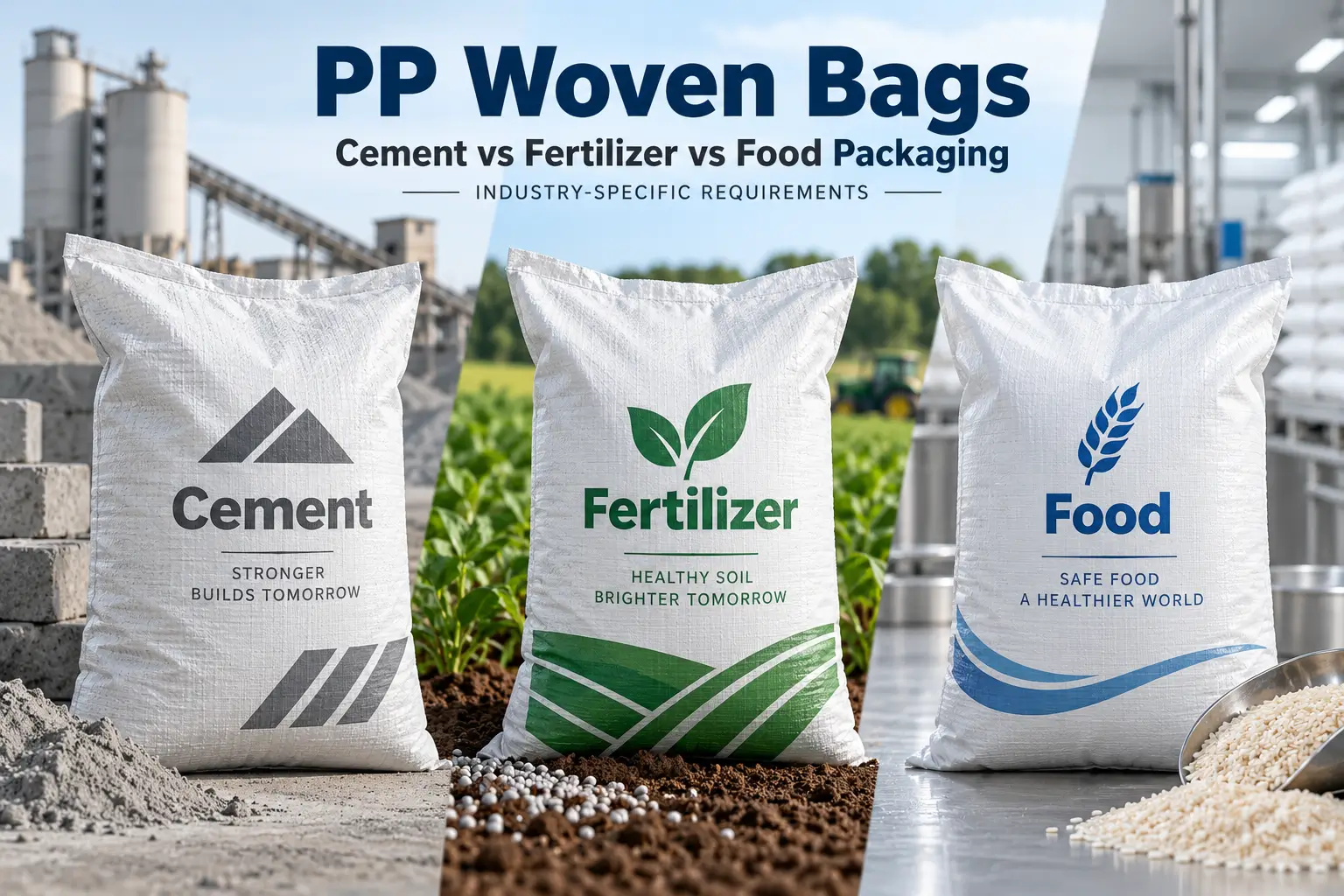
- Food and grains: prioritize hygiene, product protection, printing and any food-contact requirements.
- Fertilizers: consider humidity, dust, product chemistry and required pack weight.
- Cement and minerals: strength, seam integrity and handling may matter more than premium graphics.
- Chemicals: check compatibility, liner needs, dust containment and static-control requirements.
- Animal feed: consider hygiene, moisture management, identification and transport.
Specification checklist
Define bag dimensions, capacity, GSM, fabric construction, BOPP film requirement, lamination side, printing, top and bottom construction, liner, closure, product type, filling method and expected storage/transport environment.
Why customization matters
Aeroflex Neu lists unlaminated and laminated PP woven bags, BOPP bags, valve bags, gusseted bags, perforated bags and liner-inserted variants. This makes it possible to build the packaging specification around the product rather than selecting a generic bag.
What buyers should confirm before approving a sample
A pre-production sample should be reviewed against the approved drawing or specification, not only by appearance. Confirm dimensions, body construction, fabric, stitching pattern, loops, top and bottom, liner or coating, printing and identification. Where performance is critical, define the acceptance criteria before the production run. This prevents a sample that looks acceptable from becoming a production specification by accident.
Why application conditions matter
Packaging performance is influenced by the entire supply chain. A bag filled indoors may later spend days in a humid warehouse, on a truck, in a shipping container or in an outdoor staging area. Handling may include forklifts, lifting frames, automated filling, discharge stations and manual intervention. A good specification considers the harshest reasonably expected condition rather than only the filling stage.
How to reduce avoidable packaging changes
The most effective way to reduce changes is to provide complete information at the quotation stage. Share product, weight, density, dimensions, equipment, storage, transport and customer requirements. Ask the manufacturer to confirm the recommended construction and identify which parameters are fixed and which can be optimized. This also makes quotations from different suppliers easier to compare.
A practical procurement approach
Start with the performance requirement, convert it into a technical specification, review a sample or drawing, approve testing requirements, then release the production order. Keep the approved specification with the purchase order and inspect incoming bags against the same criteria. For repeat orders, retain batch traceability and review any field failures before changing the specification.
Quick Comparison / Buyer Checklist
| Requirement | Unlaminated PP woven | BOPP laminated woven |
| Moisture resistance | Basic woven structure | Improved surface resistance |
| Printing | Functional/simple | High-quality detailed graphics |
| Airflow | Higher through fabric | Lower where film covers surface |
| Best driver | Economy and breathability | Branding and added protection |
Choose the Right Bag for Your Product, Not Just the Look
The better bag is the one that fits your product, storage conditions, branding needs and budget. BOPP laminated bags suit products that need sharp printing and added surface protection. Unlaminated PP woven bags suit products that need airflow and lower cost. Defining your requirements first and approving the specification in writing helps you avoid moisture damage, printing rework and overspending on lamination you don’t need.
Aeroflex Neu manufactures both formats, along with valve, gusseted, perforated and liner-inserted variants. Each is built to your dimensions, GSM, print and closure requirements, with consistent production behind every order.
Not sure which construction suits your product? Share your product, bag size, GSM and printing requirements with our team today for a tailored recommendation and quotation. Contact Aeroflex Neu now and get packaging that is specified right the first time.
Frequently Asked Questions
Are BOPP bags stronger than plain PP bags?
Overall strength depends on fabric GSM, tape properties, weave, stitching and construction. Lamination alone should not be treated as the strength specification.
Are BOPP woven bags waterproof?
They can offer much better moisture resistance, but waterproof performance depends on lamination coverage, seams, closures, liners and exposure.
Which is better for fertilizer?
Choose based on fertilizer formulation, humidity, required printing and handling. Laminated construction can be useful where moisture protection is important.
Can BOPP bags be used for food?
They can be manufactured for food applications, but food-grade materials and applicable hygiene or regulatory requirements must be confirmed.
Are unlaminated bags cheaper?
They can be more economical because they avoid the extra film and lamination process, although actual price depends on the complete specification.
Can BOPP bags be customized?
Yes. Dimensions, printing, lamination coverage, liners and closures can be specified depending on the product and manufacturing capability.