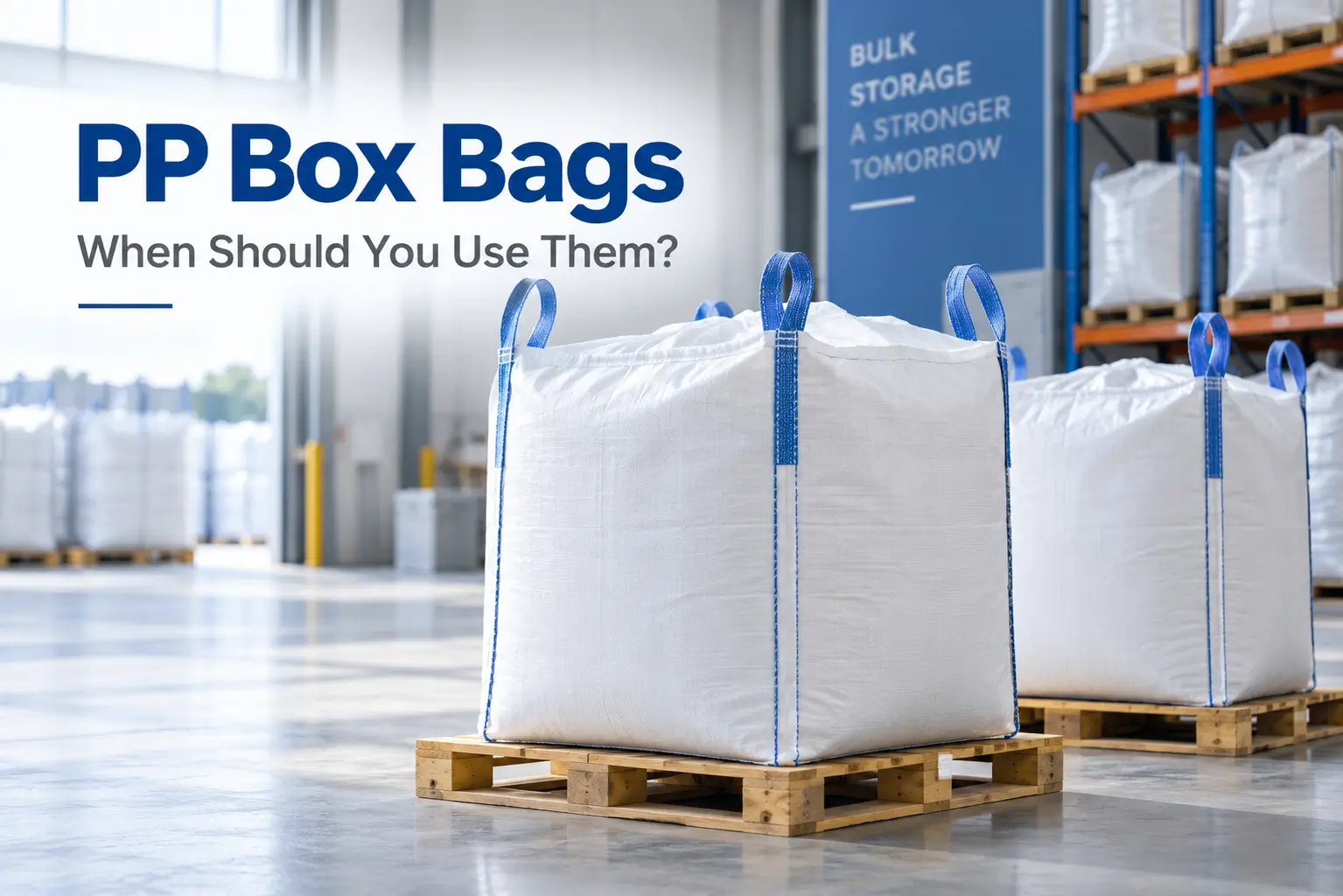
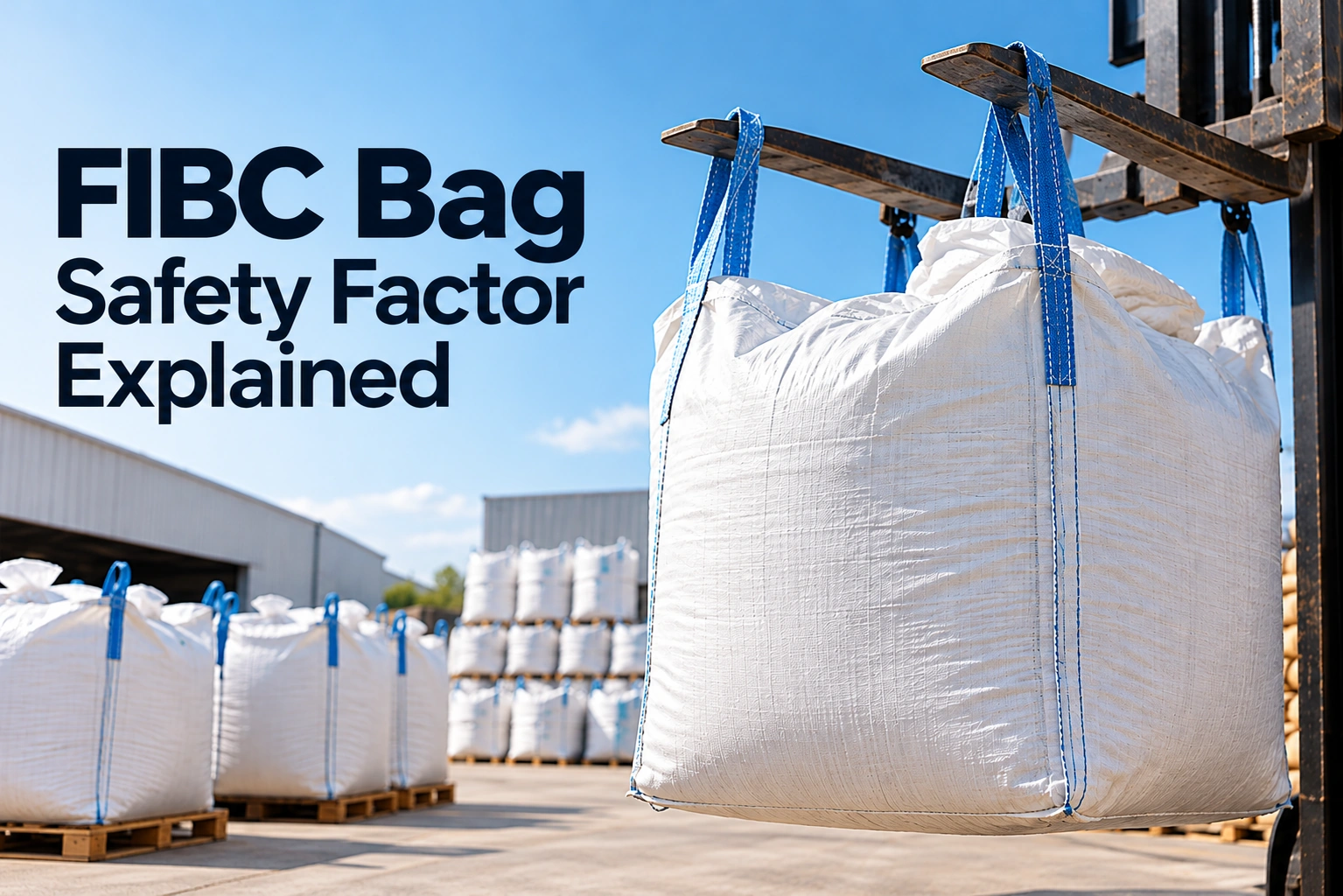
FIBC bags, also known as bulk bags, jumbo bags or big bags, are engineered for the storage and movement of dry, flowable materials. For procurement teams, one of the most important specifications is the relationship between Safe Working Load (SWL) and the bag’s tested performance. The terms 5:1 and 6:1 are often treated as simple quality grades, but the correct choice of FIBC Bags depends on the intended service, handling method, reuse requirements, product characteristics and applicable testing. This guide explains the difference in practical buying terms.
Table of Contents
ToggleWhat is an FIBC safety factor?
A safety factor expresses the relationship between a bag’s tested performance and its declared Safe Working Load. In a 5:1 design, the applicable test relationship is five times the declared SWL; in a 6:1 design it is six times. The number is not the permitted filling weight. A bag marked for a particular SWL must never be filled beyond that declared working load.
Why Safe Working Load matters
SWL should be selected from the actual product weight, bulk density, required bag volume, filling method, lifting equipment, transport conditions and storage arrangement. A 1,000 kg SWL bag and a 2,000 kg SWL bag require different construction and should not be treated as interchangeable.
5:1 vs 6:1: practical comparison
- 5:1 can be appropriate for defined service applications when the complete bag construction and testing meet the intended requirement.
- 6:1 provides a higher test-to-SWL relationship and is commonly specified for demanding or repeated-use applications where the design and applicable requirements call for it.
A higher ratio does not automatically mean higher chemical resistance, better moisture protection, better static control or unlimited reuse. Reuse depends on the specific bag design, service category, inspection requirements and manufacturer instructions.
What determines the right safety factor?
- Service type: establish whether the bag is single-trip or designed for multiple trips.
- Handling: match loops, sleeves and lifting points to the forklift, crane, hoist or automated equipment.
- Product: consider bulk density, particle size, flowability, abrasiveness, moisture sensitivity and chemical compatibility.
- Logistics: consider palletizing, stacking, container loading, export transport and storage duration.
- Compliance: confirm customer, destination-market, food, hazardous-goods or static-control requirements before production.
How FIBC testing supports procurement
Testing should be treated as evidence of the specified design rather than as a marketing number. Depending on the application, buyers may need evidence covering lifting performance, seam strength, drop performance, stacking or other applicable characteristics. Ask for the bag identification, SWL, safety factor, service category and relevant test or certification documentation. Hazardous or regulated products can require additional requirements that cannot be replaced by a generic 5:1 or 6:1 label.
How to select SWL for jumbo bags
Begin with the maximum product weight, then confirm bulk density and the required bag dimensions. Check the lifting method, filling equipment and discharge system. Review whether the bag will be exposed to outdoor storage, repeated handling, abrasion, moisture or temperature changes. The final specification should define SWL, construction, loops, top and bottom configuration, liner or coating and required tests.
Common buyer mistakes
- Selecting a general-purpose bag without checking chemical, food, dust or static requirements.
- Treating 5:1 or 6:1 as the fill limit instead of following the marked SWL.
- Choosing a bag by dimensions alone without checking fabric, seams and loop construction.
- Assuming every 6:1 bag is automatically reusable.
- Ignoring the lifting equipment and using hooks or forks in ways not approved for the bag.
FIBC procurement checklist
Before placing an order, record product, maximum net weight, bulk density, SWL, safety factor, bag type, dimensions, fabric specification, loop configuration, top, bottom, liner/coating, printing, service category and test requirements. Ask the supplier to confirm the specification in writing before mass production.
Why construction type matters
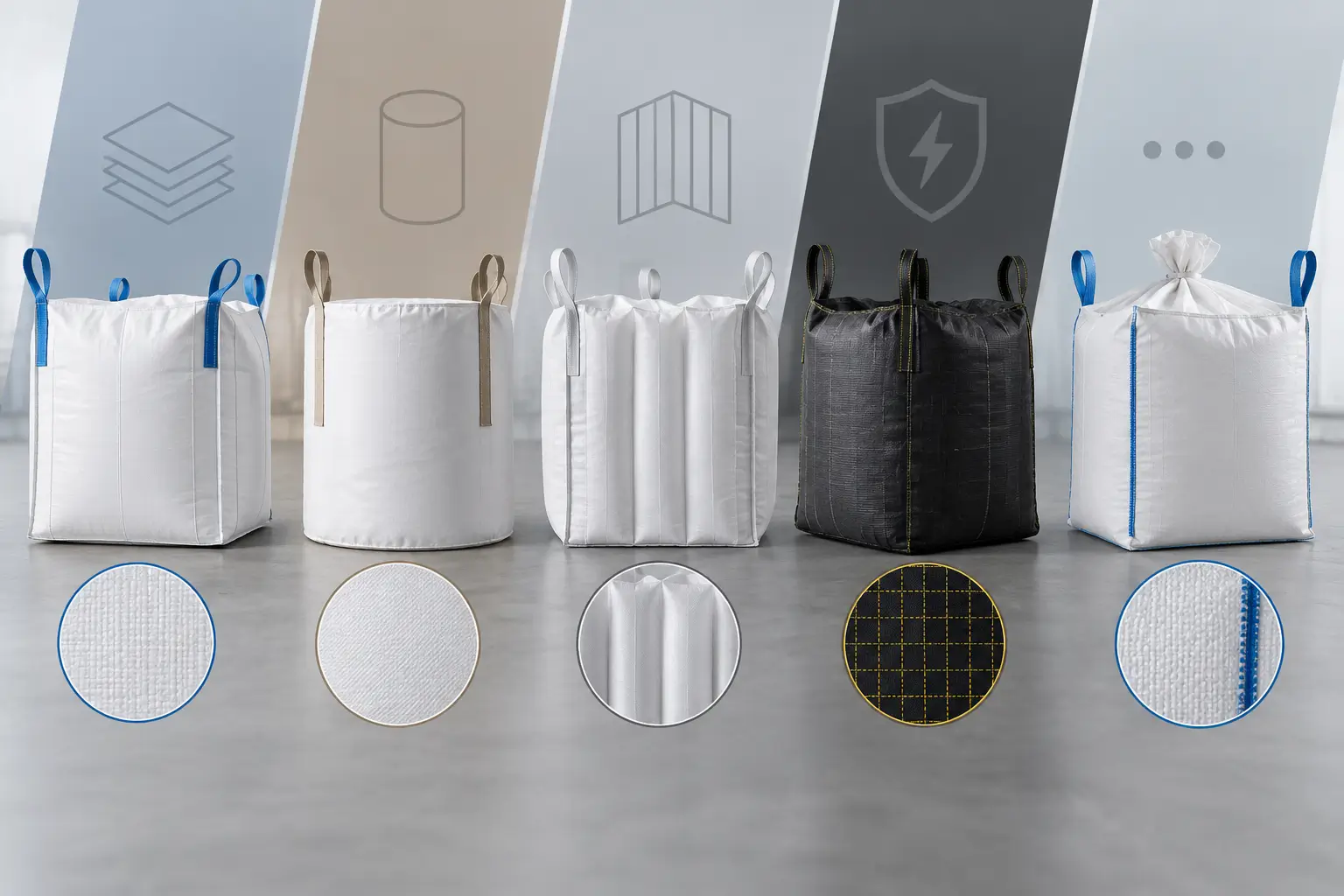
Aeroflex Neu’s current FIBC range includes U-Panel, 4-Panel, Circular/Tubular, Baffle, Conductive, Tunnel, Coated and Dust Proof designs. This types of FIBC allows construction to be selected around the material and handling system instead of assuming that one bulk-bag format suits every product.
What buyers should confirm before approving a sample
A pre-production sample should be reviewed against the approved drawing or specification, not only by appearance. Confirm dimensions, body construction, fabric, stitching pattern, loops, top and bottom, liner or coating, printing and identification. Where performance is critical, define the acceptance criteria before the production run. This prevents a sample that looks acceptable from becoming a production specification by accident.
Why application conditions matter
Packaging performance is influenced by the entire supply chain. A bag filled indoors may later spend days in a humid warehouse, on a truck, in a shipping container or in an outdoor staging area. Handling may include forklifts, lifting frames, automated filling, discharge stations and manual intervention. A good specification considers the harshest reasonably expected condition rather than only the filling stage.
How to reduce avoidable packaging changes
The most effective way to reduce changes is to provide complete information at the quotation stage. Share product, weight, density, dimensions, equipment, storage, transport and customer requirements. Ask the manufacturer to confirm the recommended construction and identify which parameters are fixed and which can be optimized. This also makes quotations from different suppliers easier to compare.
A practical procurement approach
Start with the performance requirement, convert it into a technical specification, review a sample or drawing, approve testing requirements, then release the production order. Keep the approved specification with the purchase order and inspect incoming bags against the same criteria. For repeat orders, retain batch traceability and review any field failures before changing the specification.
Quick Comparison / Buyer Checklist
| Point | 5:1 | 6:1 |
| Relationship | Five-times test relationship to SWL | Six-times test relationship to SWL |
| Fill limit | Declared SWL | Declared SWL |
| Automatic reuse | No | No |
| Selection basis | Complete tested design | Complete tested design + required higher ratio |
Ready to Specify the Right FIBC for Your Application?
The right safety factor is the one that fits your product, handling equipment, storage conditions and required performance, not the one with the bigger number. Defining these requirements before you order, approving the construction in writing and confirming test documentation helps you avoid costly failures and repeat procurement problems.
Aeroflex Neu supports buyers with a full FIBC range, including U-Panel, 4-Panel, Circular/Tubular, Baffle, Conductive, Tunnel, Coated and Dust Proof designs, built to your exact SWL and safety factor requirements and backed by consistent production.
Share your product details, SWL and handling requirements with our team today to get a tailored specification and quotation. Contact Aeroflex Neu now and get the right bulk bag for your material.
Frequently Asked Questions
What does 5:1 mean on an FIBC?
It describes the relationship between tested performance and the declared SWL under the applicable test method. It does not allow the bag to carry five times its SWL.
Is 6:1 always better than 5:1?
No. It can be appropriate for certain demanding or repeated-use specifications, but the complete construction and testing are more important than the ratio alone.
Can a 5:1 FIBC be reused?
Only when the specific bag is designed, marked and approved for multiple-trip service and is inspected according to the applicable requirements.
How do I choose FIBC SWL?
Use maximum product weight, bulk density, bag volume, lifting system, transport, storage and any regulatory or customer requirements.
What should an FIBC test document show?
The applicable test basis, bag identification, SWL, safety factor, service category and relevant test or certification information.
Does GSM alone determine FIBC safety?
No. GSM is one design parameter; tape strength, weave, stitching, loops, dimensions and the tested construction also matter.