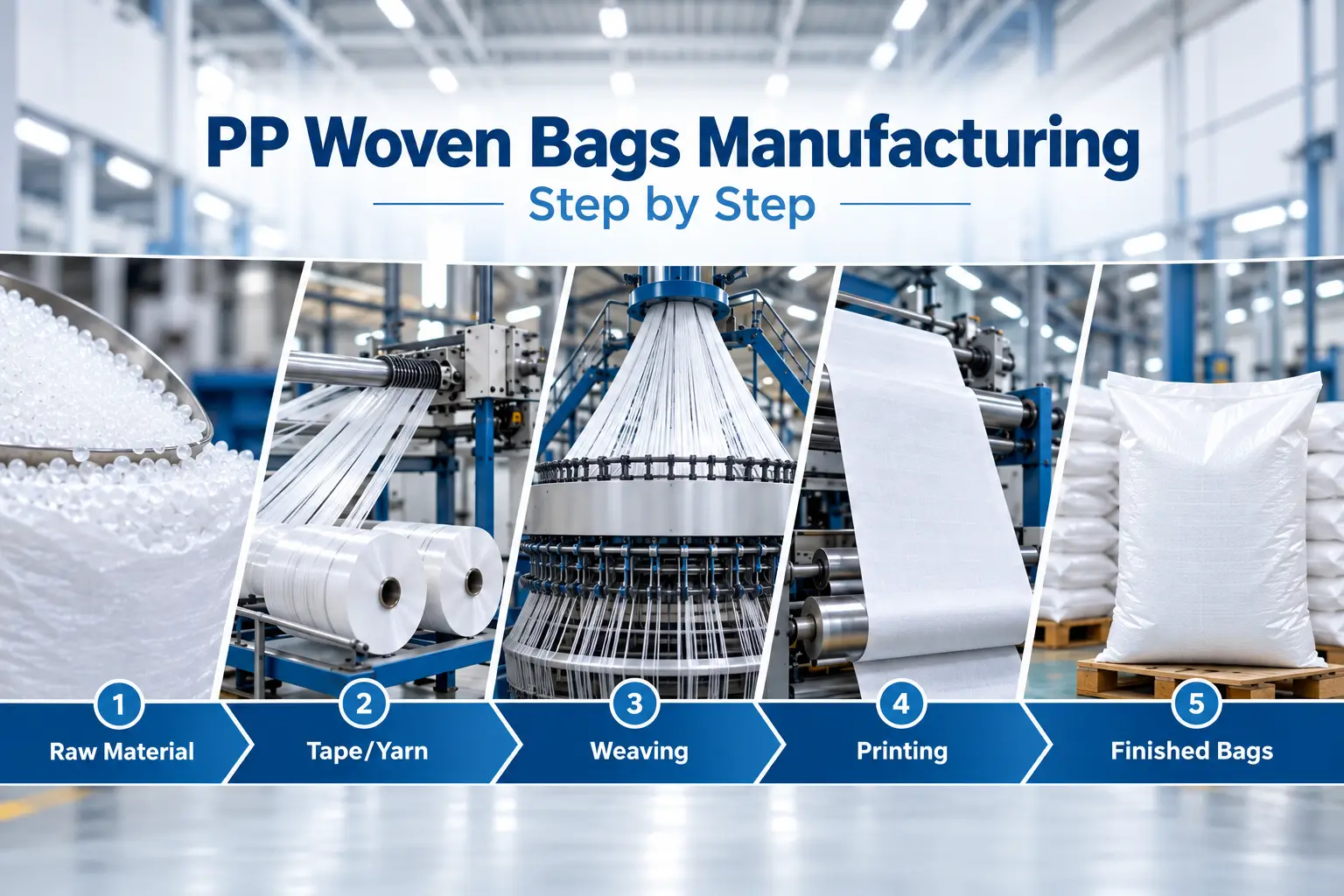
Quick answer: PP woven bags are made through five main stages: extrusion (melting polypropylene granules into tape yarn), weaving (interlacing the tape yarn into fabric on circular or flat looms), lamination/coating (adding a BOPP or PP film layer for moisture resistance and printability), printing and cutting (branding and sizing the fabric), and stitching/finishing (converting cut fabric into finished bags with handles, valves, or liners as needed). Each stage directly affects the bag’s strength, appearance, and suitability for a specific industry.
At Aeroflex Neu, this entire process happens under one roof at our manufacturing facility, which allows tighter quality control at every stage compared to outsourcing steps across multiple vendors. Here’s a detailed look at how PP Woven– Bags are actually made – useful if you’re a buyer trying to understand what drives quality and cost, or simply curious about the process.
Table of Contents
ToggleStep 1: Raw Material Selection (PP Granules)
Manufacturing starts with polypropylene (PP) granules, usually virgin-grade for food and export applications, or a virgin/recycled blend for cost-sensitive industrial use. The grade and quality of the granules directly affect the final fabric’s tensile strength, UV resistance, and flexibility. Aeroflex Neu sources granules based on the end-use of the bag – a fertilizer bag and a food-grade bag do not use the same input specification.
Step 2: Extrusion – Turning Granules into Tape Yarn
The PP granules are melted and extruded through a flat die to form a thin, continuous film. This film is then slit into narrow tapes and stretched (drawn) at controlled temperatures, which aligns the polymer molecules and gives the tape its strength. This stretched tape is the basic “yarn” used in weaving – its width, thickness, and denier are set at this stage based on the target GSM of the finished fabric.
Step 3: Weaving – Building the Fabric
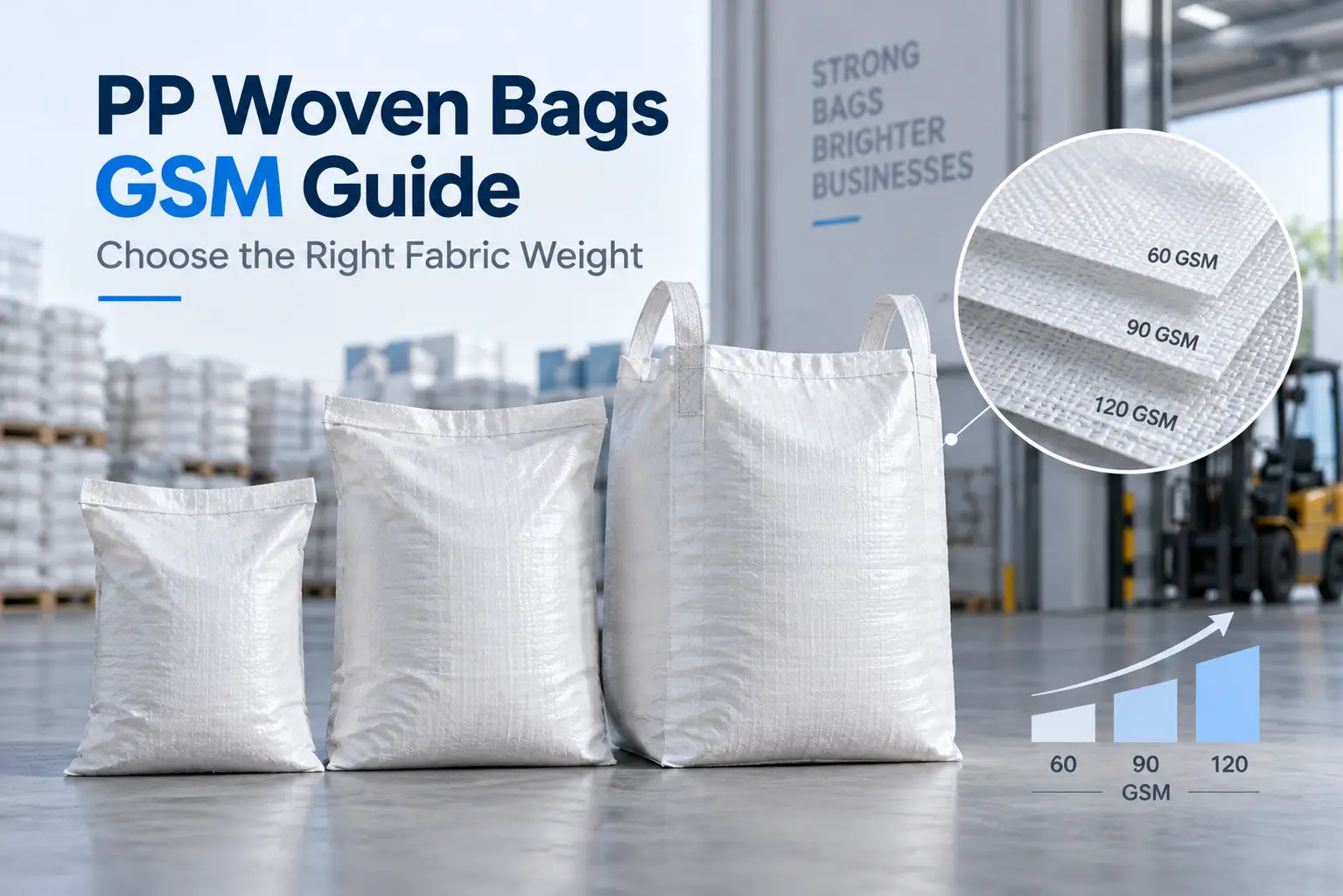
The tape yarn is fed into circular or flat looms, where it’s woven into a grid pattern (warp and weft) to form PP woven fabric. Weave density and tightness at this stage determine the fabric’s final GSM, tensile strength, and puncture resistance – this is also where the base bag structure (tubular or flat) is formed depending on whether it’s headed for sack production or lamination.
Step 4: Lamination and Coating (If Required)
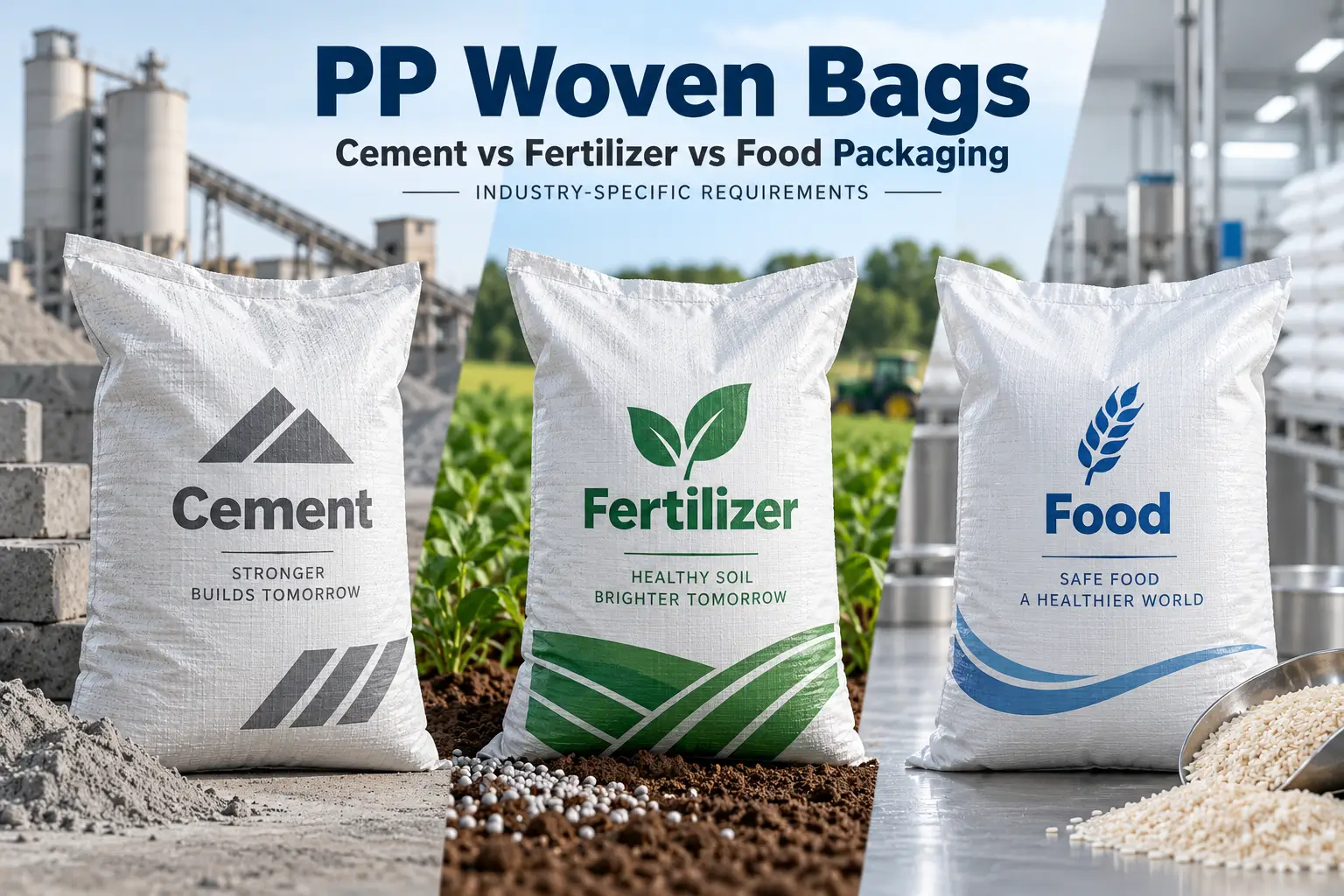
For bags that need moisture resistance, better print quality, or added strength, a thin layer of BOPP film or PP coating is laminated onto the woven fabric. This step is optional and depends on the end-use – cement and chemical bags often skip lamination, while food, retail, and export bags frequently require it for both protection and branding. You can read more about this step in our guide to BOPP Laminated Woven Bags.
Step 5: Printing
Brand logos, product information, handling instructions, and compliance marks are printed onto the fabric using flexographic printing – a technique well-suited to high-speed, roll-to-roll printing on woven and laminated substrates. Print quality at this stage is often what customers notice first, making it an important differentiator between manufacturers.
Step 6: Cutting and Sizing
The printed (or unprinted) fabric roll is cut to the exact bag dimensions required – length, width, and gusset size, depending on the bag type and the customer’s product volume requirements.
Step 7: Stitching and Finishing
Cut fabric pieces are stitched into finished bags. Depending on the specification, this stage adds:
- Bottom and top stitching for standard woven sacks
- Valve openings for valve bags used with powder products like cement
- Liners (PE or paper) for moisture-sensitive or fine-powder products
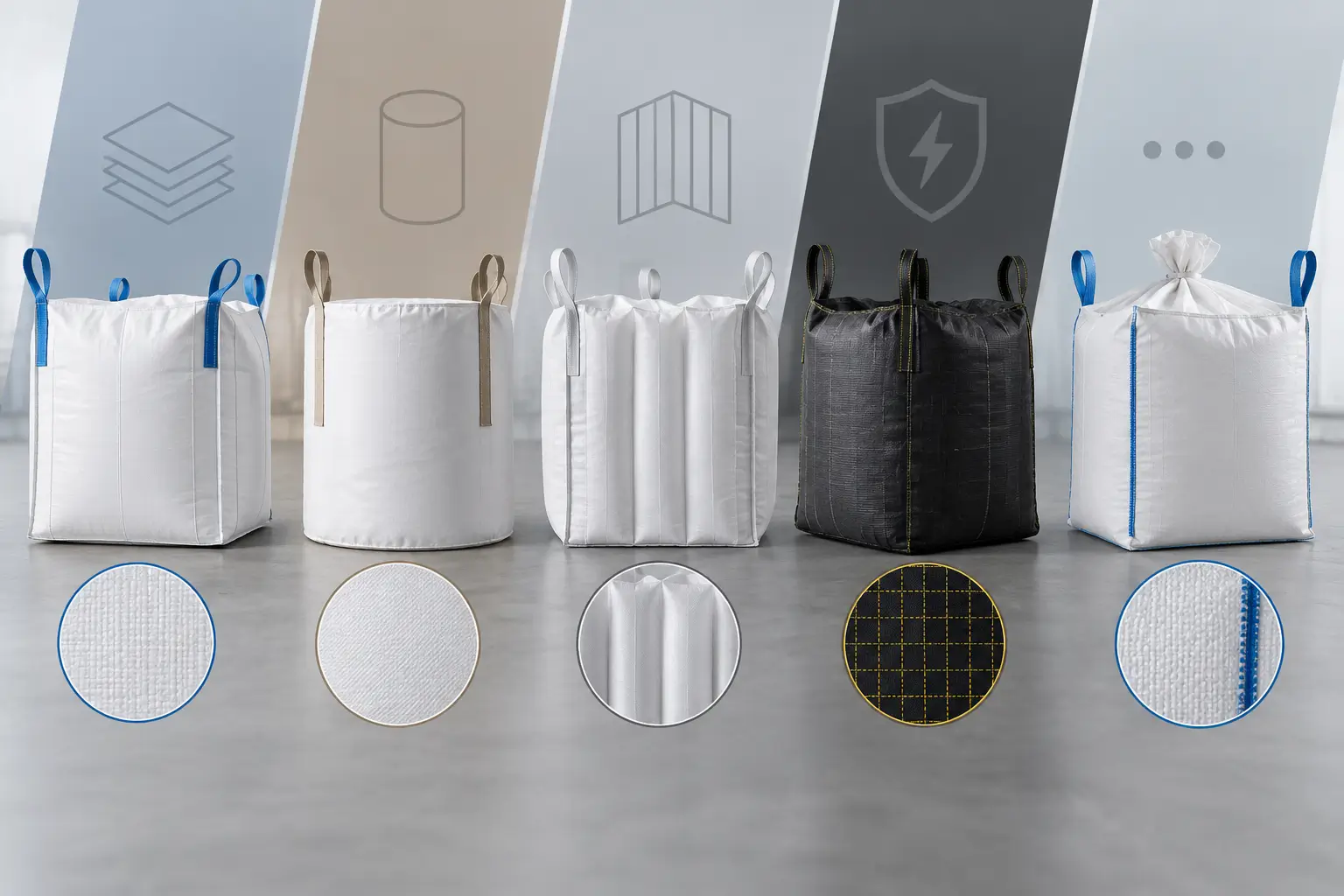
- Handles or loops for FIBC/jumbo bags
Step 8: Quality Control and Testing
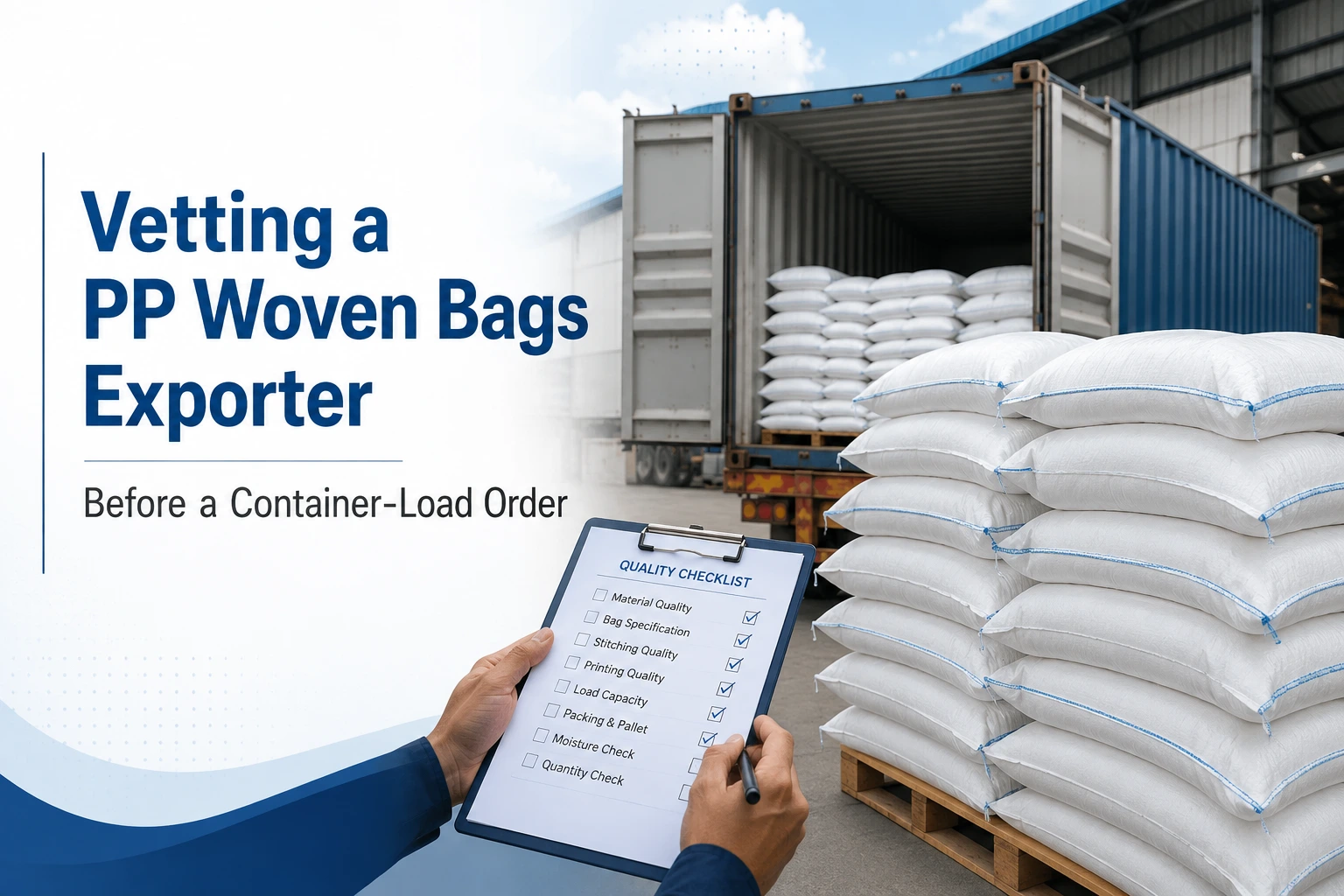
Before dispatch, finished bags go through checks for tensile strength, seam strength, print accuracy, and dimensional consistency. For export orders, additional compliance checks (labeling, certification marks) are carried out at this stage. Aeroflex Neu runs quality checks at multiple points in the process – not just at the end – so issues are caught before they multiply through a production batch.
Step 9: Packing and Dispatch
Finished bags are bundled, baled, or palletized based on the customer’s logistics requirements and shipped for domestic delivery or export.
Why the Manufacturing Process Matters to Buyers
Understanding this process helps explain why bag quality and pricing vary between suppliers. A manufacturer that controls extrusion, weaving, and lamination in-house – as Aeroflex Neu does – has far more control over consistency than one that outsources several of these stages. This is also why lead times, minimum order quantities, and customization options differ so much between suppliers.
FAQs
What raw material is used to make PP woven bags?
PP woven bags are made from polypropylene (PP) granules, which are extruded into tape yarn and then woven into fabric.
What is the difference between laminated and unlaminated PP woven bags? Laminated bags have an additional BOPP or PP film layer bonded to the woven fabric for moisture resistance and better print quality, while unlaminated bags are the plain woven fabric, typically used for products like cement where lamination isn’t essential.
How is the strength of a PP woven bag determined during manufacturing?
Strength is primarily determined during the extrusion stage (tape yarn quality) and the weaving stage (weave density and GSM) – both are set based on the bag’s intended fill weight and handling conditions.
Can PP woven bags be customized with printing?
Yes, PP woven and laminated bags can be custom printed with logos, product details, and compliance information using flexographic printing during manufacturing.
Is the manufacturing process different for FIBC (jumbo) bags?
FIBC bags follow the same basic stages but use heavier-GSM fabric, additional reinforcement, and specialized stitching for lifting loops and safe working load requirements.
See the Process in Action
Aeroflex Neu manufactures PP woven bags end-to-end – from extrusion to finished, tested bags – giving customers consistent quality across every order. Explore our PP Woven Bags range or contact us to discuss specifications for your next order.