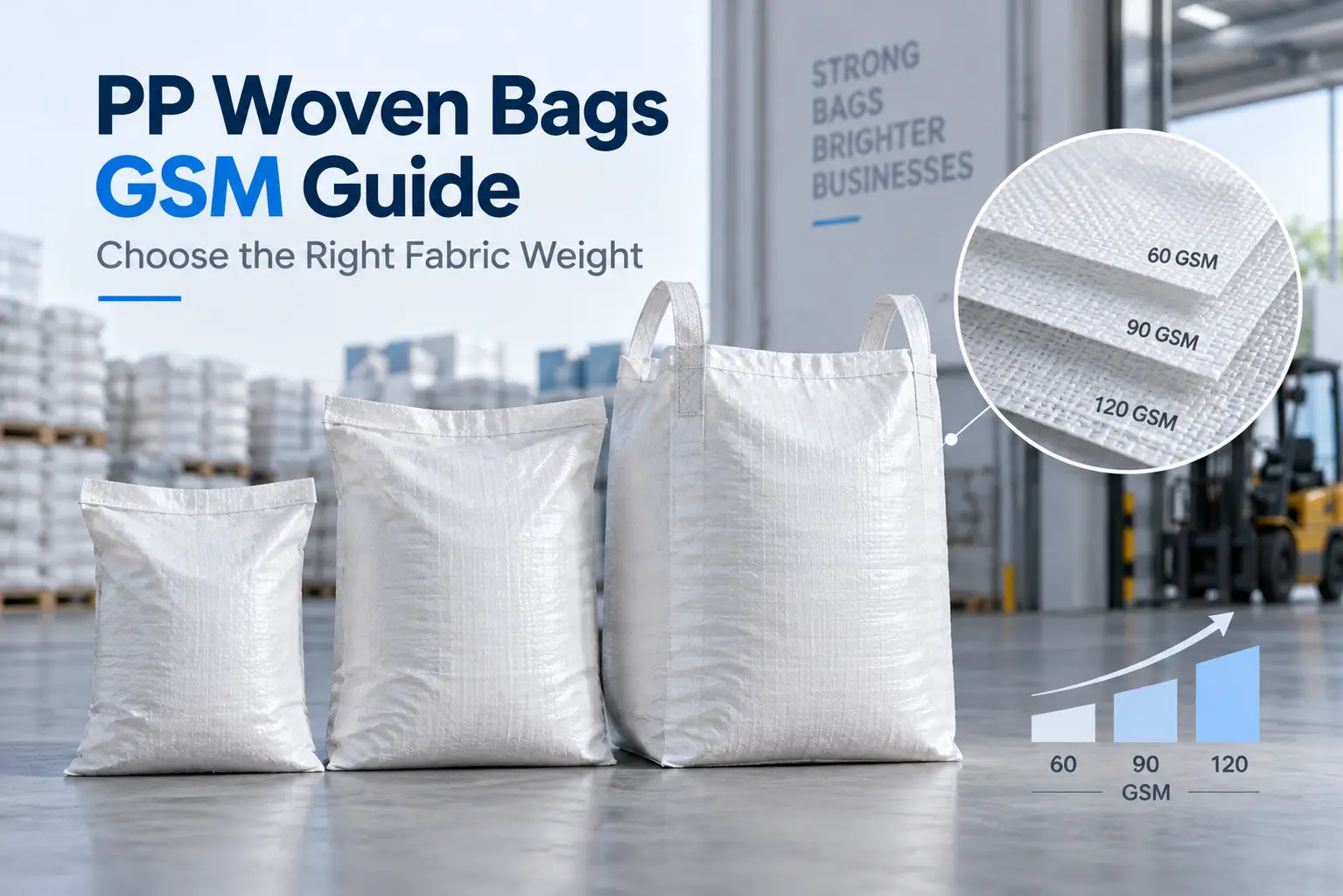
Quick answer: GSM (grams per square meter) measures how heavy and dense a PP woven fabric is. Lighter bags (60–80 GSM) suit low-weight, single-use packaging like small food or seed bags. Mid-range fabrics (80–110 GSM) are the standard for cement, fertilizer, and animal feed bags carrying 25–50 kg. Heavy-duty fabrics (110–150+ GSM) are used for chemical, mineral, and export-grade bags that need to survive rough handling, stacking, and long transit. The right GSM depends on the product weight, handling conditions, and number of times the bag needs to be reused.
If you’re sourcing PP Woven Bags from Aeroflex Neu, getting the GSM right is one of the most important decisions you’ll make – choose too light and bags tear or burst in transit; choose too heavy and you’re paying for strength you don’t need. This guide breaks down exactly how to pick the correct fabric weight for your product.
Table of Contents
ToggleWhat Is GSM and Why Does It Matter?
GSM stands for Grams per Square Meter – it tells you how much a one-square-meter piece of the woven fabric weighs. In PP (polypropylene) woven bags, GSM is a direct indicator of:
- Fabric density – how tightly the tape yarns are woven
- Tensile strength – how much weight and pulling force the bag can take before tearing
- Puncture resistance – how well it withstands sharp edges, rough loading, or stacking
- Cost – higher GSM means more raw material (PP granules), so price rises with weight
A higher GSM doesn’t automatically mean a “better” bag – it means a stronger and heavier bag. The goal is matching GSM to your product’s actual weight, sharpness, and handling journey, not simply picking the highest number available. This is exactly why Aeroflex Neu works closely with customers to specify GSM rather than defaulting to a standard weight for every order.
GSM Reference Guide by Industry and Use Case
Based on years of manufacturing experience, here is the GSM range Aeroflex Neu typically recommends for common industries:
| GSM Range | Typical Bag Weight Capacity | Common Use Cases |
| 60–70 GSM | Up to 10–15 kg | Small retail packs, seed bags, lightweight food packaging |
| 70–90 GSM | 15–25 kg | Rice, pulses, sugar, animal feed (light duty) |
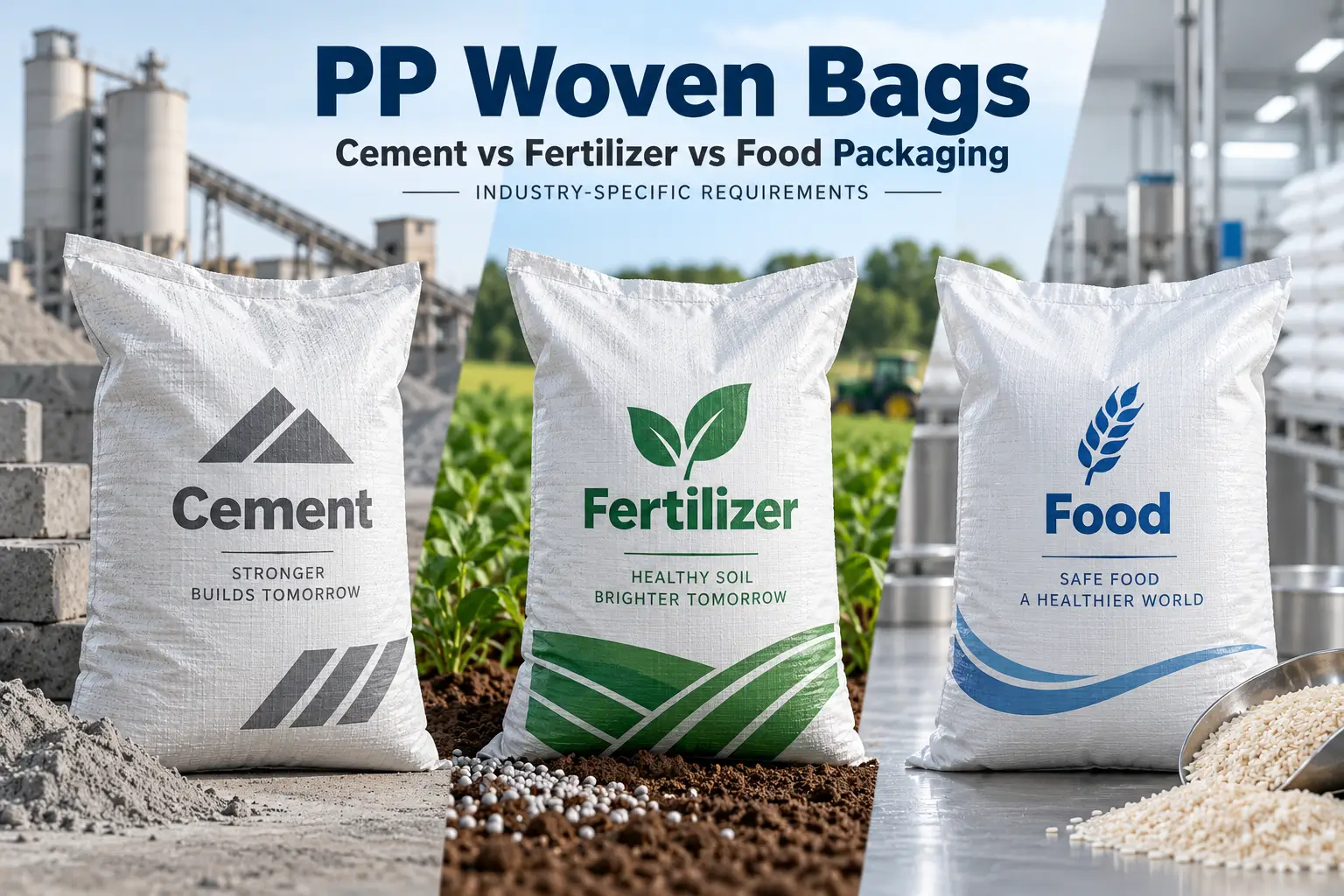
| 90–110 GSM | 25–50 kg | Cement, fertilizer, cattle feed, general industrial packaging |
| 110–130 GSM | 50 kg and export/multi-handling | Chemicals, minerals, tyre-industry raw materials, food products for export |
| 130–150+ GSM | 50 kg+, high-abrasion or multiple reuse | FIBC/jumbo bag panels, heavy minerals, construction materials, long-haul export loads |
Note: Exact GSM-to-capacity mapping also depends on weave density, denier of the tape yarn, and whether the bag is laminated – always confirm the specification sheet rather than relying on GSM alone.
Factors That Determine the Right GSM for Your Product
1. Weight of the Filled Product
Heavier fill weights need higher GSM to prevent seam failure and base tearing during lifting and stacking.
2. Nature of the Product
Sharp or abrasive materials (minerals, aggregates, certain chemicals) need denser, higher-GSM fabric to resist puncture – even at lower fill weights.
3. Handling and Transit Conditions
Bags that go through multiple loading/unloading cycles, long-distance export shipping, or manual handling in rough conditions need a safety margin above the minimum GSM for the product weight.
4. Stacking Height in Storage
Bags stored in tall stacks (common in cement and fertilizer warehousing) bear more compressive load on the bottom layers, which calls for higher GSM or reinforced base construction.
5. Single-Use vs. Reusable Bags
If a bag needs to survive multiple fill-empty-refill cycles, GSM should be higher than what a single-use bag of the same weight would require.
6. Lamination and Coating
BOPP-laminated bags add moisture and print-surface benefits but also add strength – a laminated 80 GSM bag can sometimes match the performance of an unlaminated 100 GSM bag. Learn more about BOPP Laminated Woven Bags for such cases.
How to Choose the Right GSM: A Simple Process
- Identify your product’s fill weight (e.g., 25 kg, 50 kg)
- Assess the product’s texture – is it fine powder, granules, or sharp/abrasive material?
- Map your handling journey – local distribution vs. export, manual vs. mechanized handling
- Cross-check against the GSM reference table above for a starting point
- Request a sample or test bag – Aeroflex Neu provides sample bags at the recommended GSM so you can test performance before committing to a bulk order
- Balance cost vs. safety margin – a slightly higher GSM is often cheaper than the cost of damaged goods and returns
Common Mistake: Choosing GSM by Price Alone
Many buyers select GSM purely to hit a budget target, which often causes tears, product loss, and customer complaints down the line – costing far more than the GSM upgrade would have. The smarter approach is to specify GSM based on the product and handling conditions first, then negotiate cost through order volume, weave type, or lamination choices.
FAQs
What GSM is best for cement bags? Most cement bags (50 kg) use 90–110 GSM PP woven fabric, often with a laminated inner layer for moisture resistance.
What GSM is used for fertilizer bags? Fertilizer bags typically range from 90–120 GSM depending on bag size (25 kg or 50 kg) and whether they’re for domestic or export use.
Does higher GSM always mean a stronger bag? Generally yes, but weave density and tape yarn quality also affect strength – two bags at the same GSM can perform differently depending on how tightly they’re woven.
Can I reduce GSM to cut costs without losing strength? Sometimes. Adding BOPP lamination or improving weave density can maintain strength at a slightly lower GSM, effectively reducing material cost without sacrificing performance.
What GSM is used for FIBC (jumbo) bags? FIBC bag panels typically use 130–220 GSM fabric depending on the safe working load (SWL) and safety factor required – much heavier than standard woven sack fabric.
Get the Right Fabric Weight for Your Application
Choosing GSM isn’t a one-size-fits-all decision – it depends on your product, your supply chain, and your budget. At Aeroflex Neu, our team helps customers specify the exact GSM and weave for their application, backed by 25+ years of manufacturing experience across cement, chemical, agro, food, and export industries.
Explore our PP Woven Bags range or get in touch to discuss the right specification for your next order.