If you’re a procurement manager, exporter, or business owner sourcing bulk packaging in 2026, you’ve probably faced this question at some point: should you pack your product in PP woven bags or go with traditional jute bags?
It’s not a trivial decision. The bag you choose affects your product’s shelf life, your freight costs, your compliance with importing countries’ regulations, and ultimately, how much product reaches your customer intact. Cement, fertilizer, grain, cattle feed, chemicals, and food products all behave differently depending on what’s protecting them in transit.
At Aeroflex Neu, we’ve manufactured and exported both laminated and unlaminated PP woven bags for over 25 years, working closely with buyers who’ve made this exact comparison. In this guide, we break down how PP woven bags and jute bags actually stack up – on strength, cost, moisture resistance, sustainability, and suitability for different industries – so you can make a sourcing decision with confidence.
A Quick Overview: What Are We Comparing?
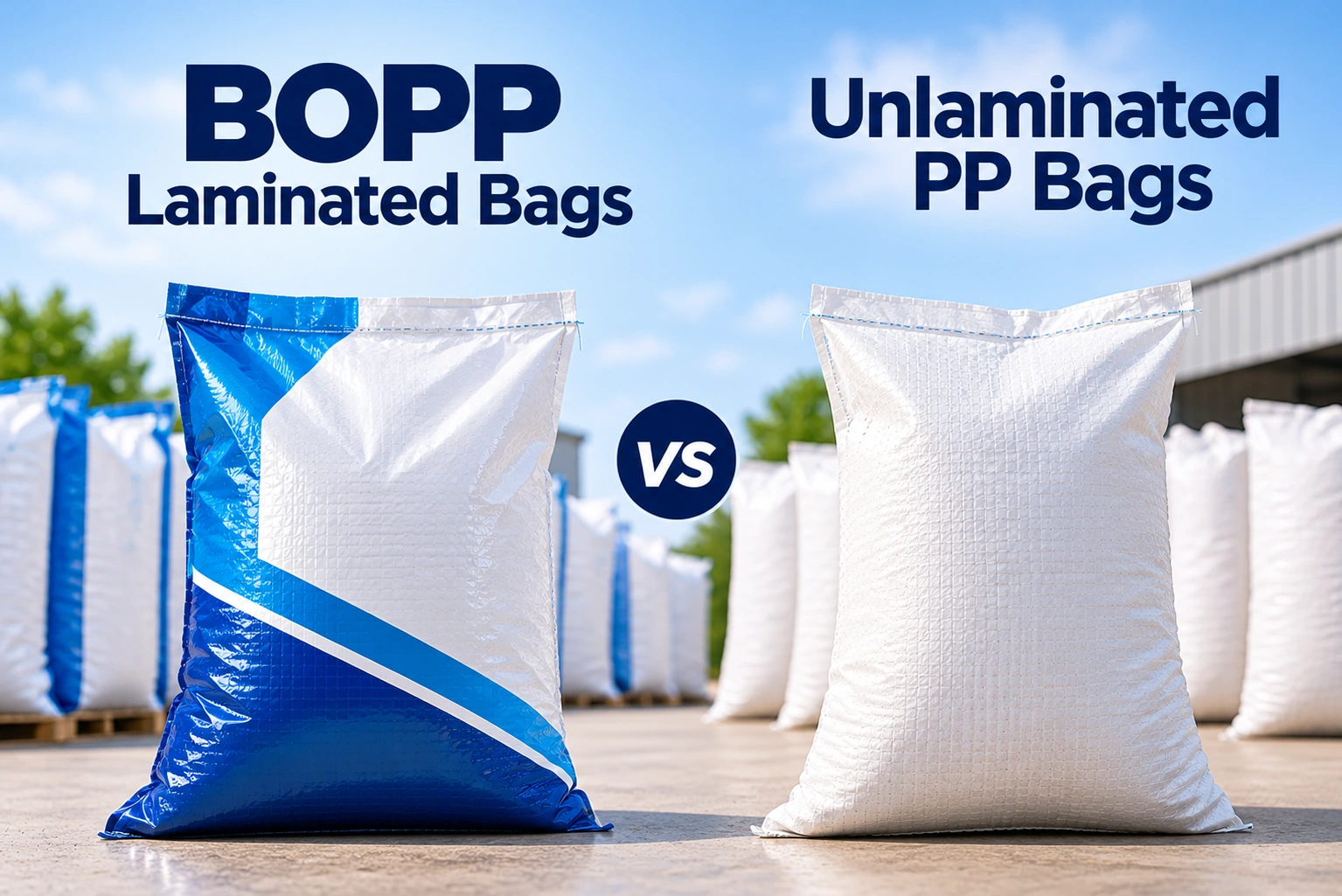
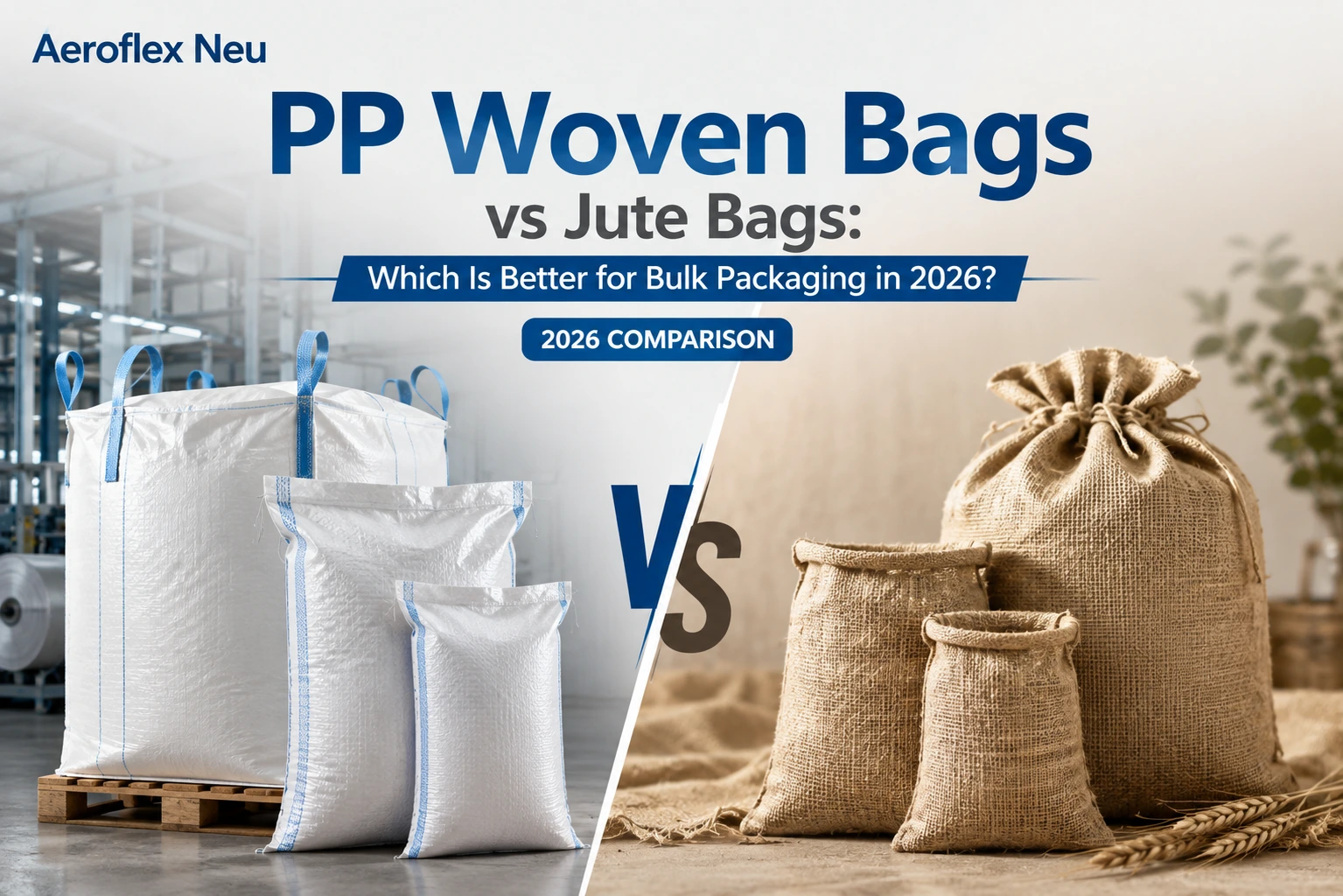
PP Woven Bags are made by weaving polypropylene tape into a fabric, which is then cut and stitched (or bottom-sealed) into bags. They can be left unlaminated, BOPP-laminated for a printable, waterproof finish, or fitted with liners for extra protection.
Jute Bags are made from natural jute fibre – a plant-based material that has been used for agricultural and commodity packaging for well over a century, particularly for grains, coffee, and spices.
Both have a place in the packaging industry. The right one depends on what you’re packing, where it’s going, and what matters most to your business: cost efficiency, durability, or biodegradability.
1. Strength and Durability
This is where PP woven bags have a clear edge. Polypropylene tape has a high tensile strength, so the woven fabric can carry heavy loads – from 25 kg cattle feed sacks to 50 kg cement bags – without tearing under normal handling and stacking pressure.
Jute, being a natural fibre, has lower tensile strength and is more prone to fraying, splitting at seams, and general wear when handled roughly or stacked for long periods. For products that go through multiple handling points – loading, freight, warehousing, and retail – that difference in durability translates directly into lower product loss.
2. Moisture and Weather Resistance
Jute is absorbent by nature. That’s fine for short-term storage in dry conditions, but it becomes a real liability during monsoon transport, sea freight, or storage in humid warehouses – jute can absorb moisture, weaken, and even encourage mould growth in the product it’s protecting.
PP woven bags, especially BOPP-laminated variants, are inherently water-resistant. The tightly woven polypropylene tape doesn’t wick moisture the way natural fibres do, which is a major reason PP bags dominate categories like fertilizer, cement, and chemical packaging where a single damp shipment can mean a total loss.
3. Cost and Scalability
Jute cultivation, processing, and weaving are more labour-intensive than polypropylene extrusion and weaving, which keeps jute bag production costs comparatively high and harder to scale quickly for large export orders.
PP woven bags are manufactured on high-speed circular looms, allowing manufacturers to fulfil bulk and container-load orders consistently, at a lower per-unit cost. For businesses ordering in the tens or hundreds of thousands of units, that cost gap compounds fast.
4. Branding and Printability
If your packaging also needs to work as a marketing surface, PP woven bags – particularly BOPP-laminated ones – offer sharp, high-definition flexographic or rotogravure printing that holds up during transport and on the shelf. Jute’s rough, natural texture limits print clarity and detail, which matters if brand visibility at the point of sale or in export markets is a priority.
5. Sustainability: The Nuance Buyers Need to Understand
This is usually where the conversation gets oversimplified. Jute is biodegradable and compostable, which gives it a straightforward environmental story. But that’s not the whole picture:
- Jute’s footprint isn’t zero. Cultivation requires water and land, and processing has its own environmental cost.
- PP woven bags are reusable and recyclable. A bag that survives multiple use cycles – and gets recycled at end of life – can have a lower overall environmental impact per unit of product delivered than a single-use natural-fibre alternative, especially in industrial and export contexts where bags are reused for storage or repurposed.
- Regulations are evolving. Depending on the destination country, extended producer responsibility (EPR) rules and recyclability requirements are increasingly shaping which packaging material is compliant – this is worth checking with your supplier before committing to either option for export.
If biodegradability at end-of-life is a hard requirement for your industry or your buyer, jute has the advantage. If durability, reusability, and total lifecycle cost matter more, PP woven bags typically come out ahead.
6. Which Industries Typically Choose Which?
| Factor | PP Woven Bags | Jute Bags |
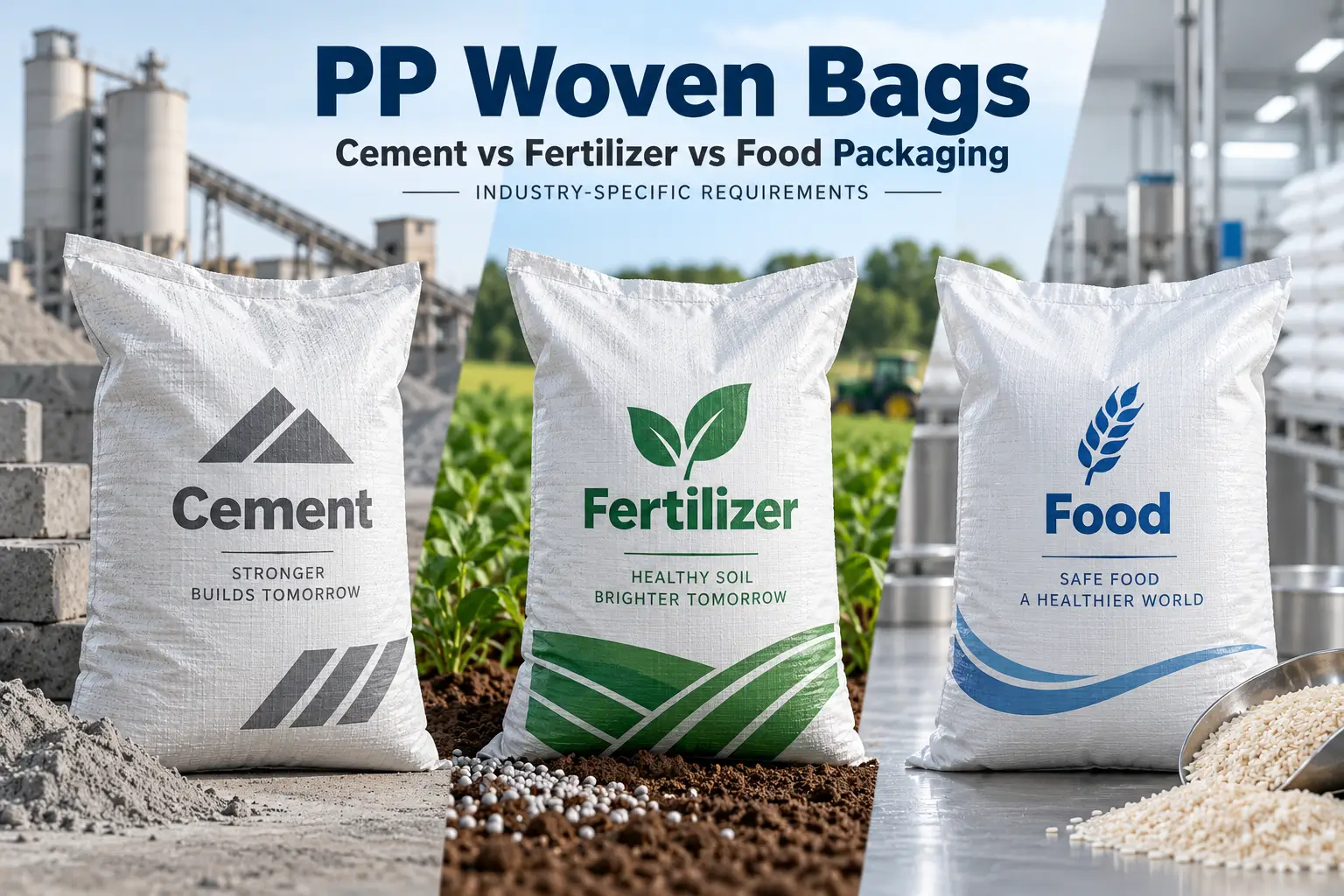
| Cement, fertilizer, chemicals | ✅ Preferred – moisture resistance is critical | Rarely used |
| Grain, cattle feed, agro-commodities | ✅ Preferred for bulk/export | Sometimes used for premium/local markets |
| Coffee, specialty foods, artisanal exports | Used when branding/print quality matters | ✅ Preferred for traditional/premium appeal |
| High-volume export orders | ✅ Preferred – cost and scalability | Harder to scale cost-effectively |
| Retail/eco-conscious branding | Used with recyclable messaging | ✅ Preferred for “natural” positioning |
So, Which Should You Choose?
For most bulk, industrial, and export packaging needs – cement, fertilizer, chemicals, food grains, cattle feed, and agro-products – PP woven bags are the more practical choice in 2026. They offer better strength-to-weight ratio, superior moisture protection, lower per-unit cost at scale, and print quality that supports your brand across international markets.
Jute still has its place, particularly where biodegradability is non-negotiable or where a natural, premium aesthetic is part of the product story. Many businesses use a hybrid approach – jute for retail-facing, smaller-batch products, and PP woven bags for bulk, industrial, and export shipments.
Why Buyers Choose Aeroflex Neu for PP Woven Bags
At Aeroflex Neu, we’ve been manufacturing and exporting PP Woven Bags from our 80,000 sq. ft. facility in Udaipur, Rajasthan, for over 25 years – supplying industries across agriculture, cement, chemicals, food, and fertilizer sectors, and exporting to Europe, Africa, the Middle East, Australia, Southeast Asia, and the Americas.
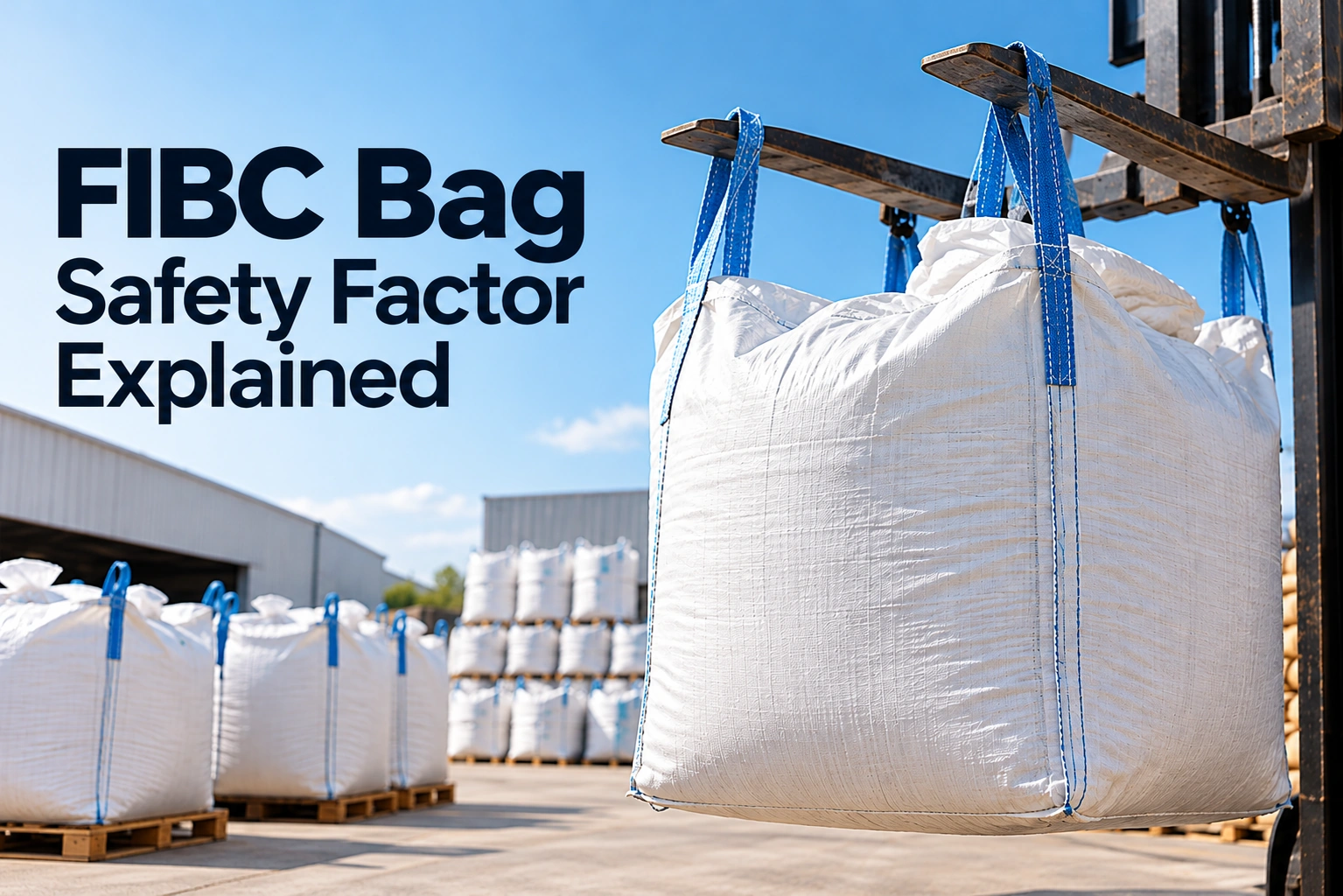
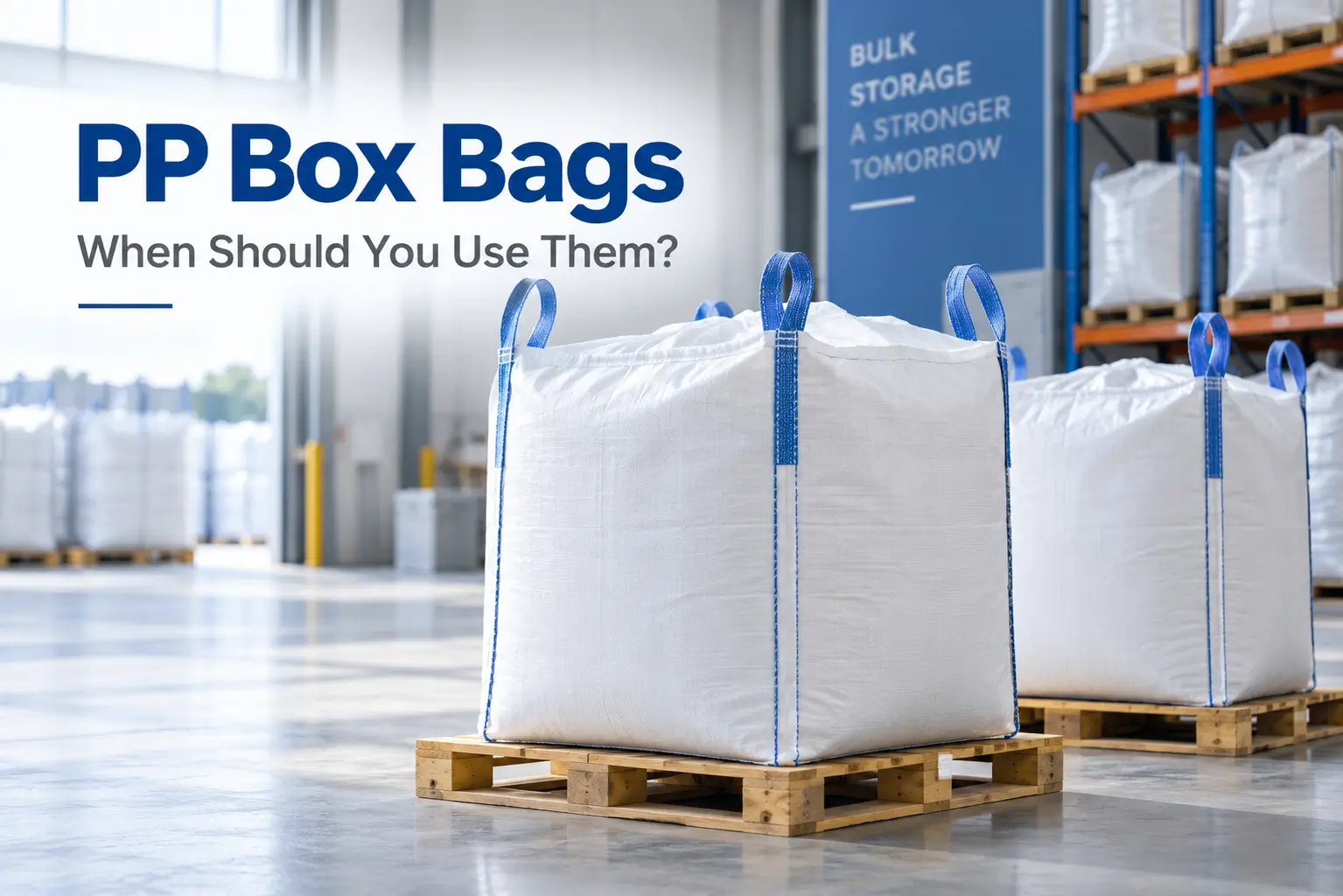
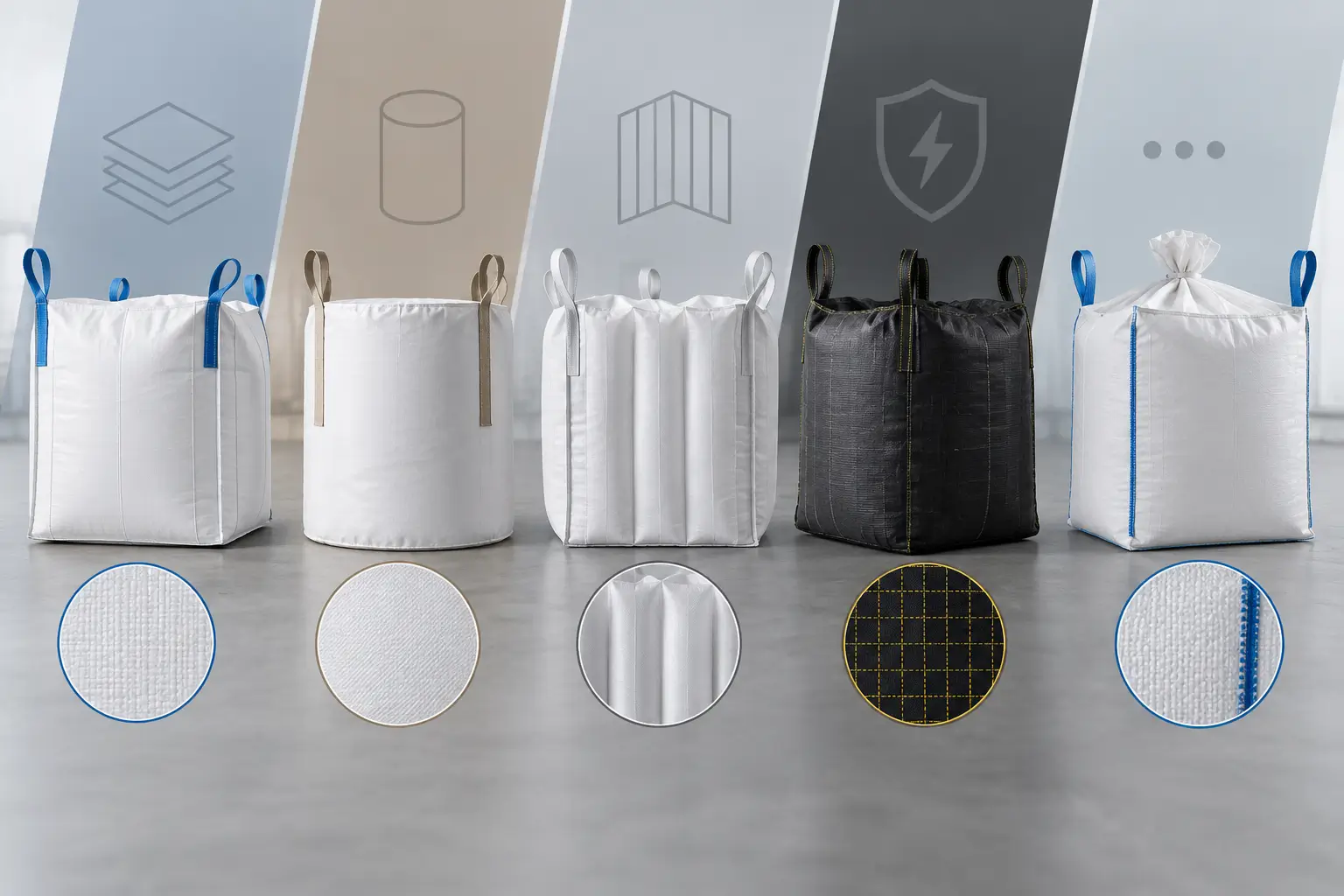
Whether you need unlaminated bags, BOPP-laminated woven bags, valve bags, or FIBC/jumbo bags for larger bulk loads, our team can help you choose the right specification for your product, your handling conditions, and your destination market.
Get in touch with our team for a custom quote, or explore our full PP Woven Bags range to see specifications, customization options, and industry-specific solutions.
Frequently Asked Questions
Are PP woven bags more expensive than jute bags?
No – PP woven bags are generally more cost-effective at scale, since polypropylene weaving is a faster, less labour-intensive manufacturing process than jute processing and weaving.
Are PP woven bags recyclable?
Yes. PP woven bags are reusable and recyclable, which supports circular-economy packaging goals when handled through proper recycling channels.
Can PP woven bags be used for food packaging?
Yes, when manufactured and laminated to relevant food-safety standards, PP woven bags are widely used for grains, cattle feed, and other food-industry applications.
Do jute bags perform better in humid climates?
No – jute is naturally absorbent and can retain moisture, which makes it less suitable than PP woven bags for humid climates, sea freight, or monsoon-season transport.
Which is cheaper in the long run – PP woven bags or jute bags?
PP woven bags usually work out cheaper over time. They cost less per unit to manufacture, last longer under repeated handling, and cause fewer losses from tearing or moisture damage – all of which lowers the effective cost per shipment compared to jute.
Can PP woven bags be customized with branding, like jute bags often are?
Yes. PP woven bags – especially BOPP-laminated versions – support high-definition flexographic and rotogravure printing, giving sharper, more durable branding than the coarse texture of jute allows. Aeroflex Neu offers full customization on size, lamination, and print for bulk orders.
Are PP woven bags suitable for export, or do some countries restrict them?
PP woven bags are widely accepted for export, but some destination markets have specific regulations around plastic packaging, recyclability, or Extended Producer Responsibility (EPR). It’s best to confirm compliance requirements for your destination country with your supplier before placing a bulk order – Aeroflex Neu’s team can help you navigate this for shipments to Europe, the Middle East, Africa, and beyond.
How long do PP woven bags typically last compared to jute bags?
PP woven bags generally have a longer usable life, both in single use (higher resistance to tearing and stacking pressure) and in reuse scenarios, since the polypropylene fabric doesn’t degrade from moisture or fraying the way jute does.
Can I order a sample before committing to a bulk PP woven bags order?
Yes – reputable manufacturers, including Aeroflex Neu, typically provide samples so you can test strength, lamination quality, and print before confirming a bulk or container-load order. Contact our team to request samples for your specific application.
What industries does Aeroflex Neu supply PP woven bags to?
Aeroflex Neu supplies PP woven bags, BOPP-laminated bags, and FIBC bags to industries including agro pesticides, cement, chemicals, food products, fertilizers, cattle feed, textiles, tyres, minerals, and salt – for both domestic and export markets.