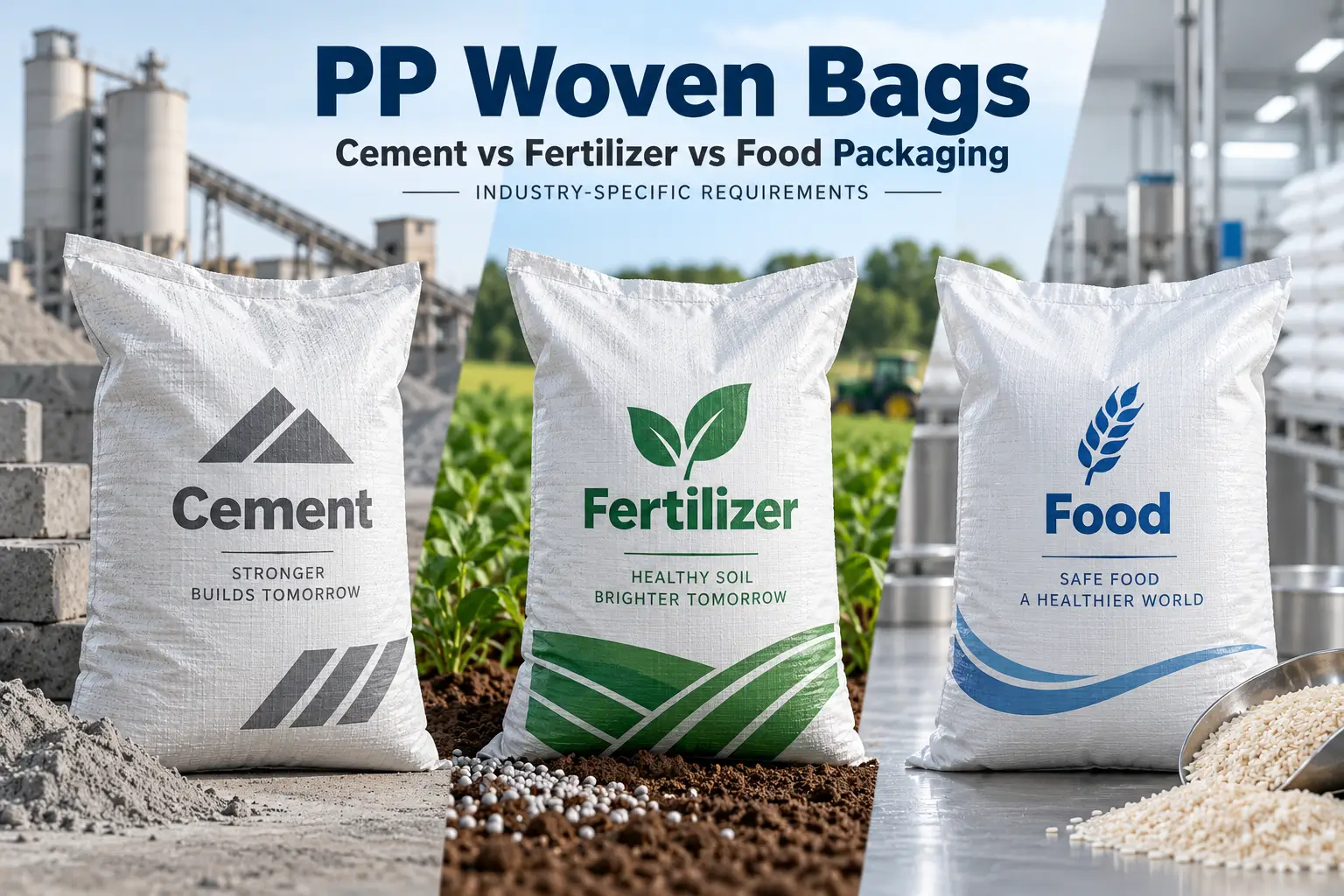
Quick answer: PP woven bags are used across cement, fertilizer, and food packaging, but each industry needs a different specification. Cement bags typically use 90–110 GSM unlaminated or valve-type fabric with a moisture-resistant inner layer. Fertilizer bags use 90–120 GSM fabric, often laminated, with UV stabilization for outdoor storage. Food-grade bags require 70–100 GSM laminated, food-safe (non-toxic, BOPP-laminated) fabric with hygienic handling and, for exports, compliance certifications like FSSAI or FDA-grade material. The right choice depends on the product’s weight, moisture sensitivity, storage conditions, and regulatory requirements.
Even though all three industries use the same base material – polypropylene woven fabric – the finished bag is built very differently depending on what it’s carrying. At Aeroflex Neu, we manufacture PP Woven Bags tailored to each of these industries, and this guide breaks down exactly what changes and why.
Table of Contents
ToggleComparison at a Glance
| Requirement | Cement | Fertilizer | Food Packaging |
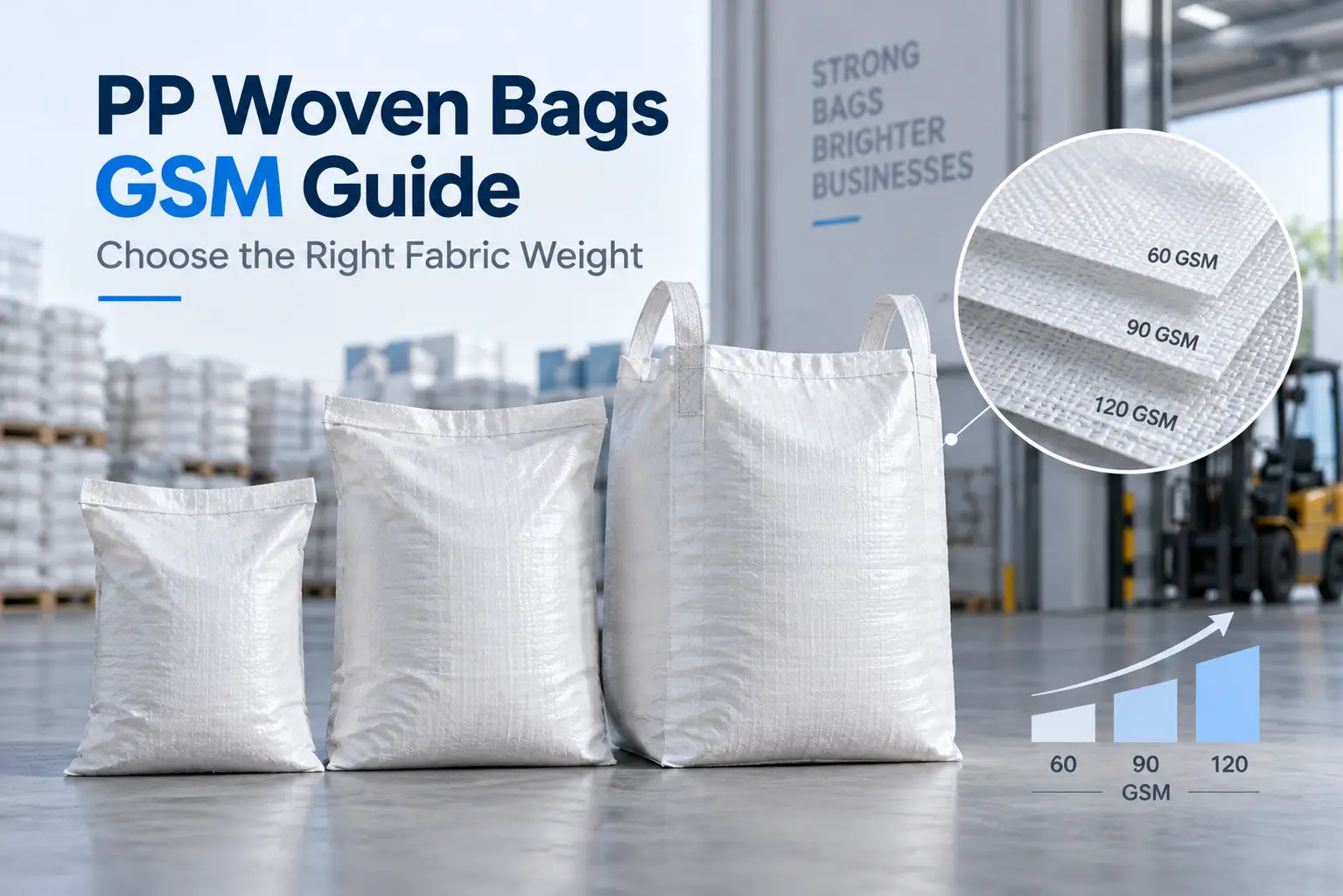
| Typical GSM | 90–110 GSM | 90–120 GSM | 70–100 GSM |
| Lamination | Usually unlaminated or PE-lined | Often laminated (BOPP) | Almost always laminated |
| Moisture Protection | High (valve bags, inner PE liner) | High (UV + moisture resistant) | High (food-safe barrier layer) |
| Bag Type | Valve bags (block-bottom) | Open-mouth or valve bags | Open-mouth, often with liners |
| UV Stabilization | Not usually required | Required (outdoor storage/transport) | Not usually required |
| Regulatory Requirement | General industrial standards | Agri-input packaging norms | FSSAI/FDA-grade food-safe material |
| Typical Fill Weight | 25–50 kg | 25–50 kg | 5–50 kg (varies widely) |
Cement Bag Requirements
Cement is a fine powder that is highly moisture-sensitive and dispatched in high volumes with heavy stacking during storage and transport. This drives a few specific requirements:
- Valve-bag construction – filled through a small valve rather than an open top, minimizing dust loss and contamination
- Moisture barrier – often a PE (polyethylene) inner liner or coating to protect cement from humidity
- Higher GSM for stacking loads – bags at the bottom of tall warehouse stacks bear significant compressive weight
- Minimal printing needs – functional branding rather than retail-style graphics, since these bags aren’t shelf-facing
Fertilizer Bag Requirements
Fertilizer bags share some overlap with cement bags but have additional demands driven by outdoor storage and chemical content:
- UV stabilization – fertilizer bags are frequently stored outdoors or transported in open trucks, so the fabric needs UV-resistant additives to prevent degradation
- Lamination for moisture and chemical resistance – many fertilizers are hygroscopic (absorb moisture) or chemically reactive, requiring a barrier layer
- Larger print area – fertilizer packaging often carries detailed usage instructions, brand information, and regulatory text, requiring good print clarity
- Both open-mouth and valve options – depending on whether the fertilizer is granular or powdered
Food Packaging Requirements
Food-grade PP woven bags have the strictest requirements of the three, since the packaging directly contacts consumable products:
- Food-safe, non-toxic material – granules and additives used must meet food contact safety standards
- BOPP lamination – almost universal in food packaging for both hygiene (moisture/pest barrier) and shelf appeal through high-quality printing
- Lower GSM range – food bags are often lighter (5–50 kg range) and don’t need the heavy-duty fabric that cement or fertilizer bags require
- Certifications – depending on the destination market, compliance with FSSAI (India), FDA (US), or similar food safety standards is required
- Hygienic manufacturing environment – controlled production conditions to avoid contamination during bag manufacturing itself
Why These Differences Matter for Buyers
Ordering the wrong specification for your industry doesn’t just risk product damage – for fertilizer and food, it can create regulatory or compliance issues too. A cement-grade unlaminated bag used for a hygroscopic fertilizer will fail faster than expected, and a non-food-grade bag used for edible products can create a serious compliance risk for exporters. This is why Aeroflex Neu builds bags to industry-specific specifications rather than offering one generic bag across all sectors.
FAQs
Can the same PP woven bag be used for cement and fertilizer?
Not ideally. While the base fabric type is similar, fertilizer bags typically need UV stabilization and stronger moisture/chemical resistance that standard cement bags don’t have.
Do food-grade PP woven bags need special certification?
Yes, food-grade bags need to be manufactured from food-safe material and, depending on the export destination, may require certification such as FSSAI or FDA compliance.
Why are fertilizer bags UV stabilized but cement bags usually aren’t?
Fertilizer is more commonly stored and transported outdoors in open conditions, so the fabric needs UV additives to prevent it from becoming brittle. Cement bags are typically stored in covered warehouses, reducing UV exposure.
What GSM is best for food packaging bags?
Food packaging bags typically use 70–100 GSM laminated fabric, lighter than cement or fertilizer bags since fill weights are often lower and moisture/hygiene protection matters more than raw strength.
Is lamination compulsory for fertilizer bags?
Not always, but it’s common because it improves moisture resistance and allows for clearer printing of usage instructions and compliance information.
Get the Right Bag Specification for Your Industry
Whether you need cement-grade valve bags, UV-stabilized fertilizer packaging, or food-safe laminated bags, Aeroflex Neu manufactures to your industry’s exact requirements. Explore our PP Woven Bags range or contact us to discuss the right specification for your product.