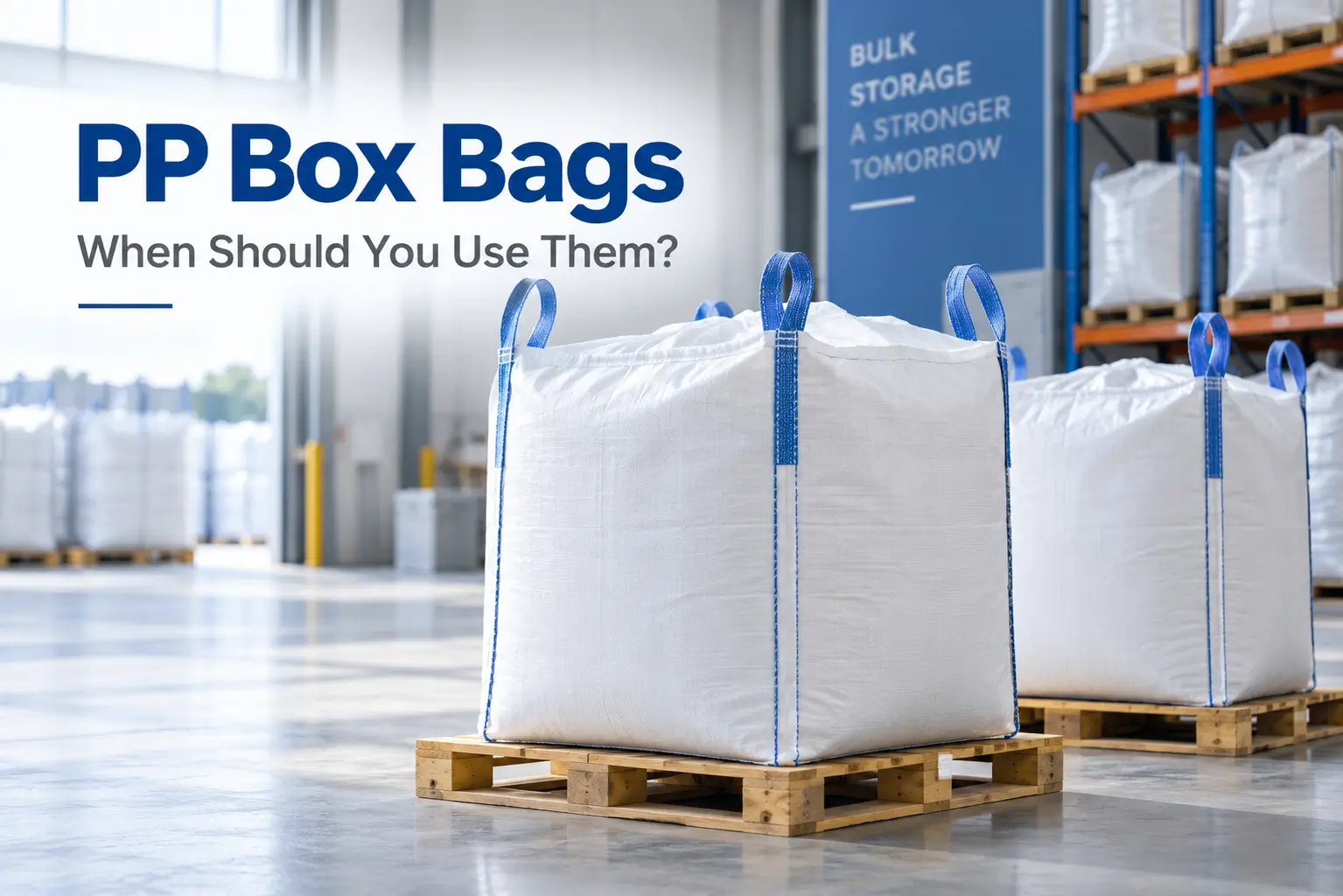
Quick answer: PP Box Bags (also called HDPE Box Bags) are heavy-duty woven sacks built with a flat, reinforced base that lets them stand upright on their own during filling, storage, and transit – unlike standard woven sacks, which collapse or slump when not fully packed. This box-like structure gives better pallet stacking stability, reduces product shifting in transit, and improves shelf presentation for retail-facing goods. They’re commonly used for agriculture, food processing, fertilizer, construction materials, and retail/FMCG products where a self-standing, structurally stable bag matters.
At Aeroflex Neu, our PP Box Bags are engineered for exactly these applications, combining the strength of woven polypropylene or HDPE fabric with a construction that holds its shape under real-world handling conditions. Here’s what sets box bags apart and how to know if they’re the right fit for your product.
Table of Contents
ToggleWhat Makes a Box Bag Different from a Standard Woven Sack?
A standard PP woven sack is essentially a flexible tube – strong, but shapeless once it’s not completely full, which means it can lean, slump, or shift during stacking and transport. A box bag is built with a reinforced, flat-bottom construction that creates a stable rectangular or square base, similar in principle to a cardboard box. This means:
- It stands upright unsupported – easier and faster to fill on automated or semi-automated lines
- It stacks more predictably on pallets – flat sides and a flat base reduce shifting and toppling risk
- It uses container and warehouse space more efficiently – square-ish stacking wastes less space than rounded, slumping sacks
Key Benefits of PP Box Bags
- Structural stability – holds its shape whether it’s being filled, stored, or shipped, reducing damage from tipping or crushing
- Better pallet utilization – flat-sided bags stack tighter than traditional sacks, which can meaningfully reduce per-unit freight cost on large shipments
- Moisture protection – can be manufactured with lamination or liners for products sensitive to humidity
- Strength for heavier fills – the reinforced base construction is built to handle repeated stacking loads without seam failure
- Retail-ready presentation – for FMCG and consumer-facing products, a bag that stands upright on a shelf or pallet display looks more professional than a slumping sack
Common Industries Using PP Box Bags
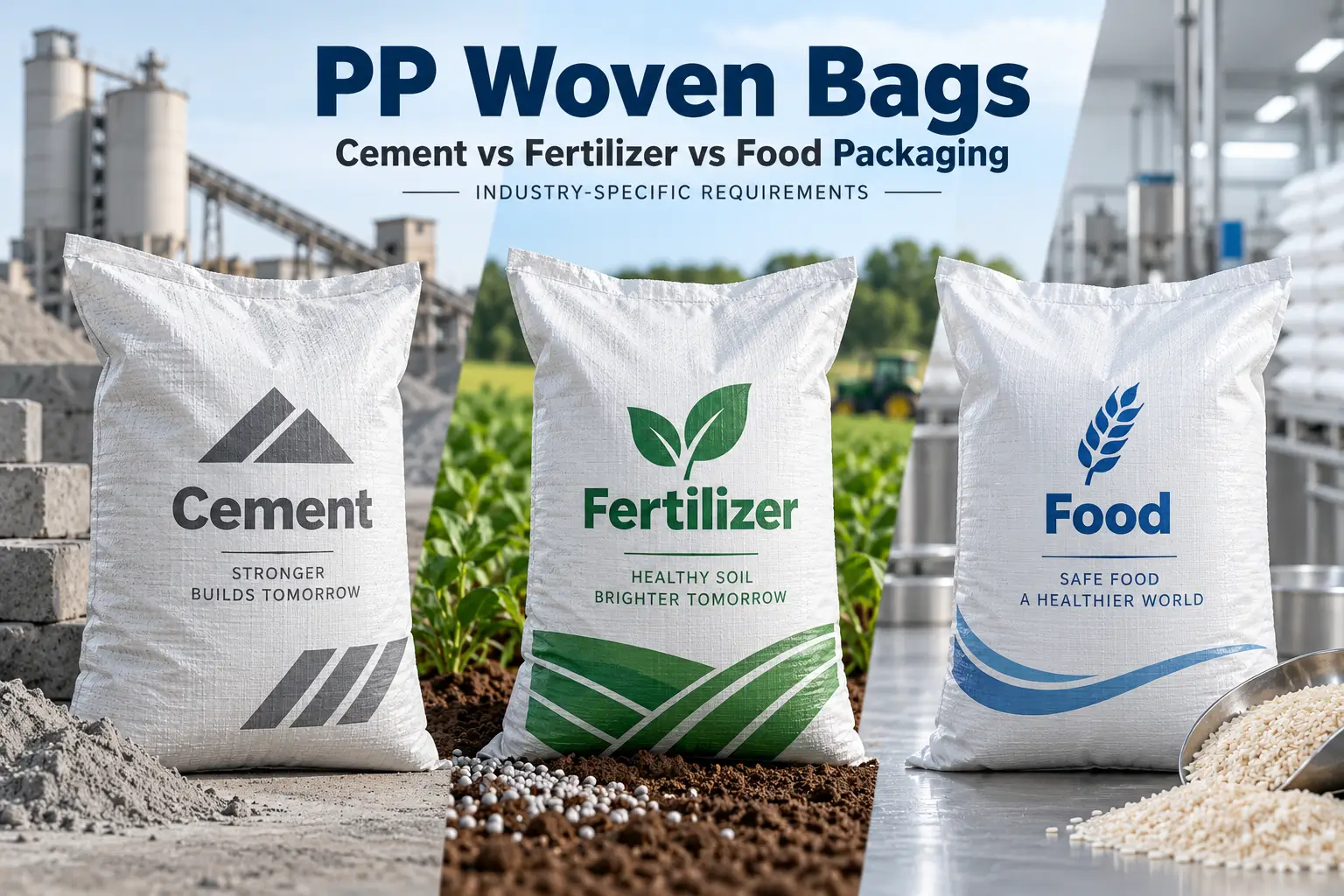
- Agriculture – grains, seeds, and animal feed that need stable stacking in warehouses and during transport
- Food processing – rice, flour, sugar, and similar bulk food products, especially where retail or export presentation matters
- Fertilizer – products that are stored outdoors or stacked high in distribution yards
- Construction materials – sand, aggregates, and similar heavy, dense-fill products
- Retail and FMCG – branded bulk packaging where shelf appearance and stacking stability both matter
When Should You Choose a Box Bag Over a Standard Woven Sack?
Box bags make the most sense when:
- You’re palletizing or containerizing large volumes and want predictable, space-efficient stacking
- Your filling line benefits from a bag that stands upright without manual support
- Your product is being displayed or handled at retail, where presentation affects perceived quality
- You’ve experienced stacking instability, toppling, or damage with standard woven sacks in your current supply chain
If your bags are filled manually in small batches, stored briefly, and not stacked high, a standard woven sack may be more cost-effective – box bags earn their value at scale and in structured logistics environments.
FAQs
What is the difference between a PP box bag and a regular woven sack?
A PP box bag has a reinforced flat-bottom construction that lets it stand upright and hold a box-like shape, while a standard woven sack is a flexible tube that slumps or collapses when not completely full.
Are PP box bags the same as HDPE box bags?
They’re closely related – both refer to heavy-duty, flat-bottomed woven bags. The difference is the base material (polypropylene vs. high-density polyethylene), which affects fabric feel and stiffness slightly, though both offer strong structural stability.
What industries benefit most from PP box bags?
Agriculture, food processing, fertilizer, construction materials, and retail/FMCG businesses benefit most, particularly where pallet stacking efficiency and product presentation both matter.
Can PP box bags be laminated or printed?
Yes, box bags can be BOPP laminated or printed with branding and product information, similar to standard PP woven bags, making them suitable for retail-facing packaging.
Do box bags cost more than standard woven sacks?
Typically yes, due to the reinforced construction, but the cost difference is often offset by reduced freight costs (better stacking density) and lower product damage rates during transit.
Explore PP Box Bags for Your Application
Aeroflex Neu manufactures PP and HDPE Box Bags engineered for stable stacking, efficient logistics, and retail-ready presentation. Explore our PP Box Bags range or contact us to discuss the right specification for your product.