Choosing the wrong FIBC (Flexible Intermediate Bulk Container) isn’t just a packaging inconvenience – it can mean product spillage, unstable pallet loads, static discharge risk with combustible powders, or a shipment that fails a buyer’s specification altogether. And with FIBC bags used across petrochemicals, chemicals, pharma, food, construction, fertilizer, mining, and wood industries, “one bag fits all” simply doesn’t work.
The problem is that FIBC terminology – Panel, Tubular, Baffle, Conductive, and more – gets used loosely, and buyers sourcing in bulk often aren’t sure which construction actually suits their material, their filling equipment, or their transport conditions.
At Aeroflex Neu, we manufacture and export the full range of FIBC jumbo bags – U Panel, 4 Panel, Circular/Tubular, Baffle, Conductive, Coated, Dust Proof, and more – to industries around the world. This guide breaks down what each type actually is, how they differ structurally, and how to match the right FIBC to your product.
What Is an FIBC Bag?
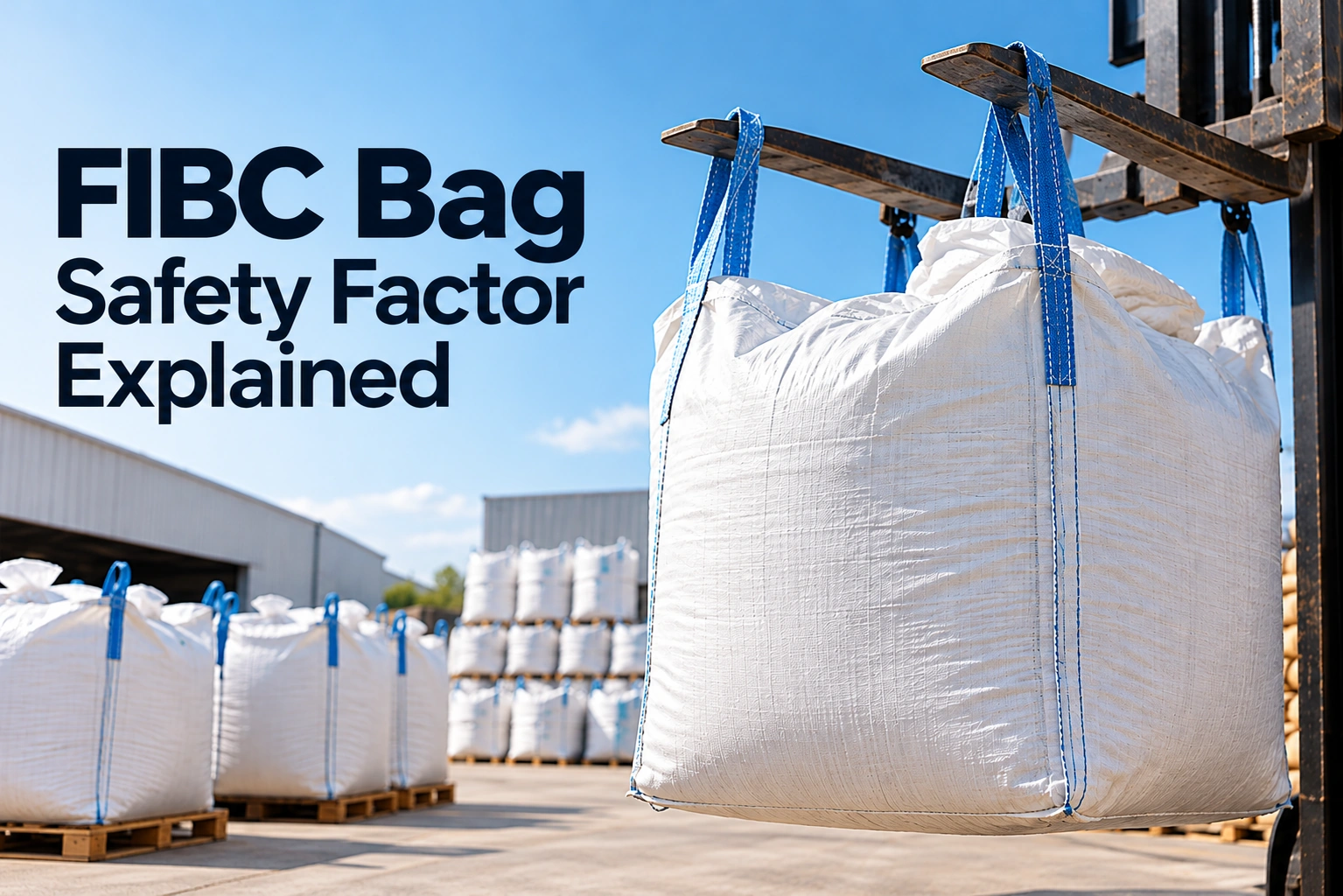
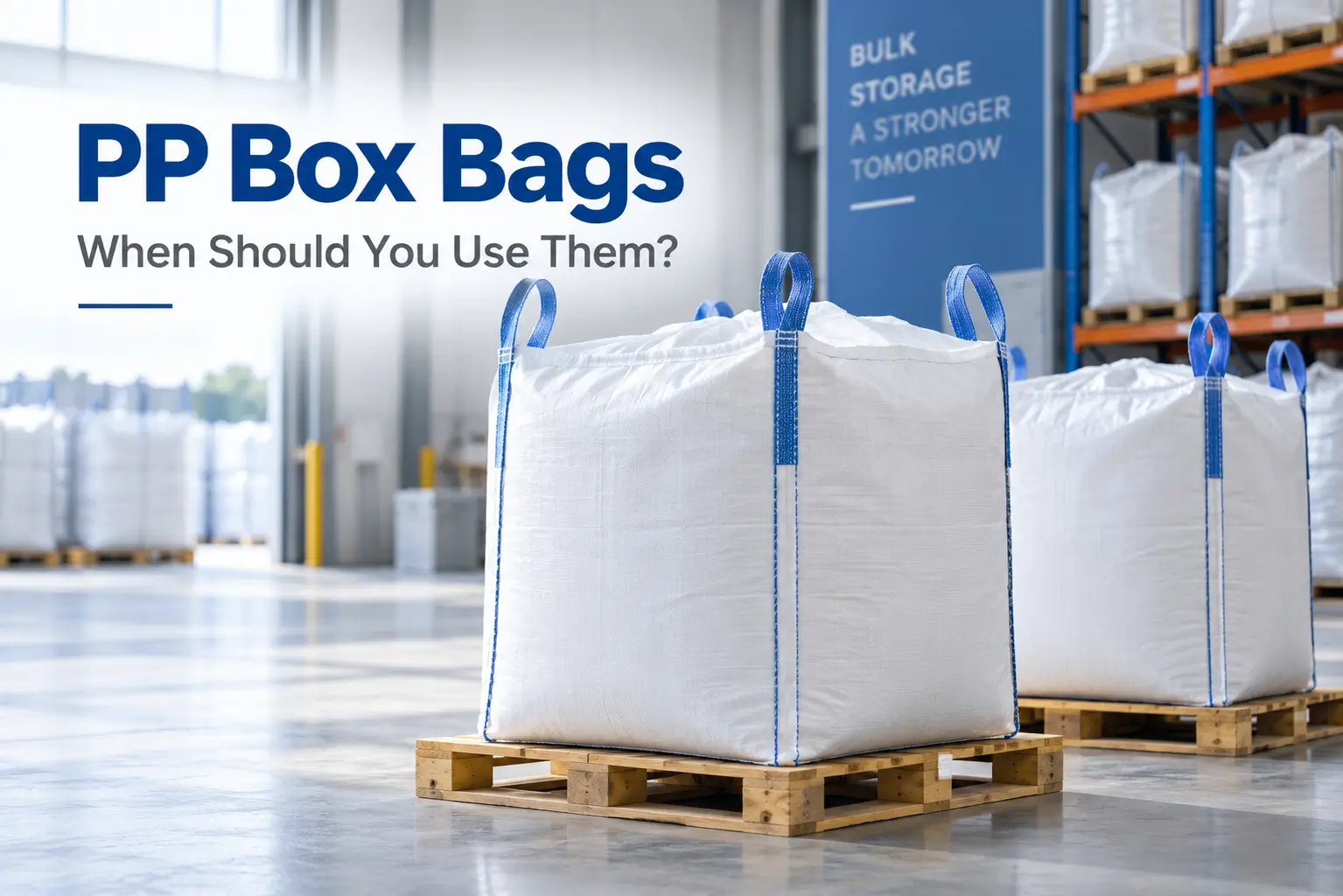
An FIBC (also called a jumbo bag, bulk bag, or big bag) is a large, flexible woven polypropylene container designed to store and transport bulk materials – typically ranging from 500 kg to 2,000 kg – in a single unit. FIBCs sit between small retail bags and rigid bulk containers, offering a space-efficient, cost-effective way to move powders, granules, and bulk solids across the supply chain.
The “type” of FIBC bag refers to how the fabric panels are constructed and stitched together, which directly affects the bag’s shape, load stability, strength distribution, and suitability for automated or manual filling.
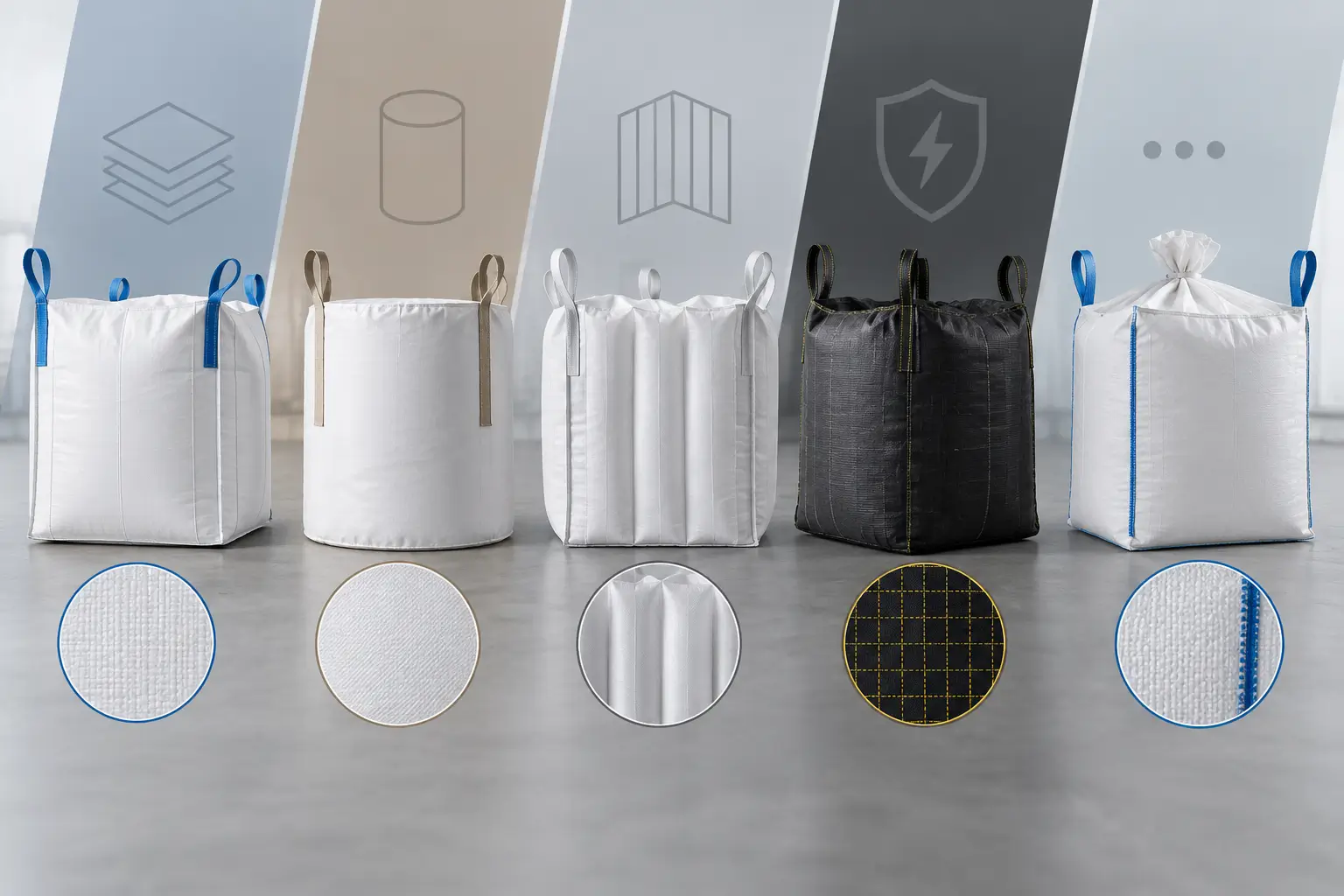
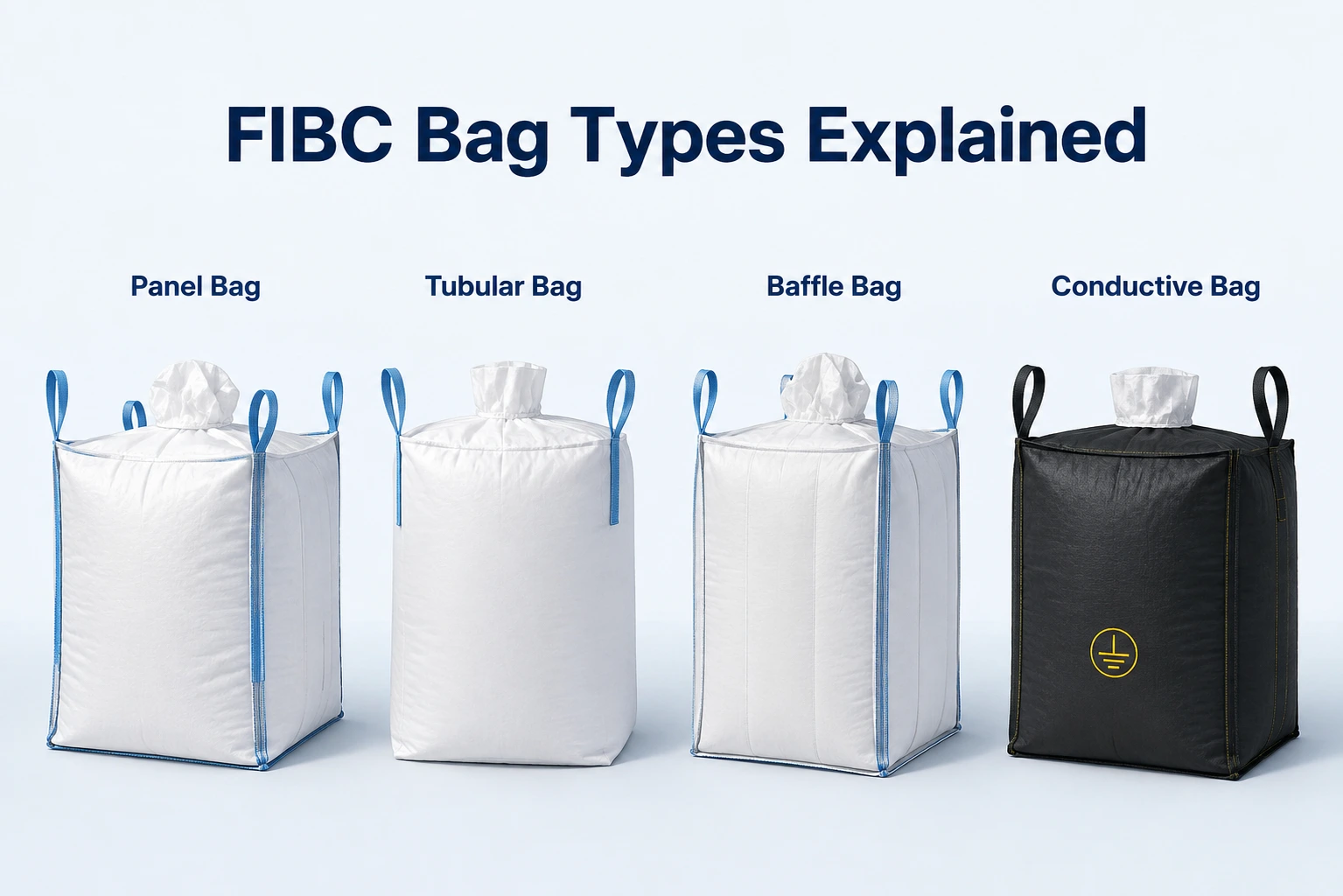
1. Panel Bags (U-Panel & 4-Panel)
Construction: Panel bags are built from individual fabric panels – either a “U” shaped panel wrapped around with two side panels stitched on, or four separate panels stitched at the corners to form a cube.
Why buyers choose them:
- Excellent shape retention – panel bags hold a defined, box-like form when filled, which makes palletizing and stacking more stable and space-efficient.
- Strong corner seams distribute load stress evenly, reducing the risk of seam failure under heavy fills.
- Print surface is flatter and more uniform, which matters if you need clear branding or hazard labelling.
Best suited for: Chemicals, minerals, construction materials, and any product where stacking stability during warehousing or container loading is a priority.
2. Tubular / Circular Cross Bags
Construction: Tubular bags are woven as a single continuous circular tube on a circular loom, with a base and top stitched on separately. There are no vertical corner seams.
Why buyers choose them:
- Fewer seams mean fewer potential failure points, which can translate to marginally higher tensile reliability for certain fill weights.
- Faster and more economical to manufacture at scale, since the body is woven in one continuous piece.
- A good fit for buyers prioritizing cost-efficiency on high-volume, repeat orders where shape retention is less critical than unit cost.
Best suited for: Agricultural commodities, minerals, and bulk materials where cost-per-unit and manufacturing speed matter more than precise stacking geometry.
3. Baffle Bags (Baffle Q-Bags)
Construction: Baffle bags are essentially panel or tubular bags with internal fabric baffles (partitions) stitched into the corners, which pull the bag into a squarer, more cube-like shape when filled.
Why buyers choose them:
- Baffles counteract the natural tendency of a filled bulk bag to “bulge” outward, giving a much more stable, block-like shape.
- Maximizes usable space on pallets and inside shipping containers – more bags fit per container load compared to bulging round bags.
- Reduces the risk of load shifting during transport, which matters for long-haul export shipments.
Best suited for: Export shipments where container space optimization directly affects freight cost, and for products (like granules or powders) prone to bulging in standard bags.
4. Conductive Bags (Type C FIBCs)
Construction: Conductive FIBCs are woven with interconnected conductive threads throughout the fabric, and require proper electrical grounding during filling and discharge.
Why buyers choose them:
- Static electricity is a genuine ignition risk when handling fine powders, especially in combustible-dust environments like certain chemical, pharma, or petrochemical operations.
- Conductive bags safely dissipate static charge to a grounded point, rather than letting it discharge as a spark near flammable material.
- Compliance requirement: many petrochemical and chemical buyers specify Type C (or Type D anti-static) FIBCs as a non-negotiable safety standard, not an optional upgrade.
Best suited for: Petrochemical, chemical, and pharma industries handling fine, flammable, or combustible powders – this is a safety-critical choice, not a cosmetic one.
Other FIBC Variants Worth Knowing
- Tunnel Bags – have loops formed by sewn-in fabric sleeves through the base of the bag, allowing forklift forks to pass directly underneath for easy lifting without exposed corner loops.
- Ventilated Bags – woven with a mesh-like or perforated fabric to allow airflow, used for products that need to breathe, such as certain agricultural produce.
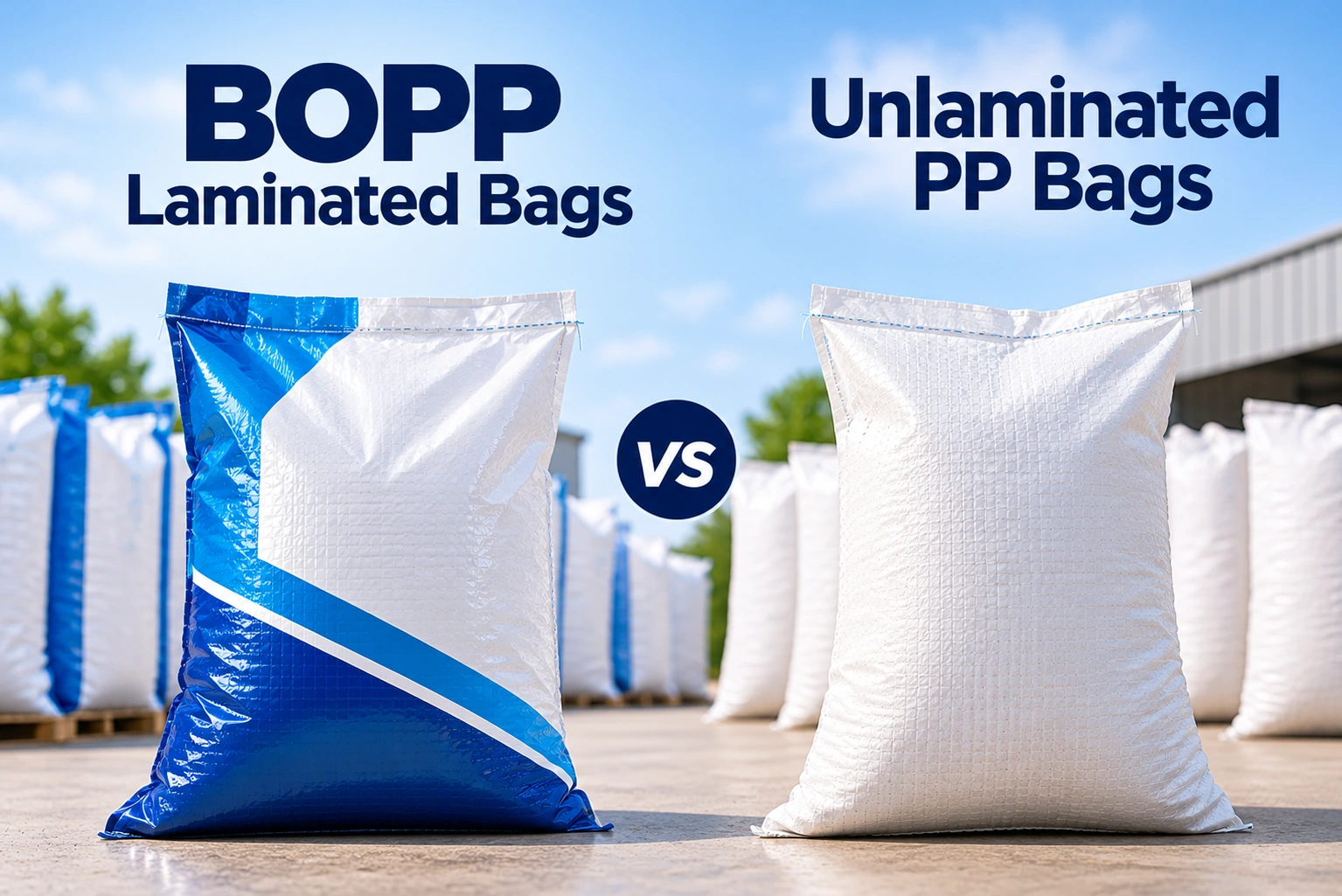
- Coated Bags – laminated or coated on the inside to add moisture resistance and reduce sifting of fine powders through the weave.
- Dust Proof Bags – constructed with sift-proof seams and sometimes an inner liner to fully contain very fine powders.
- Single Loop, Double Loop & Full Loop Bags – differ in lifting-loop configuration, which affects handling with cranes, forklifts, or hoists depending on your facility’s equipment.
Filling and Discharge Systems: The Other Half of the Decision
Choosing the right panel construction is only half the specification. FIBCs also need to match your filling and discharge equipment:
Filling systems: Open Top with Hem, Duffel Top Skirt, Filling Spout with Flap, Tie-Down Flap, Open Top with Drawn Cord, and Filling Spout.
Discharge systems: Discharge Spout, Discharge Spout with Iris Protection, Discharge Spout with Protection Flap, Discharge Spout with Petal Closure, and Full Drop Bottom.
Getting the filling/discharge configuration wrong – for example, specifying a spout discharge when your facility uses a full drop-bottom unloading system – can slow down operations significantly, even if the panel type itself is correct.
How to Choose the Right FIBC Type: A Quick Framework
| Priority | Recommended FIBC Type |
| Maximum stacking stability & branding | Panel Bags (U-Panel or 4-Panel) |
| Lowest cost per unit at high volume | Tubular / Circular Cross Bags |
| Container space optimization for export | Baffle Bags |
| Handling flammable/combustible powders | Conductive (Type C/D) Bags |
| Forklift-friendly lifting | Tunnel Bags |
| Fine powder containment | Dust Proof / Coated Bags |
| Produce needing airflow | Ventilated Bags |
Talk to Aeroflex Neu About Your FIBC Specification
Getting the FIBC type, filling system, and discharge system right – together – is what actually determines whether your bulk packaging performs the way you need it to, from the factory floor to the final delivery point.
At Aeroflex Neu, we manufacture the full range of FIBC jumbo bags – U Panel, 4 Panel, Circular Cross, Baffle, Conductive, Coated, Dust Proof, Tunnel, and Single/Double/Full Loop bags – customized to your material, industry, and export destination. We supply to the petrochemical, chemical, pharma, food, construction, fertilizer, mining, and wood industries, from our 80,000 sq. ft. manufacturing facility in Udaipur, Rajasthan.
Get in touch with our team to discuss the right FIBC specification for your product, or explore our full FIBC Jumbo Bags range to see all available types, filling systems, and discharge options.
Frequently Asked Questions
What does FIBC stand for?
FIBC stands for Flexible Intermediate Bulk Container – also commonly called a jumbo bag or bulk bag – used to store and transport bulk materials, typically between 500 kg and 2,000 kg per bag.
Which FIBC bag type is strongest?
Panel bags generally offer the most even load distribution across seams due to their structured corner construction, making them a strong choice for heavier or irregular loads, though actual strength also depends on fabric weight (GSM) and stitching quality.
Do I need a conductive FIBC bag for my product?
If you’re handling fine powders in a flammable or combustible-dust environment – common in chemical, petrochemical, or pharma applications – a conductive (Type C) or anti-static (Type D) FIBC is typically a safety requirement, not optional. Check with your safety/compliance team and confirm the correct type with your manufacturer.
What’s the difference between a Panel bag and a Baffle bag?
A Panel bag is built from stitched fabric panels forming a box shape, while a Baffle bag adds internal fabric partitions to a panel or tubular construction to reduce bulging and create a squarer, more stackable form – Baffle bags typically optimize container space better for export shipments.
Can FIBC bags be reused?
Many FIBC bags are designed for single trip use, but certain heavy-duty constructions are rated for multiple trips or reconditioning – this should be confirmed with your manufacturer based on the specific bag’s design load and safety factor.
How do I know which filling and discharge system I need?
This depends on your existing filling and unloading equipment at both the loading and receiving end. Common combinations include spout filling with spout discharge for automated lines, or open-top filling with full drop-bottom discharge for high-speed bulk unloading – Aeroflex Neu’s team can help match this to your facility’s setup.
What industries use FIBC jumbo bags most?
FIBC bags are widely used across petrochemical, chemical, pharma, food, construction, fertilizer, mining, and wood industries for bulk storage and transport of powders, granules, and bulk solids.
Can Aeroflex Neu customize FIBC bags for export orders?
Yes. Aeroflex Neu manufactures and exports FIBC bags customized by panel type, filling/discharge system, loop configuration, coating, and printing to meet destination-market and industry-specific requirements. Contact us for a custom specification and quote.