If you manage or supply materials for construction, road building, or land development projects, silt fencing is probably a line item you order without thinking too hard about – until it fails. A silt fence that tears in heavy rain, sags after a few weeks in the sun, or lets sediment straight through isn’t just an inconvenience. It’s a compliance risk, a potential fine, and a source of avoidable rework on-site.
Most silt fence underperformance comes down to two things: buying the wrong fabric for the job, or installing it incorrectly. This guide covers both – what PP woven silt fence actually is, the specifications that matter, how to install it correctly, and what to check before you place a bulk order.
What Is PP Woven Silt Fence?
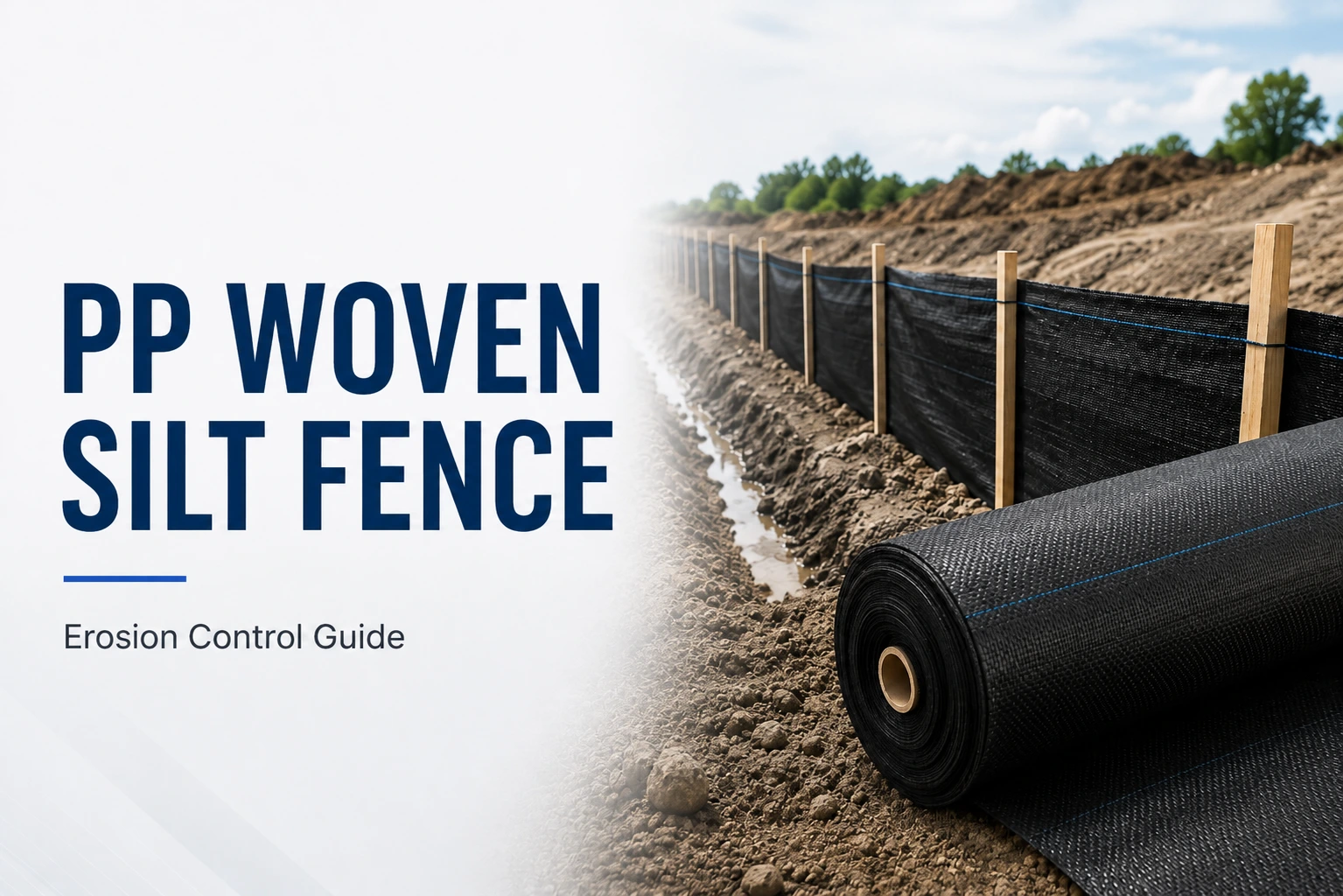
PP woven silt fence is a geotextile fabric made from woven polypropylene tape, used as a temporary perimeter control to manage sediment runoff on construction and land development sites. The fabric is stretched between wooden or metal stakes along the downhill contour of a disturbed site, with the base trenched or backfilled into the soil.
Silt fence works by slowing and pooling stormwater runoff long enough for suspended sediment to settle out, while allowing filtered water to pass through the fabric weave. It’s important to note this distinction: silt fence is a sediment control measure, not an erosion control measure – it manages sediment after soil has already been disturbed, rather than preventing the disturbance itself. Getting this terminology right also matters for compliance documentation on regulated sites.
Compared to non-woven geotextile alternatives, woven polypropylene silt fence typically offers higher tensile strength and better resistance to tearing under wind load, water pressure, and the weight of accumulated sediment – which is why it’s become the standard choice for most construction and road projects.
Key Specifications to Check Before You Buy
Not all silt fence fabric is built the same, and the wrong specification is the single most common reason a fence underperforms on-site. Here’s what actually matters:
1. Fabric Weight (GSM) Heavier fabric generally holds up better under sustained water pressure and sediment load, but adds cost. Lighter-weight fabric is more economical for shorter-duration or lower-risk projects but is more prone to tearing on longer installations or in high-rainfall regions.
2. Tensile Strength This determines how much stress the fabric can withstand before tearing – critical for sites in high-wind areas, steep slopes, or locations with heavy stormwater flow. Ask your supplier for tensile strength ratings specific to their fabric grade.
3. Filtration / Permittivity Rate The fabric needs to strike a balance: tight enough to trap sediment particles, but permeable enough to let water pass through without excessive ponding or fabric failure from pressure buildup. Too tight a weave causes water to back up and potentially overtop or blow out the fence; too loose a weave lets sediment pass straight through.
4. UV Stabilization Silt fence is typically left in place for weeks or months during a construction phase, fully exposed to sunlight. Fabric without UV stabilization becomes brittle and degrades well before the project is complete, requiring costly mid-project replacement. Confirm UV stabilization is built into the fabric, not just claimed generically.
5. Fence Height and Roll Length Standard silt fence height is typically around 900mm (36 inches) fabric with roughly 150mm buried below grade, though project-specific requirements vary by jurisdiction. Roll lengths should match your site perimeter to minimize seams, since each seam is a potential weak point.
6. Color While functionally optional, high-visibility colors (orange being the most common) are often specified for safety and site-visibility compliance, particularly on active construction sites with vehicle and pedestrian traffic.
How to Install PP Woven Silt Fence Correctly
Even premium-grade fabric will fail if installed incorrectly. The core steps:
- Position along the contour – Install the fence along a level contour line on the downhill side of the disturbed area, never running straight down a slope, which channels water instead of slowing it.
- Trench the base – Dig a trench roughly 150mm deep along the fence line, run the base of the fabric into the trench, and backfill and compact the soil over it. This prevents water from undercutting the fence.
- Set stakes at correct spacing – Drive stakes (wood or steel) on the downhill side of the fabric, typically no more than 2 metres apart, closer on steeper or higher-flow sections.
- Secure the fabric to stakes – Fasten the fabric tightly to each stake, keeping the fence taut to prevent sagging, ponding, or fabric distortion under sediment load.
- Overlap seams properly – Where fabric rolls join, overlap sections at a stake point rather than mid-span, to keep the joint reinforced rather than being the weakest point in the run.
- Inspect and maintain regularly – Silt fence should be checked after every significant rainfall, with accumulated sediment removed once it reaches roughly a third of the fence height, and any tears or undermined sections repaired promptly.
Skipping any of these steps is a common reason fencing “fails” even when the fabric itself was correctly specified – installation quality matters as much as the material.
Common Mistakes That Lead to Silt Fence Failure
- Installing straight down a slope instead of along the contour, which channels rather than slows water flow
- Skipping the trench-and-backfill step, allowing water to undercut the fence base
- Using standard fabric without UV stabilization on a multi-month project, leading to mid-project brittleness and tearing
- Overstretching roll lengths between stakes, causing sagging and reduced effectiveness
- Neglecting maintenance, letting sediment build up past a third of the fence height, which increases pressure and failure risk
Quick Buyer’s Checklist
| What to Confirm | Why It Matters |
| Fabric GSM matches project duration and rainfall exposure | Prevents mid-project tearing |
| UV stabilization confirmed, not assumed | Fabric must survive full exposure period |
| Tensile strength rating available from supplier | Confirms fence can handle wind/water load |
| Roll length matches your site perimeter | Minimizes weak-point seams |
| Supplier can customize width, GSM, and color | Avoids over- or under-specifying for your project |
| Manufacturer has consistent quality control | Reduces risk of inconsistent fabric across a bulk order |
Sourcing PP Woven Silt Fence for Your Project
At Aeroflex Neu, we manufacture PP woven silt fence from our 80,000+ sq. ft. facility in Udaipur, Rajasthan, using durable, UV-stabilized woven polypropylene fabric engineered for strength and long-term sediment control performance. Whether you need standard specifications or a custom width, GSM, or roll length for a large-scale project, our team can match the fabric to your site’s actual conditions rather than a generic default.
Contact our team with your project specifications for a quote, or explore our PP Woven Silt Fence range to see available options.
Frequently Asked Questions
What’s the difference between silt fence and erosion control fabric?
Silt fence is a sediment control measure – it manages sediment already carried in stormwater runoff after soil has been disturbed. Erosion control fabric or matting is typically used to prevent soil disturbance in the first place, often on slopes. The two are complementary, not interchangeable.
How long does PP woven silt fence typically last on-site?
With proper UV stabilization and correct installation, PP woven silt fence is designed to remain effective for the duration of a typical construction project – often several months – though it’s intended as a temporary measure rather than a permanent installation.
How often should silt fence be inspected and maintained?
Best practice is to inspect silt fence after every significant rainfall event, removing accumulated sediment once it builds up to roughly a third of the fence height, and repairing any tears, sagging, or undermined sections promptly.
What height should PP woven silt fence be?
Fence height requirements vary by project and jurisdiction, but a common standard is roughly 900mm (36 inches) of fabric above ground with an additional buried section – confirm exact requirements with your project’s sediment control plan or local regulations.
Can PP woven silt fence be reused on multiple projects?
Silt fence is generally treated as a single-project, temporary installation given the wear from trenching, staking, and extended UV exposure, though fabric in good condition after removal can sometimes be reused depending on its remaining strength and UV life.
Does Aeroflex Neu supply silt fence in custom widths and roll lengths?
Yes. Aeroflex Neu manufactures PP woven silt fence with customization available on width, fabric GSM, roll length, and color to match specific project requirements. Contact us with your site perimeter and duration for a tailored specification.
Is PP woven silt fence better than non-woven geotextile silt fence?
Woven polypropylene silt fence generally offers higher tensile strength and better tear resistance under wind, water pressure, and sediment load compared to non-woven alternatives, making it a common choice for projects with higher stormwater flow or longer installation durations. The right choice ultimately depends on your specific site conditions and regulatory requirements.
Can PP woven silt fence be supplied for export projects outside India?
Yes. Aeroflex Neu exports woven polypropylene products across Europe, Africa, the Middle East, Australia, Southeast Asia, and the Americas, and can advise on specification requirements for different regional standards. Get in touch with your project location and requirements.