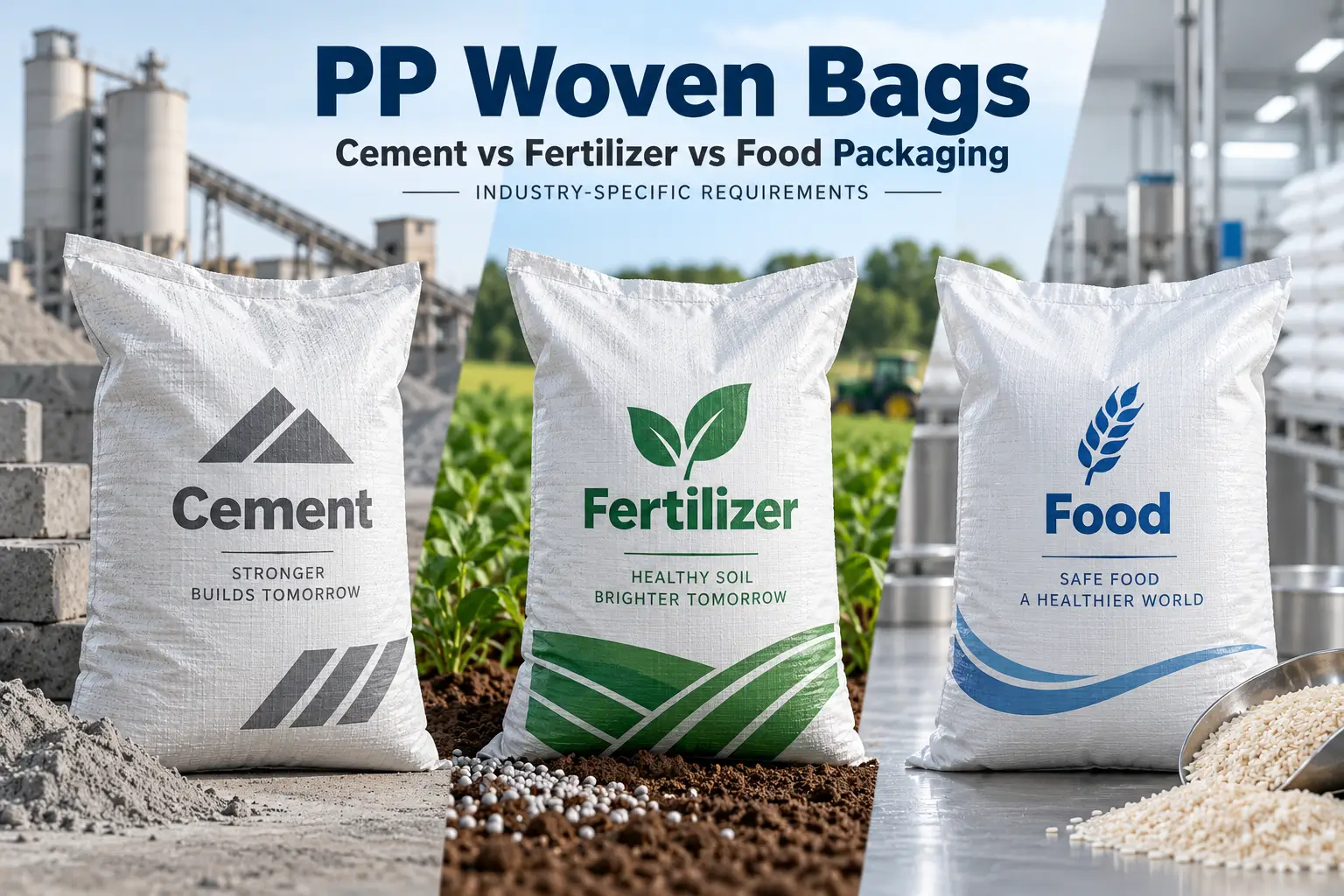
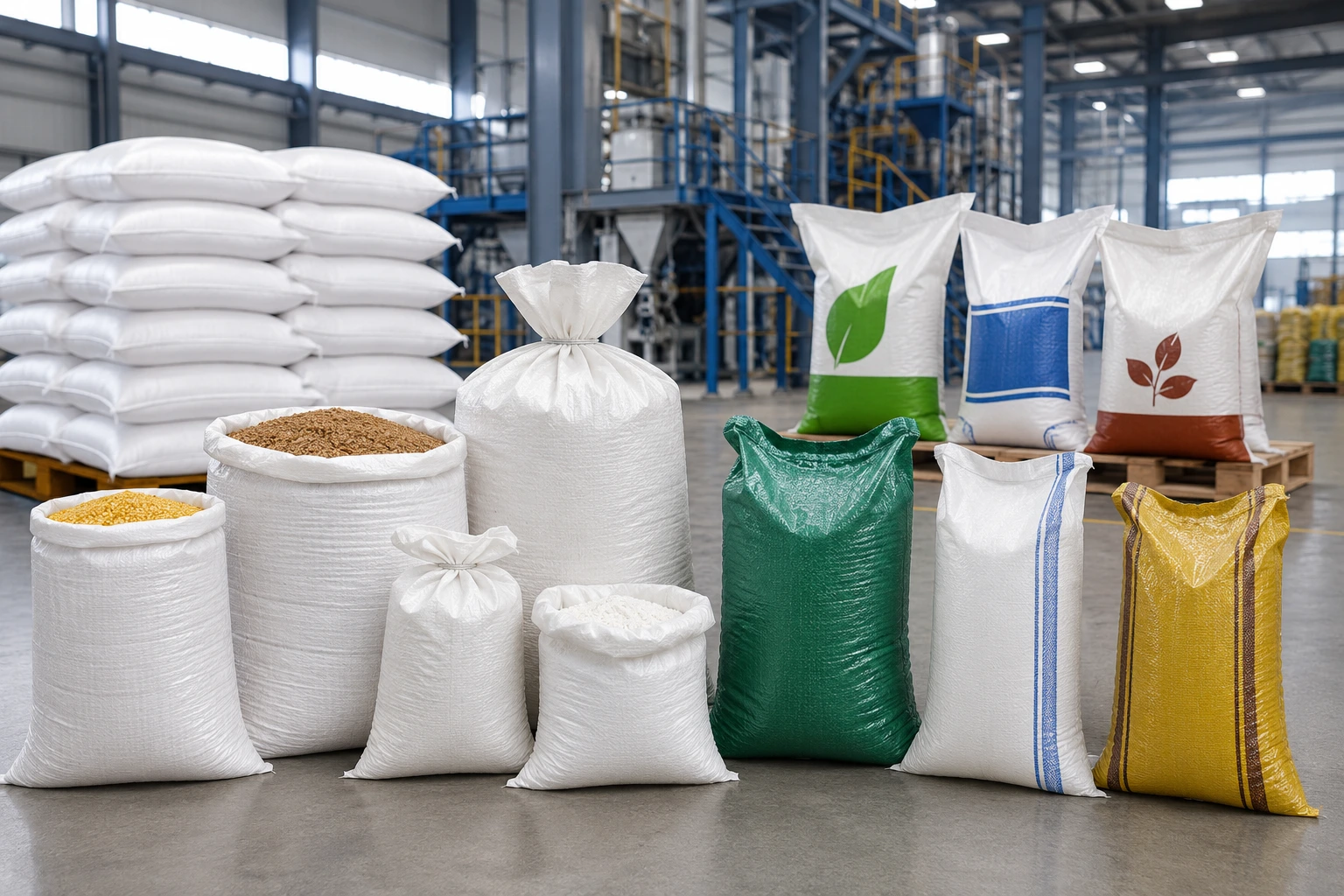
Walk into any rice mill in Punjab, a cement plant in Rajasthan, a chemical processing unit in Gujarat, or a fertilizer warehouse in Uttar Pradesh – and the first thing you will notice is the same product stacked floor to ceiling in every corner: PP woven bags. They are everywhere. And for very good reason.
What are PP woven bags? They are the workhorses of industrial packaging – tough, versatile, lightweight, and cost-effective. They carry everything from rice and wheat to cement, chemicals, fertilizers, salt, animal feed, and minerals. In India’s massive and fast-growing manufacturing and export economy, they have become the default choice for bulk packaging across dozens of industries.
India’s flexible packaging industry was valued at over ₹2.3 lakh crore in 2025 and is projected to grow at a CAGR of approximately 7–8% through 2030, according to industry analysis from the Indian Flexible Packaging and Folding Carton Association (IFPCA). PP woven bags are a cornerstone of that growth – manufactured and exported in billions of units annually from production hubs in Rajasthan, Gujarat, Uttar Pradesh, and Andhra Pradesh.
This article explains everything a buyer, manufacturer, exporter, or business owner needs to know about PP woven bags – what they are, how they are made, which types exist, which industries use them, and why they remain India’s most trusted industrial packaging format in 2026. For a complete view of the PP woven bag range available for bulk supply and export, explore Aeroflex Neu’s full PP woven bag manufacturing range.
Table of Contents
ToggleWhat Are PP Woven Bags Made Of?
What are PP woven bags at their most basic level? They are bags made from polypropylene (PP) – a thermoplastic polymer that is woven into flat tapes, which are then interlocked in a criss-cross pattern to create a strong, breathable fabric. This woven structure gives PP bags their distinctive appearance and their remarkable strength-to-weight ratio.
The manufacturing process starts with polypropylene granules, which are melted and extruded into flat tapes. These tapes are then stretched, oriented for strength, and woven on circular or flat looms. The resulting fabric is cut, stitched, and – depending on the product specification – laminated, printed, lined, or treated for UV resistance or moisture protection.
The finished product is a bag that can hold anywhere from 1 kg to 100 kg of material, withstand rough handling during loading, transport, and storage, and – crucially – be customised with branding, colours, and specifications to meet the exact requirements of any industry or buyer.
What Are the Main Types of PP Woven Bags?
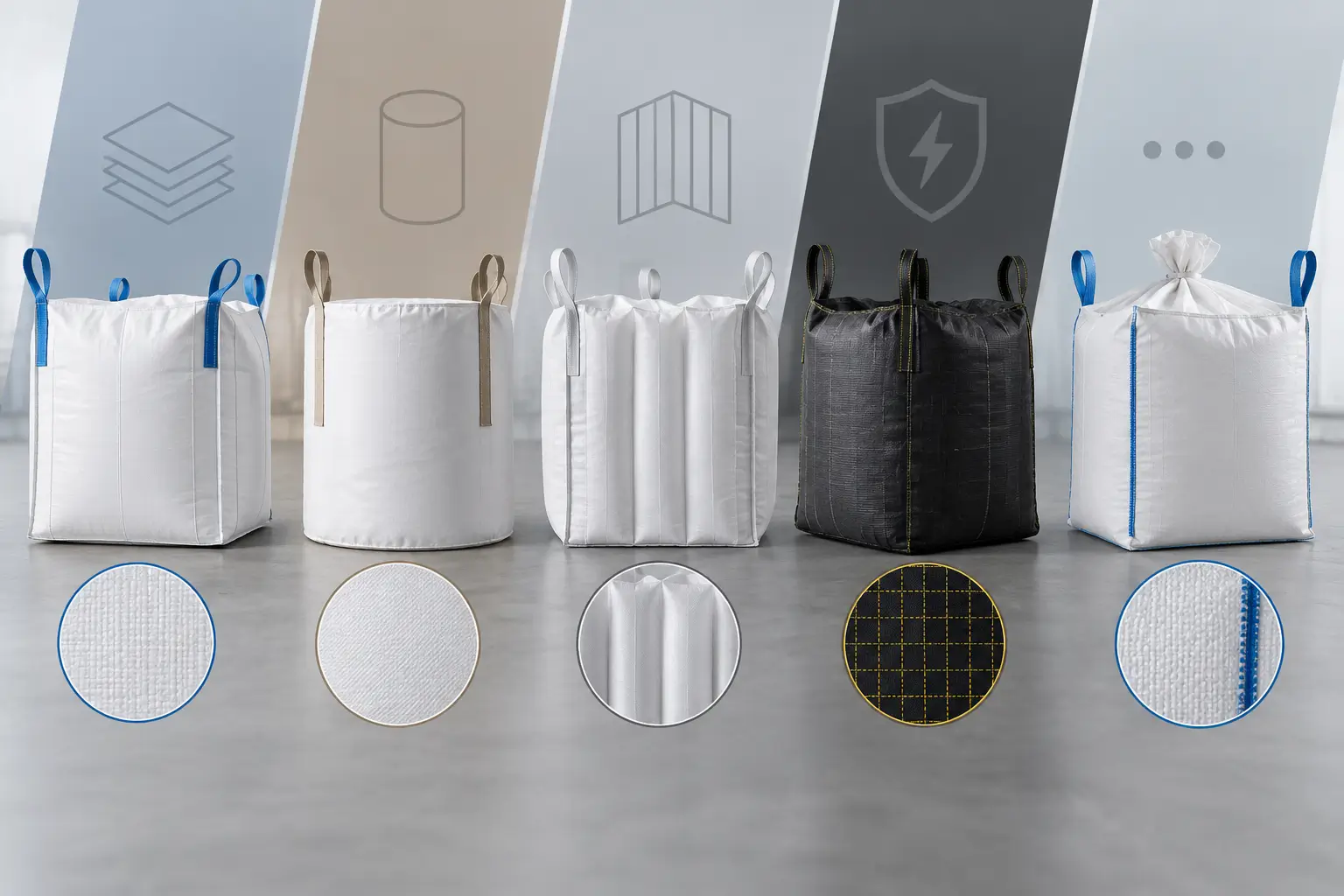
What are PP woven bags in terms of variety? The answer is: far more varied than most buyers initially realise. PP woven bags are not a single product – they are a family of packaging solutions, each designed for specific applications and load requirements.
Unlaminated PP Woven Bags
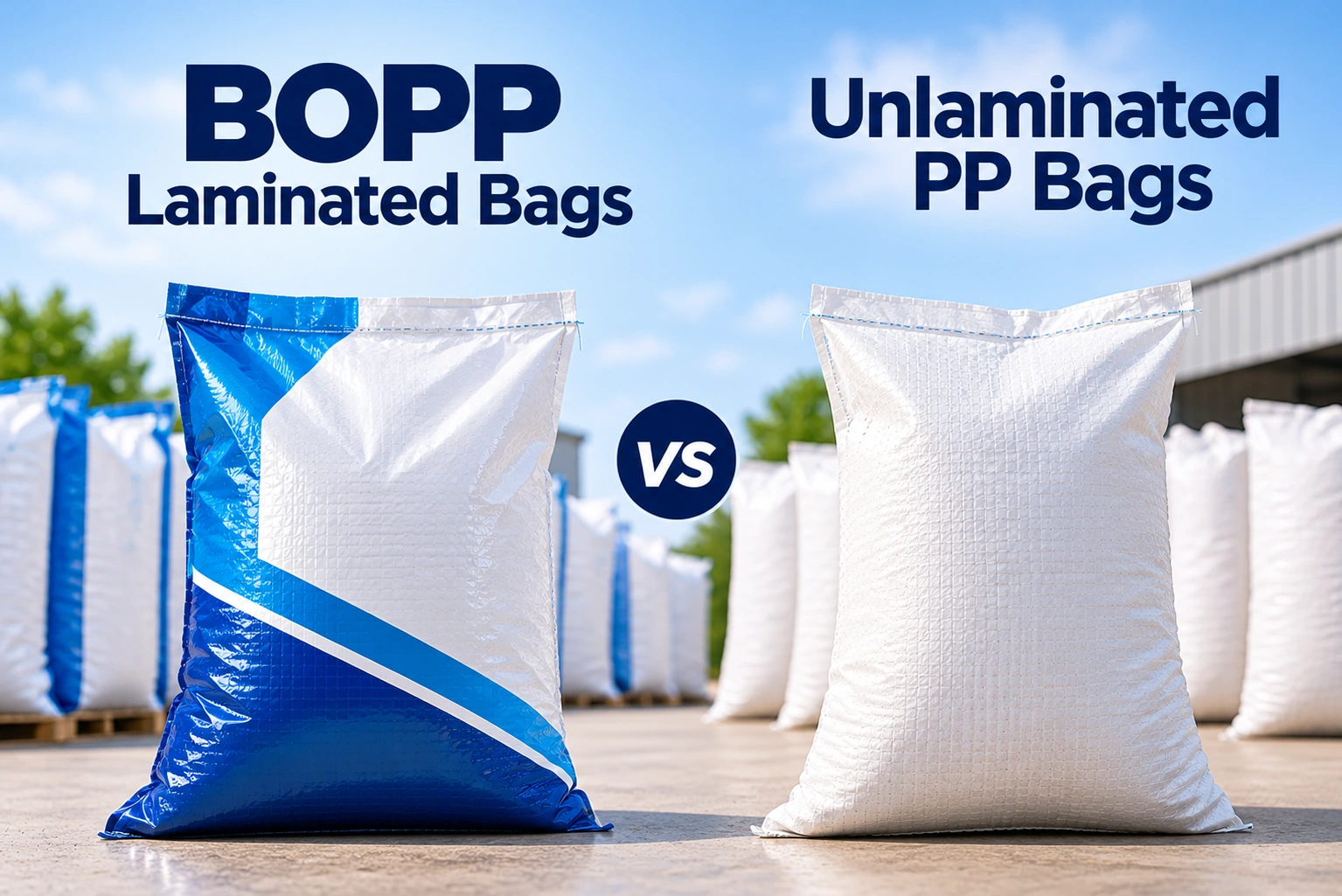
The most basic form – a plain woven polypropylene bag without any surface coating. Unlaminated bags are breathable, which makes them ideal for products that need airflow, such as agricultural produce, grain, pulses, and certain animal feeds. They are the most economical option in the PP woven bag range.
Laminated PP Woven Bags
These bags have a polypropylene film laminated onto the woven fabric surface, creating a moisture-resistant barrier. Laminated PP woven bags are used for products that need protection from humidity and water – such as sugar, salt, flour, cement, and chemical powders. The laminated surface also accepts high-quality printing far better than unlaminated fabric.
BOPP Laminated Woven Bags
BOPP (Biaxially Oriented Polypropylene) laminated bags represent the premium tier of the PP woven bag category. A BOPP film laminated onto the woven fabric enables vivid, photographic-quality multicolour printing directly on the bag surface – making these bags as much a branding tool as a packaging solution. Rice mills, seed companies, flour brands, and consumer-facing packaged goods companies use BOPP bags extensively to stand out on retail shelves and in export markets.
PP Box Bags (Baffle Bags / Block-Bottom Bags)
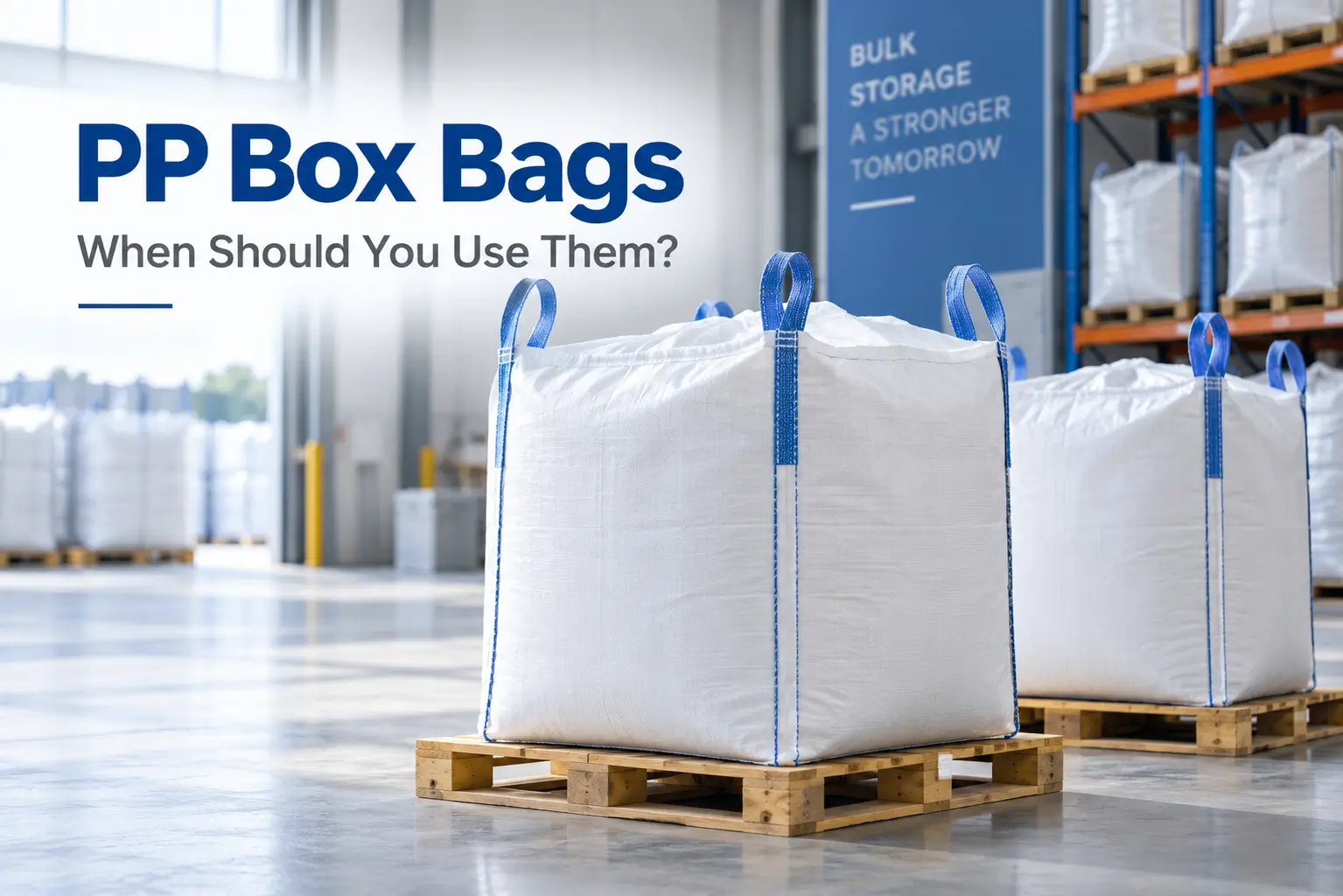
PP box bags have internal baffles or structured panels that give the filled bag a rectangular, box-like shape. This is enormously practical for palletisation and container loading – box-shaped bags stack far more efficiently than round-bottomed bags, reducing wasted space in shipping containers and warehouses. They are widely used for cement, chemicals, minerals, and any bulk product where space efficiency matters in the supply chain.
Valve Bags
Valve bags are sealed on all sides with a small filling valve – typically a sleeve of polypropylene – through which the product is filled under pressure. Once filled and the valve closed, the bag is self-sealing. Valve bags are the preferred choice for powdered products like cement, fly ash, lime, and fine chemicals where open-top filling is impractical or messy.
Liner-Inserted PP Woven Bags
These bags include an inner liner – usually polyethylene (PE) – inside the woven outer shell. The liner adds a second moisture barrier and prevents fine powders from sifting through the woven fabric weave. Liner-inserted bags are commonly used for fine chemicals, food-grade products, and hygroscopic materials that must remain completely dry.
Gusseted and Perforated PP Woven Bags
Gusseted bags have fold-in sides that expand when filled, giving the bag a larger effective volume without increasing the flat dimensions. Perforated bags have small ventilation holes that allow moisture to escape from fresh produce – commonly used for onions, potatoes, and other agricultural products that need airflow to prevent spoilage.
What Are PP Woven Bags Used For in India’s Key Industries?
What are PP woven bags’ most important applications in India’s industrial economy? The answer spans virtually every major manufacturing and processing sector.
Agriculture and Food Processing
PP woven bags are the dominant packaging format for India’s agricultural sector. Rice, wheat, maize, pulses, sugar, salt, flour, spices, and animal feed are all routinely packed in PP woven bags across India’s vast food processing value chain. The bags’ combination of strength, breathability (in unlaminated form), and moisture resistance (in laminated form) makes them suitable for both farm-gate and retail packaging.
India is the world’s second-largest rice exporter, shipping over 20 million metric tonnes annually. A significant proportion of this volume is exported in BOPP laminated PP woven bags – where the high-quality printed surface helps Indian rice brands command premium prices in markets across Africa, the Middle East, and Southeast Asia.
Cement and Construction Materials
What are PP woven bags‘ role in India’s construction boom? Enormous. India’s cement industry – the world’s second-largest – produces over 400 million tones annually. PP woven bags, particularly valve bags and laminated bags, are the standard packaging for cement, fly ash, gypsum, and other construction materials. Their high tensile strength handles the weight of cement without tearing during loading and unloading.
Chemical and Fertilizer Industry
Chemical powders, granules, and fertilizers require robust packaging that prevents contamination, moisture ingress, and spillage. PP woven bags – particularly liner-inserted and laminated varieties – are standard across India’s chemical and fertilizer sectors. The bags’ resistance to chemical interaction makes them safe for a wide range of industrial chemicals and agricultural inputs.
Mineral and Mining Sector
India’s mining sector – covering sand, stone aggregates, talc, barite, silica, and dozens of other minerals – relies heavily on PP woven bags for bulk transport from mine to processor and from processor to exporter. The bags’ abrasion resistance and high load capacity make them specifically suited to the rough handling conditions of mineral supply chains.
Textile and Polymer Industries
What are PP woven bags’ uses in India’s own polymer and textile industries? Polypropylene granules, polyester fibres, and textile raw materials are routinely shipped in PP woven bags between suppliers, processors, and manufacturers throughout India’s integrated textile value chain.
Why Are PP Woven Bags India’s Most Popular Industrial Packaging in 2026?
The dominance of PP woven bags in Indian industrial packaging is not accidental. It reflects a genuinely compelling combination of properties that no other packaging format currently matches for bulk industrial use.
Strength and durability are the most obvious advantages. PP woven bags are engineered to carry heavy loads – 25 kg, 50 kg, even 100 kg bags are standard in cement and chemical applications – without tearing under normal handling conditions. The woven fabric structure distributes stress across the entire bag rather than concentrating it at seams or edges.
Lightweight construction reduces packaging weight, which matters enormously for transport cost and for export shipments priced by gross weight. A PP woven bag weighs a fraction of what comparable jute or paper bags weigh, reducing freight costs on both domestic and international shipments.
Moisture and chemical resistance – particularly in laminated and liner-inserted variants – protects contents from humidity, rain exposure, and condensation throughout India’s humid monsoon season and during long ocean freight journeys to export markets.
Customisation flexibility allows manufacturers and exporters to specify exactly the bag they need: size, weight capacity, lamination type, number of print colours, valve or open-top filling, gusseted or flat, liner or no liner. This flexibility makes PP woven bags suitable for applications ranging from basic farm-gate grain storage to branded export-ready packaging.
Cost efficiency at scale is another major factor. At Aeroflex Neu, we manufacture PP woven bags with the operational efficiency of a 25-year-old dedicated facility – enabling competitive pricing at the bulk volumes that Indian manufacturers and international buyers require. For standard unlaminated bags in bulk orders, pricing typically ranges from ₹8–₹18 per bag depending on size, GSM (grams per square metre), and order volume. BOPP laminated bags with full-colour printing are priced from ₹22–₹55 per bag in bulk.
How Does Aeroflex Neu Ensure Consistent Quality in PP Woven Bag Manufacturing?
Quality in industrial packaging is not a marketing claim – it is a technical and operational discipline that determines whether products arrive at their destination intact and whether buyers keep placing orders.
Aeroflex Neu’s high-strength PP woven bags are manufactured at an 80,000 sq. ft. state-of-the-art facility in Udaipur, Rajasthan, where every production stage – from raw material selection through weaving, lamination, printing, stitching, and final inspection – is subject to in-process quality checks. This systematic quality management is what has built a 25-year track record of supply to demanding buyers across Europe, Africa, the Middle East, the USA, Australia, and Southeast Asia.
Raw material selection is the first quality gate. The polypropylene granules used in manufacturing are sourced from verified, high-grade suppliers, ensuring consistent tape strength and fabric uniformity. Variations in raw material quality are one of the most common sources of bag failure in the industry – and the most common area where lower-cost manufacturers cut corners.
Weave density (measured in tapes per inch) and fabric weight (measured in GSM) are monitored against specification throughout production. Tensile strength and elongation at break are tested on finished fabric before bags are stitched. Printed bags undergo colour registration checks and ink adhesion tests. Final packed bags are inspected for stitch integrity, dimension accuracy, and print quality before dispatch.
According to Aeroflex Neu’s 2026 India market insights, international buyers across export markets increasingly specify detailed technical parameters – GSM range, minimum tensile strength, lamination thickness, and food-contact compliance – reflecting a global trend toward more rigorous packaging standards. Meeting these specifications consistently, batch after batch, is what separates a reliable long-term supplier from a transactional one.
Are PP Woven Bags Recyclable and Environmentally Responsible?
This is a question that comes up increasingly in procurement conversations, particularly from European and North American buyers who face stringent sustainability reporting requirements from their own regulatory environments.
What are PP woven bags’ environmental credentials? Polypropylene is a recyclable thermoplastic. PP woven bags can be recycled into new polypropylene products – including new woven fabric, pipe fittings, garden furniture, and automotive components – through established recycling streams. In India, a significant proportion of used PP woven bags are collected and recycled through the informal waste recovery sector, particularly in agricultural regions where seasonal bulk volumes create concentrated recovery opportunities.
Compared to multi-layer laminate packaging formats that combine incompatible materials and are therefore not recyclable, mono-material PP woven bags offer a cleaner end-of-life profile. BOPP laminated bags are slightly more complex to recycle due to the lamination layer, but still represent a substantially more recyclable option than many alternative flexible packaging formats.
The industry is also moving toward UV-stabilised PP bags that extend service life, reducing the frequency of replacement and therefore the total material consumed per unit of product packaged.
People Also Ask
Q: What are PP woven bags made of?
A: PP woven bags are made from polypropylene (PP), a thermoplastic polymer. The polymer is extruded into flat tapes, which are woven into fabric on industrial looms. The fabric is then cut, stitched, and finished – with or without lamination, printing, or liners – into bags for industrial use.
Q: What is the load capacity of a PP woven bag?
A: PP woven bags are manufactured in a range of load capacities from 1 kg to 100 kg depending on the fabric GSM (grams per square meter), weave density, and stitching specification. Standard industrial bags for cement, grain, and chemicals typically carry 25 kg, 50 kg, or 100 kg loads.
Q: Are PP woven bags food grade?
A: Yes, PP woven bags can be manufactured to food-grade specifications. Food-grade PP bags use virgin polypropylene (not recycled material), food-safe inks for printing, and – where required – food-grade polyethylene inner liners. They are widely used for rice, flour, sugar, salt, spices, and animal feed in India and export markets.
Q: How much do PP woven bags cost in India in bulk?
A: In bulk orders, standard unlaminated PP woven bags are priced at approximately ₹8–₹18 per bag depending on size and GSM. BOPP laminated bags with multicolour printing range from ₹22–₹55 per bag in bulk. Exact pricing depends on order volume, specification, and customisation requirements.
Q: Can PP woven bags be custom printed?
A: Yes. PP woven bags can be printed with up to 6 colours using flexographic or BOPP lamination printing processes. Custom printing includes brand logos, product information, weight, handling instructions, and barcode or QR code elements. BOPP laminated bags support photographic-quality full-colour printing.
Q: What is the difference between laminated and unlaminated PP woven bags?
A: Unlaminated PP woven bags are breathable and best suited for agricultural products like grain, pulses, and fresh produce. Laminated PP woven bags have a polypropylene film coating that provides moisture resistance, making them suitable for cement, salt, sugar, chemicals, and any product that must be protected from humidity. Laminated bags also accept higher-quality printing.
Why PP Woven Bags Will Continue to Dominate Indian Industrial Packaging
India’s manufacturing output is growing, its export ambitions are expanding, and its agricultural processing sector is modernising rapidly. All three of these trends drive demand for reliable, cost-effective, high-volume industrial packaging – and PP woven bags sit at the centre of all three.
The bags have earned their dominant position in Indian packaging over decades of proven performance. They are not the cheapest option at any given moment, but they deliver the most consistent value across the full lifecycle of procurement, filling, handling, transport, storage, and end-of-life recovery.
At Aeroflex Neu, we have spent 25 years refining every aspect of PP woven bag manufacturing – from raw material sourcing through production, quality control, and export logistics – to serve the full range of Indian manufacturers and international buyers who depend on packaging that performs every time, at every stage of the supply chain.
Whether you are a rice exporter in Punjab looking for BOPP-printed bags that win shelf space in African supermarkets, a chemical manufacturer in Gujarat sourcing liner-inserted bags for moisture-sensitive powders, or an international buyer sourcing from India for the first time, the right PP woven bag is available – and the right manufacturing partner makes all the difference.
To discuss your requirements, explore product specifications, or request samples, visit Aeroflex Neu – India’s trusted PP woven bag manufacturer and exporter and connect with our team.