PP Woven Bags versus conventional plastic bags – this comparison is reshaping packaging procurement decisions across India’s manufacturing, agri-processing, retail, and export sectors in 2026. With India’s packaged goods economy touching ₹180 lakh crore in gross output and the government’s plastic waste regulations growing progressively stricter, the question of which bag type to choose has moved from a logistical footnote to a strategic business decision.
The answer is not always simple. Thin-film plastic bags still have legitimate uses in certain short-shelf-life, light-weight applications. But for the vast majority of Indian businesses – from rice millers and cement plants to FMCG exporters and construction material distributors – the comparison is increasingly one-sided. This article gives you the full picture: a criterion-by-criterion analysis of both packaging formats against the seven dimensions that matter most to Indian business buyers in 2026. Start your evaluation with our complete range of industrial and food-grade PP woven bags to see the benchmark every comparison in this article is built around.
Table of Contents
ToggleThe Quick Verdict: How Do PP Woven Bags and Plastic Bags Compare?
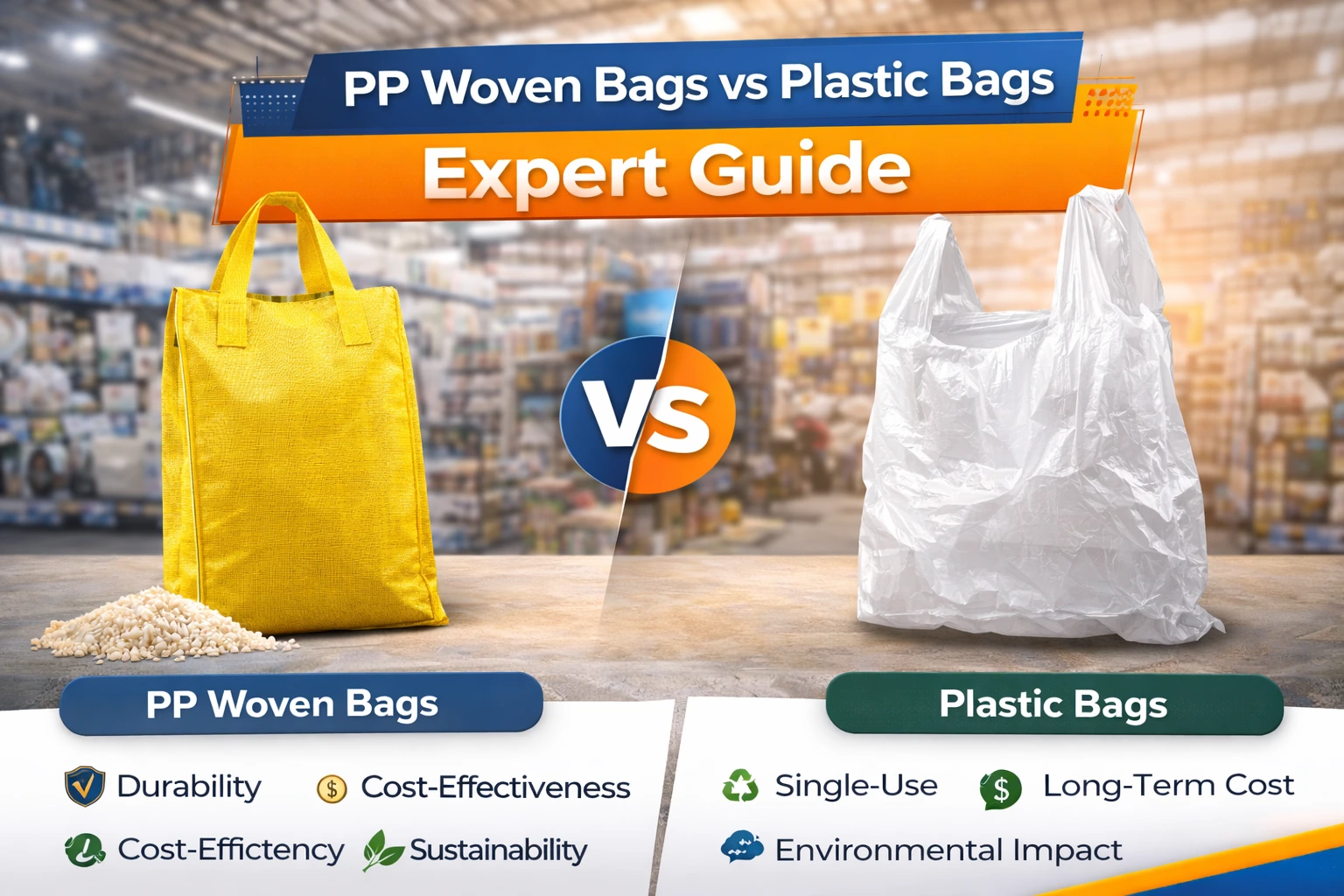
PP Woven Bags outperform regular plastic bags across most commercial dimensions that matter to Indian businesses in 2026. Before the detailed breakdown, here is the head-to-head summary across seven key criteria:
| Category | PP Woven Bags | Regular Plastic Bags |
| Load Capacity | ✓ Up to 50 kg; FIBC up to 2,000 kg | ✗ Typically 1–10 kg maximum |
| Durability | ✓ High tensile strength; multi-use rated | ✗ Prone to tearing; single-use |
| Moisture Resistance | ✓ Inherent + BOPP laminate option | ✗ Moderate; degrades under UV |
| Print Quality | ✓ Up to 8-colour; BOPP photographic | ✗ Limited; basic flexo only |
| Regulatory Status | ✓ EPR-compliant; food-grade certified | ✗ Subject to bans; restricted in India & EU |
| Recyclability | ✓ 74%+ PP recycling rate (CIPET 2025) | ✗ Lower recyclability; multi-layer issues |
| Export Acceptance | ✓ Meets EU, GCC, US FDA standards | ✗ Restricted in many export markets |
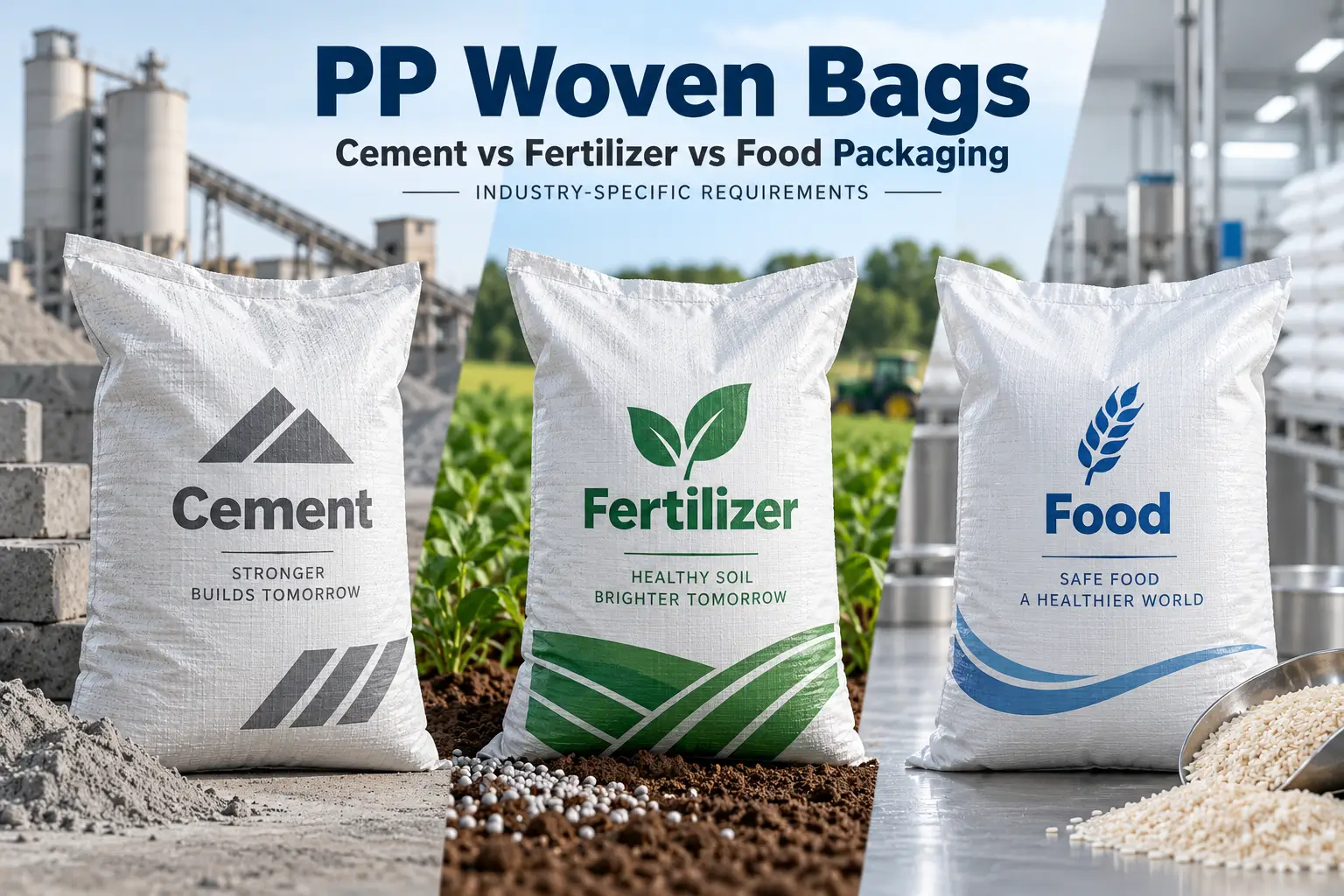
| 01 Strength and Load Capacity: Which Bag Handles More? PP Woven Bags are engineered for heavy industrial loads. The woven polypropylene structure – produced by interlacing stretched PP tapes on circular looms – creates a tensile matrix that distributes load stress across the entire bag face rather than concentrating it at seams or film layers. This is why PP woven bags are the default packaging for commodities like cement (50 kg), fertiliser (50 kg), rice (25 kg and 50 kg), sugar (50 kg), and animal feed (50 kg) across India. Regular plastic bags, in contrast, are produced from extruded polyethylene or polypropylene film. Their load-bearing capacity is determined by film thickness (measured in microns), and even heavy-duty plastic bags rarely exceed 10–15 kg before tearing risk becomes significant. For any application requiring loads above 10 kg, plastic bags represent a packaging liability, not a solution. At Aeroflex Neu, we manufacture PP woven bags with GSM ratings from 60 to 120+ GSM and load capacities from 5 kg to 50 kg in standard format, with Flexible Intermediate Bulk Containers (FIBCs or jumbo bags) rated to carry up to 2,000 kg – a load capacity that no plastic bag format can approach. Standard PP woven bag: 5 kg to 50 kg load capacityFIBC jumbo bag: 500 kg to 2,000 kg load capacityHeavy-duty plastic bag: 1 kg to 15 kg maximum – with significant tear risk at upper range |
| 02 Durability and Reuse: Which Bag Lasts Longer in the Supply Chain? PP Woven Bags are inherently multi-use packaging. The woven structure resists puncturing, abrasion, and edge stress in a way that thin-film plastic simply cannot. In agricultural applications – where bags are filled at the mill, transported by truck, stored in warehouses, and handled multiple times before retail – PP woven bags withstand the full supply chain journey without integrity failure. Standard PP woven bags are rated for 1–3 reuse cycles in general industrial applications. UV-stabilised variants extend this to 3–5 cycles in outdoor or high-sunlight environments. Regular plastic bags, even in heavy-duty format, are rated for single-use and frequently fail before the end of their first use cycle when loaded beyond 5 kg. For Indian businesses managing high-volume logistics, the durability differential compounds quickly. Damaged bags in transit mean product spillage, contamination claims, repackaging costs, and delayed delivery. A PP woven bag that survives the full supply chain journey is not just a stronger bag – it is a measurably lower total cost packaging solution. |
People Also Ask
| Are PP woven bags stronger than plastic bags? |
| Yes. PP woven bags are significantly stronger than regular plastic bags due to their woven polypropylene tape structure, which distributes load stress across the entire bag. Standard PP woven bags handle loads of 5 kg to 50 kg, while heavy-duty plastic bags typically fail above 10–15 kg. For industrial and bulk commodity packaging, PP woven bags are the clear choice. |
| Why are plastic bags being replaced by PP woven bags in India? |
| India’s Plastic Waste Management Rules 2022 (amended 2024) restrict single-use thin plastic bags and mandate EPR compliance for all packaging producers. PP woven bags are EPR-compliant, recyclable, stronger, food-grade certifiable, and export-accepted – making them the natural replacement for plastic bags across industrial, food, and retail packaging. |
| 03 Regulatory Compliance: Which Bag Keeps Your Business on the Right Side of the Law? PP Woven Bags are explicitly supported under India’s Plastic Waste Management Rules 2022 (amended 2024) as a preferred industrial and commercial packaging format. Their polypropylene composition, single-material recyclability, and documented EPR compliance pathways make them a future-proof choice under India’s evolving packaging regulation landscape. Thin plastic bags – particularly those below 75 microns – face ongoing restrictions and outright bans under the same rules. In 2022, India banned single-use plastic items including plastic bags below 75 microns. By 2026, enforcement has tightened further, with spot inspections and penalties for non-compliant packaging reported across major industrial states. Businesses using non-compliant plastic bags face fines, product seizures, and reputational damage in regulated markets. For exporters, the regulatory contrast is even sharper. The European Union’s Single-Use Plastics Directive, the UK Plastics Packaging Tax, and GCC import packaging standards all restrict or penalise thin plastic bag usage. PP woven bags, with appropriate certifications, are accepted across all major export corridors that Indian businesses serve. India: PP woven bags are EPR-compliant; plastic bags below 75 microns are bannedEU: PP woven bags meet EC 1935/2004; thin plastic bags restricted under SUP DirectiveGCC: PP woven bags accepted under GSO packaging standards; plastic bag restrictions applyUSA: PP woven bags meet FDA 21 CFR; plastic bags face state-level bans across 10+ US statesUK: PP woven bags exempt from Plastic Packaging Tax (30% recycled content threshold); thin bags taxed |
| 04 Food-Grade Safety: Which Bag Is Safer for Food Packaging? PP Woven Bags manufactured with food-grade polypropylene resin and food-safe inks comply fully with India’s FSSAI regulations and international food-contact material standards. When equipped with an inner PE liner, they provide a dual-barrier packaging system that protects food products from contamination, moisture ingress, and pest infiltration throughout the supply chain. Regular plastic bags present a more complicated food-safety picture. Standard polyethylene bags used for food packaging can be food-safe, but the thin-film format offers no protection against the mechanical stresses of bulk grain, flour, or pulse packaging. More importantly, many plastic bags in the Indian market are manufactured from recycled or mixed-grade plastics that are not food-contact safe – and cannot be certified to FSSAI or international standards. According to Aeroflex Neu’ 2026 India market insights, over 80% of organised Indian food exporters shipping to regulated markets have transitioned from plastic bag-based packaging to food-grade PP woven bags with PE liners. The shift is driven not by regulation alone, but by the practical reality that major international food buyers – supermarket chains, wholesale distributors, and institutional purchasers – now require FSSAI and ISO food-grade certification as a baseline procurement requirement. |
People Also Ask
| Can PP woven bags be used for food packaging in India? |
| Yes. PP woven bags made from food-grade polypropylene resin with food-safe inks are FSSAI-compliant for food packaging. When fitted with a PE inner liner, they provide a dual-barrier system suitable for rice, flour, sugar, pulses, and other dry food commodities for both domestic retail and international export. |
| Are PP woven bags recyclable in India? |
| Yes. Polypropylene woven bags are 100% recyclable through organised plastic collection and processing systems in India. CIPET data from 2025 shows a 74%+ recycling rate for PP-family packaging through urban collection streams – one of the strongest environmental performance records among flexible packaging formats available to Indian businesses. |
| 05 Environmental Impact: Which Bag Is Better for the Planet? PP Woven Bags have a measurably better environmental profile than thin plastic bags across the metrics that matter most in 2026: recyclability, reuse cycles, and regulatory compliance with India’s EPR framework. The single-material polypropylene composition of PP woven bags makes them straightforward to recycle – unlike multi-layer plastic films that combine polyethylene, nylon, and aluminium foil in structures that cannot be separated for recycling. Thin plastic bags have an environmental profile that is difficult to defend in 2026. Their light weight – often cited as a sustainability advantage – is also the property that makes them most likely to escape waste management systems, enter waterways, and fragment into microplastic pollution. India’s Central Pollution Control Board (CPCB) reported in 2025 that thin plastic bags remain among the top five plastic waste items found in Indian rivers and coastal zones despite the 2022 ban. PP woven bags, by contrast, have sufficient weight and structural integrity to remain in formal waste streams. CIPET’s 2025 Annual Report documents a 74%+ recycling rate for polypropylene packaging through India’s organised recycling channels. Manufacturers who register under EPR and use PP woven bags are not only compliant with current law – they are positioned ahead of the tightening sustainability requirements that will characterise the 2026–2030 regulatory cycle. |
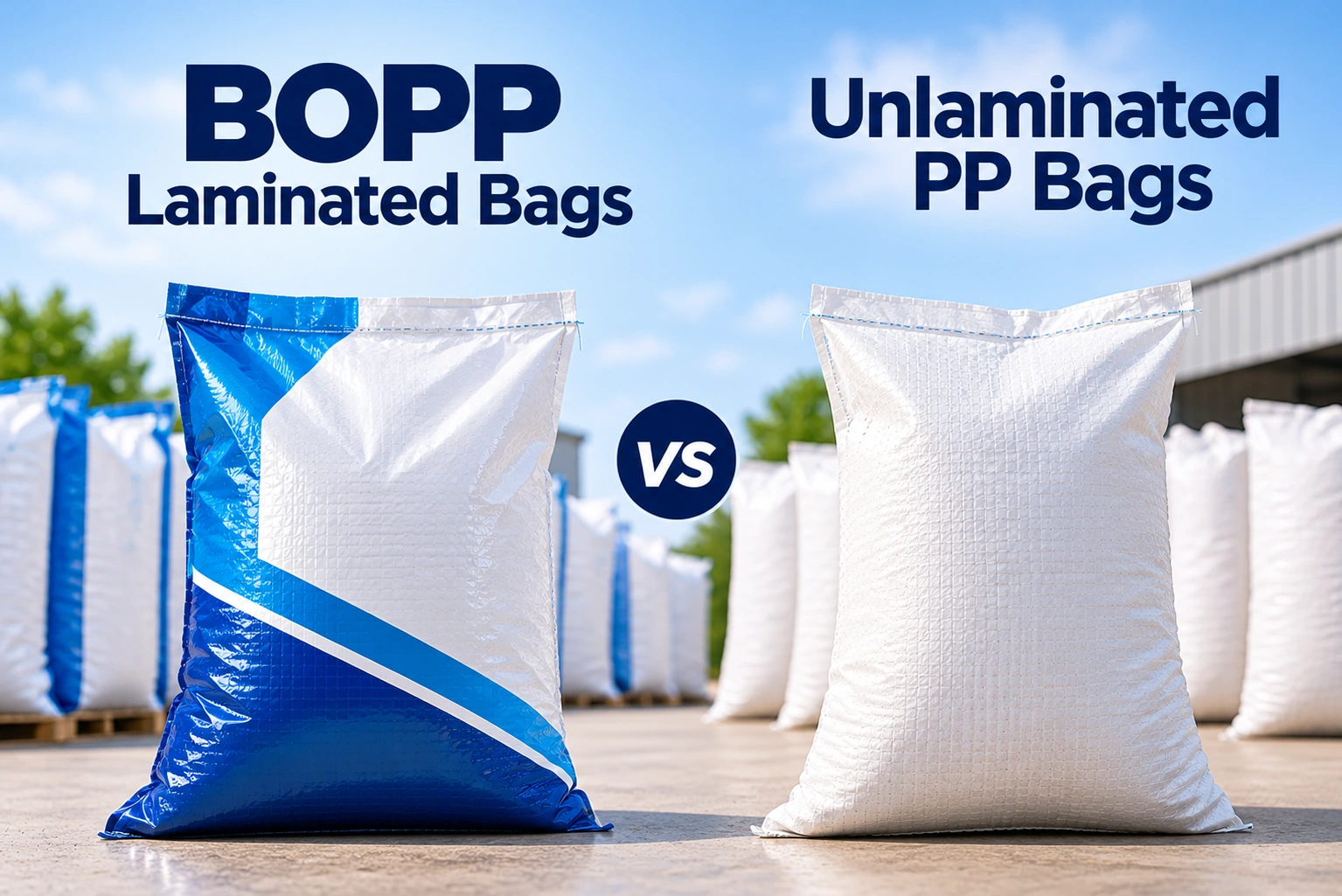
| 06 Branding and Print Quality: Which Bag Sells Your Product Better? PP Woven Bags offer dramatically superior branding capability compared to regular plastic bags. With up to 8-colour rotogravure or flexographic printing on BOPP laminated surfaces, PP woven bags can carry photographic-quality imagery, gradient colour fields, Pantone-accurate brand colours, and full regulatory print panels – all without compromise to bag structural integrity. Regular plastic bags can be printed, but the thin polyethylene film surface limits print resolution, colour saturation, and the range of design elements that can be reproduced reliably. For commodity products competing on retail shelves or in the branded wholesale market, this print quality gap translates directly into shelf presence and consumer brand recall. A 2025 Nielsen India study found that consumers spend an average of just 2.7 seconds evaluating a packaged food product at the point of purchase. In that window, bag surface quality, print clarity, and colour vibrancy are the dominant decision drivers for unbranded or new-to-market products. Aeroflex Neu’ high-strength PP woven bags ensure brands make those 2.7 seconds count, with BOPP laminated printing that delivers retail-grade visual impact at bulk packaging scale. |
| 07 Export Readiness: Which Bag Opens More International Markets? PP Woven Bags are the globally recognised standard for bulk food and industrial commodity export packaging. Every major import destination for Indian goods – the UAE, Saudi Arabia, the United Kingdom, Germany, the United States, Japan, and Australia – has established import packaging standards that PP woven bags, with appropriate certifications, are designed to meet. Thin plastic bags, in contrast, face a growing wall of international import restrictions. The EU’s Single-Use Plastics Directive, the UK’s Plastic Packaging Tax (effective from April 2022, with rates increasing through 2026), and import packaging standards across GCC nations all create compliance barriers for plastic bag-based export packaging that do not apply to PP woven bags. At Aeroflex Neu, we manufacture and export PP woven bags to clients in over 20 countries, providing full documentation support including FSSAI compliance certificates, REACH declarations for EU markets, material safety data sheets, and third-party inspection readiness for SGS and Bureau Veritas pre-shipment audits. Our export clients benefit from packaging that clears import inspections in target markets without delays, demurrage costs, or shipment rejections. GCC exports: PP woven bags accepted under GSO – thin plastic bags face labelling and material restrictionsEU exports: PP woven bags compliant with EC 1935/2004 and REACH – SUP Directive restricts plastic bagsUS exports: PP woven bags meet FDA 21 CFR food-contact standards – plastic bags subject to state bansUK exports: PP woven bags not subject to Plastic Packaging Tax – thin plastic bags taxed at £45/tonne from 2026 |
The Verdict: When Should Indian Businesses Choose PP Woven Bags?
PP Woven Bags are the correct choice for the overwhelming majority of Indian business applications in 2026. The comparison below summarises the decision framework:
| Choose PP Woven Bags when… | Thin plastic bags may still suit… |
| ✓ Load exceeds 10 kg | Very light consumer retail packs (under 2 kg) |
| ✓ Bulk or industrial supply chain | Short-distance, single-handling distribution |
| ✓ Food-grade certification required | Non-food short shelf life items |
| ✓ Export to regulated markets | Domestic only, low-value commodity markets |
| ✓ Branded retail packaging needed | Unbranded internal logistics labelling |
| ✓ Multi-reuse supply chain application | One-way single-handling light distribution |
| ✓ EPR compliance required | Applications pending regulatory review |
Conclusion: For Indian Businesses in 2026, PP Woven Bags Win on Every Dimension That Matters
PP Woven Bags are not simply a better version of a plastic bag – they are a fundamentally different packaging technology built for the load, durability, regulatory, and branding demands of modern Indian business. From the 50 kg rice sack that travels from a Punjab mill to a Dubai retailer, to the branded atta bag that competes on a Mumbai supermarket shelf, PP woven bags deliver performance that thin plastic simply cannot match.
The regulatory landscape in 2026 is not neutral. Thin plastic bags face bans, restrictions, and EPR obligations that make them an increasingly risky procurement choice. PP woven bags, by contrast, are moving in the opposite direction – toward greater acceptance, stronger certification frameworks, and broader market access in India and internationally.
If your business is still using thin plastic bags for any application above 5 kg, for any food-grade requirement, or for any export-linked supply chain, 2026 is the year to make the switch. Explore Aeroflex Neu’ complete range of custom PP woven bags → and speak to our team about specifications, certifications, and bulk supply timelines tailored to your business.
Frequently Asked Questions
Q What is the main difference between PP woven bags and plastic bags?
PP woven bags are made from interlaced polypropylene tape woven on circular looms, giving them far superior load capacity (up to 50 kg and beyond), tensile strength, and durability compared to thin-film plastic bags. They are also EPR-compliant, food-grade certifiable, multi-reuse rated, and accepted in regulated export markets where thin plastic bags face restrictions or outright bans.
Q Are PP woven bags better for the environment than plastic bags?
Yes, in most commercially relevant respects. PP woven bags are made from a single polymer (polypropylene) that achieves 74%+ recycling rates through India’s organised waste streams. They support multiple reuse cycles, are EPR-compliant under India’s Plastic Waste Management Rules, and are not subject to the microplastic pollution risk associated with thin plastic bags that escape formal waste management.
Q Can PP woven bags be used instead of plastic bags for rice packaging?
Yes, and they are the preferred format for rice packaging in India in 2026. Food-grade PP woven bags with PE inner liners protect rice from moisture, insects, and contamination across the supply chain while providing the structural integrity needed for 5 kg, 10 kg, 25 kg, and 50 kg formats. BOPP laminated variants add high-quality branding for retail markets.
Q Why are plastic bags banned in India and what should businesses use instead?
India’s Plastic Waste Management Rules 2022 banned single-use plastic bags below 75 microns due to their environmental impact and difficulty of recycling. PP woven bags are the recommended industrial alternative – they are stronger, EPR-compliant, recyclable, multi-reuse rated, and accepted under both Indian regulation and international export standards.
Q How do I know if a PP woven bag is food-grade certified?
Ask your supplier for FSSAI registration documents and a declaration that the bags are manufactured from virgin food-grade polypropylene resin using food-safe inks. For export applications, also request compliance documentation for EU Regulation (EC) 1935/2004, GCC GSO packaging standards, or US FDA 21 CFR, depending on your destination market.
Q Are PP woven bags accepted by importers in the UAE, UK, and EU?
Yes. PP woven bags with appropriate certifications (ISO 9001:2015, FSSAI, REACH compliance, food-grade material declarations) are accepted across GCC, EU, and UK import markets. Unlike thin plastic bags, which face the EU Single-Use Plastics Directive and UK Plastic Packaging Tax, PP woven bags are treated as compliant industrial packaging in all major Indian export destinations.