
PP woven bags vs jute bags is a common question for anyone packing grain, cement, fertilizer, seeds or chemicals, and the right answer depends on your product, your storage conditions and your budget. Both are strong, familiar sack materials, but they behave very differently in moisture, handling, printing and cost. This guide compares them side by side so you can pick the one that suits your packaging needs. See Aeroflex Neu’s range of PP woven bags for the options available in polypropylene.
Table of Contents
TogglePP woven bags vs jute bags: what are they?
PP woven bags are made by weaving flat tapes of polypropylene into a fabric, which is then cut and converted into bags. Aeroflex Neu describes its PP woven bags as made from 100% polypropylene, lightweight, moisture-tolerant and resistant to tearing and punctures. Jute bags, often called gunny bags, are woven from jute, a natural plant fibre widely grown in eastern India. You can read more about the fibre in this overview of jute. Jute is natural and biodegradable, while polypropylene is a synthetic plastic that is reusable and recyclable.
PP woven bags vs jute bags: side-by-side comparison
Tier | Factor | PP woven bags | Jute bags |
Tier 1 | Moisture | Moisture-tolerant; laminated or liner-inserted options add protection | Absorbs moisture, which can affect contents and bag strength |
Tier 1 | Strength | Resists tearing and punctures; GSM can be chosen for pack weight | Strong but heavier, and fibres can weaken when wet |
Tier 1 | Weight | Lightweight, so lower handling and freight load per bag | Heavier for the same capacity |
Tier 2 | Breathability | Plain bags are breathable; perforated bags allow controlled airflow | Naturally breathable, useful for some produce |
Tier 2 | Printing | Up to six-colour flexographic print; sharper on laminated bags | Limited, usually simple marks |
Tier 2 | Customisation | Size, colour, GSM, mesh count, closure, lamination, UV stabilisation, liner | More limited range of constructions |
Tier 3 | Environment | Reusable and recyclable, but made from plastic | Biodegradable and plant-based |
Tier 3 | Regulation | Check current rules for your product category | Some commodities in India have jute packaging requirements |
When PP woven bags beat jute bags
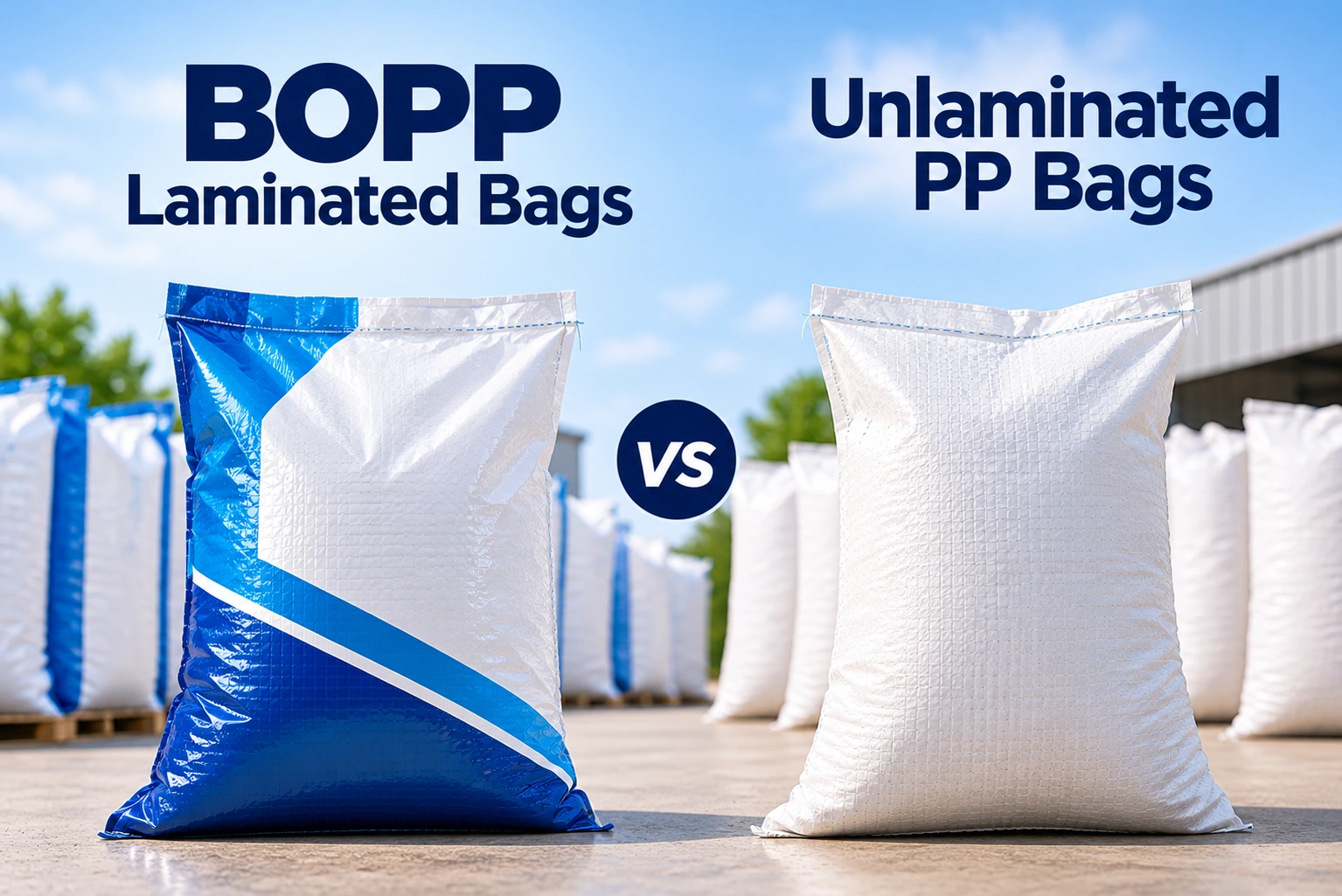
For many industrial products, PP woven bags vs jute bags is decided by moisture, weight and branding. PP is the stronger choice when your product is sensitive to damp, when bags are stored or transported in open conditions, or when you need printed branding and consistent sizes for automated filling. It is widely used for cement, fertiliser, chemicals, minerals, cattle feed, salt and sugar. Because PP fabric is lightweight, it also helps keep freight weight down. You can choose between BOPP laminated woven bags for shelf-ready printing and plain woven bags for lower cost.
When jute bags are still the right choice
Jute remains a good fit where natural fibre matters. Some produce benefits from the natural breathability of jute, some buyers prefer a plant-based, biodegradable sack and some markets expect it. In India, jute packaging is also supported by regulations that require certain commodities to be packed in jute. Check the current rules for your product with the relevant authority or your buyer before switching material, since requirements can change.
How to choose between PP woven bags vs jute bags
- Product: dry powders, granules and fertilisers usually suit PP; some fresh produce may prefer breathable fibre.
- Storage: if bags will face humidity, rain or long storage, PP with lamination or a liner offers more protection.
- Pack weight: choose PP GSM to match the load, from 50 to 140 GSM depending on pack size.
- Branding: if print quality matters, laminated PP gives the best result.
- Handling: automated lines prefer consistent, lightweight bags with defined dimensions.
- Rules and buyer needs: confirm packaging requirements for your commodity and market.
Choosing GSM and mesh after PP woven bags vs jute bags
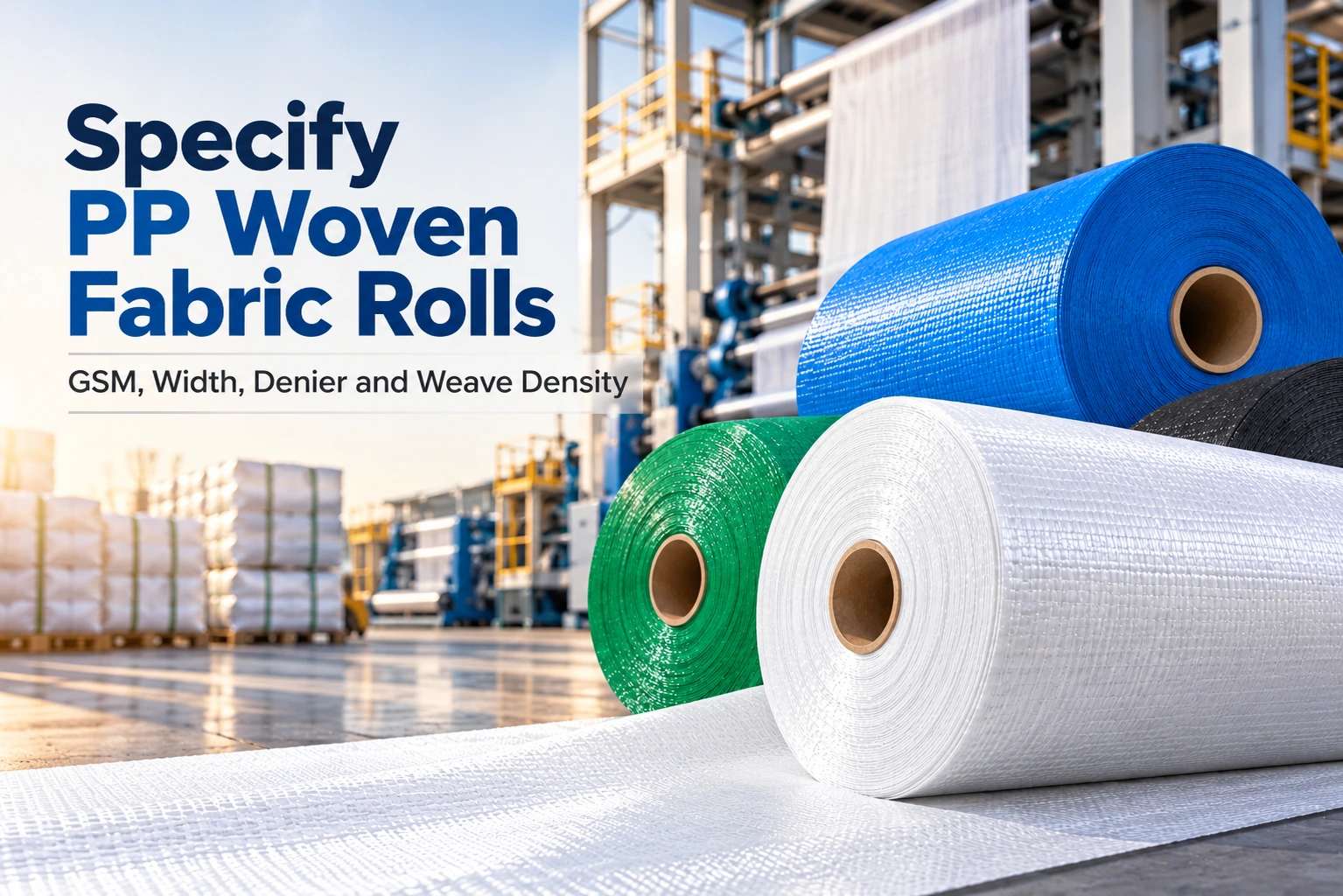
Once you decide on PP woven bags vs jute bags in favour of polypropylene, specification becomes the next question. Aeroflex Neu’s guide suggests 50–60 GSM for retail bags up to 10 kg, 60–75 GSM for 10–20 kg packs such as rice and light grains, 75–90 GSM for 20–35 kg such as fertiliser and cement, 90–110 GSM for 50 kg packs and 120–140 GSM for heavy-duty sacks up to 100 kg. Mesh count ranges from 10×10 to 14×14, and closures include heat-cut, zig-zag, hemmed and valve tops. For fabric details, read how to specify PP woven fabric rolls.
Cost and total value of PP woven bags vs jute bags
Price per bag is only part of the cost. Consider how many bags are damaged, how much product is lost to moisture, how much freight weight each bag adds and how long the bag lasts if reused. A slightly more expensive bag that reduces losses or presents your brand better can be cheaper overall. Request samples and run a trial on your own line and storage, then compare damage rates and handling time for each material.
Sustainability in PP woven bags vs jute bags
Environmental claims deserve care. Jute is plant-based and biodegradable. Polypropylene is a plastic, but PP woven bags are reusable and recyclable, and their durability and low weight can reduce waste and transport emissions. Plan for reuse or recycling of used bags where possible, and ask your supplier about options for your market.
A simple trial plan for PP woven bags vs jute bags
The fastest way to settle PP woven bags vs jute bags for your product is a small, honest trial. Pack the same product in both materials, store them side by side in your real conditions and record moisture damage, tears, handling time and customer feedback over a few weeks. Weigh a sample of filled bags to compare freight load, and check how well your branding prints on each. If you are moving from jute to polypropylene, begin with one product line, share results with your team and buyers and then extend the change. A trial gives you evidence that you can show your customers, which is more convincing than any general comparison.
Explore More from Aeroflex Neu
Use these links to go straight to the products and guides mentioned in this article.
- Products: PP woven bags | PP woven fabric | BOPP laminated woven bags | PP box bags | FIBC bags | PP woven silt fence | PP woven ground cover
- Guides: BOPP laminated vs unlaminated PP bags | How to specify PP woven fabric rolls | Bulk packaging for fertilizers
Pick the right sack after comparing PP woven bags vs jute bags
PP woven bags vs jute bags is not a contest with one winner. PP wins on moisture tolerance, weight, printing and customisation, while jute wins where natural fibre or a specific rule matters. Match the material to your product, storage and market, test with samples and choose on total cost, not only price per bag. Aeroflex Neu manufactures PP woven bags in Udaipur with options in size, GSM, lamination, liners and printing.
Not sure which bag suits your product? Tell us what you pack and in what quantity. Call +91 294 2490534, email customer.care@aeroflexneu.com or contact Aeroflex Neu online with your requirement and our team will guide you on specification, customisation and quotation.
Frequently Asked Questions
What is the main difference between PP woven bags vs jute bags?
PP bags are made of synthetic polypropylene tape and tolerate moisture, while jute bags are made of natural plant fibre and absorb moisture.
Which is stronger, PP woven bags or jute bags?
PP woven bags resist tearing and punctures and can be made in different GSM for different loads. Jute is strong but heavier and can weaken when wet.
Are PP woven bags waterproof?
They are moisture-tolerant, and laminated or liner-inserted versions give more protection. Ask your supplier for the right option for your product.
Are PP woven bags reusable and recyclable?
Aeroflex Neu describes PP woven bags as reusable and recyclable.
Can PP woven bags be printed?
Yes, with six-colour flexographic printing, and results are sharper on laminated bags.
Is jute packaging mandatory in India?
Some commodities have jute packaging requirements. Check current rules for your product before changing material.
Which is cheaper in PP woven bags vs jute bags?
It depends on specification and market prices. Compare total cost, including damage, product loss, freight weight and reuse, not only price per bag.
Which bag suits cement and fertiliser?
PP woven bags are widely used for both. A 75–90 GSM guide applies to 20–35 kg packs and 90–110 GSM to 50 kg cement.
Can I get custom sizes and colours?
Yes. Width, length, GSM, colour, mesh count, closure and lamination can be customised, with minimum order quantities.
How do I request samples?
Call +91 294 2490534, email customer.care@aeroflexneu.com or use the contact page with your product and pack size.