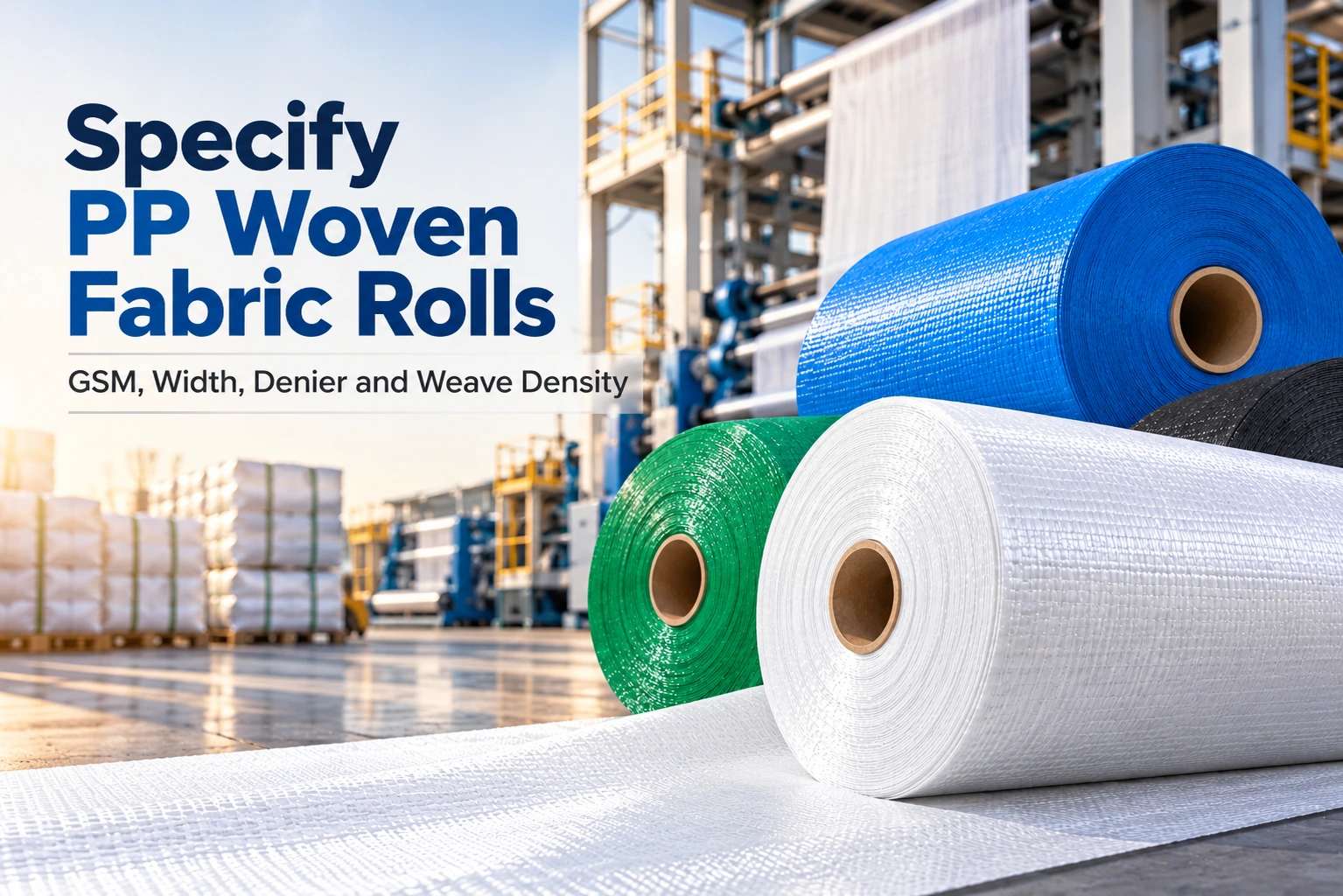
PP woven fabric rolls are the starting material for many sacks, FIBCs and other flexible packaging products. A purchase specification based only on width and GSM can create avoidable variation, because final performance also depends on tape properties, weave density, orientation, coating and conversion. Aeroflex Neu’s manufacturing process treats extrusion, tape production, weaving, lamination, printing and finishing as connected stages. This guide explains the parameters a procurement team should define before ordering PP woven fabric rolls.
Table of Contents
ToggleWhat is PP woven fabric?
Polypropylene is extruded into tapes, oriented for strength and then woven in warp and weft directions. The resulting fabric can remain unlaminated or receive PP/BOPP lamination or coating. It can then be cut, printed and stitched into finished packaging. For the full sequence, see our PP woven bags manufacturing process, step by step.
What do GSM, denier, width and weave density mean?
- GSM: Grams per square metre. It indicates fabric mass and helps control material consumption and consistency, but it does not independently guarantee tensile strength. Tape quality, orientation, weave density and construction also matter. Our GSM guide for PP woven bags explains how to choose fabric weight.
- Denier: A measure of linear density used to characterize yarn or tape. Denier is defined as grams per 9,000 metres, so agree the tape specification with the manufacturer rather than treating one denier number as a universal quality grade.
- Width: Finished width must match the converting process. Too narrow reduces finished dimensions; too wide creates trimming waste. Define width tolerance as well as nominal width, plus roll length or weight and core requirements.
- Weave density: The number of warp and weft elements over a defined distance. It affects fabric cover, appearance, permeability and mechanical behavior, and the correct density depends on the finished product.
How GSM, denier and weave work together
These variables interact. Increasing GSM does not automatically produce the best fabric for every application. The practical approach is to define the finished product, required strength and conversion process, then let the technical team establish the appropriate tape and weave construction.
How to specify a PP woven fabric roll
- State the finished application: sack, FIBC, ground cover or other product.
- Define finished width and allowable tolerance.
- Define GSM and tolerance.
- Define warp/weft density or an equivalent performance target.
- Define tape/denier information where it is important to the product.
- State color, lamination/coating and printing requirements.
- State roll length/weight, core, winding and packaging requirements.
- Define strength, elongation, tear or other tests where relevant.
Unlaminated vs laminated fabric
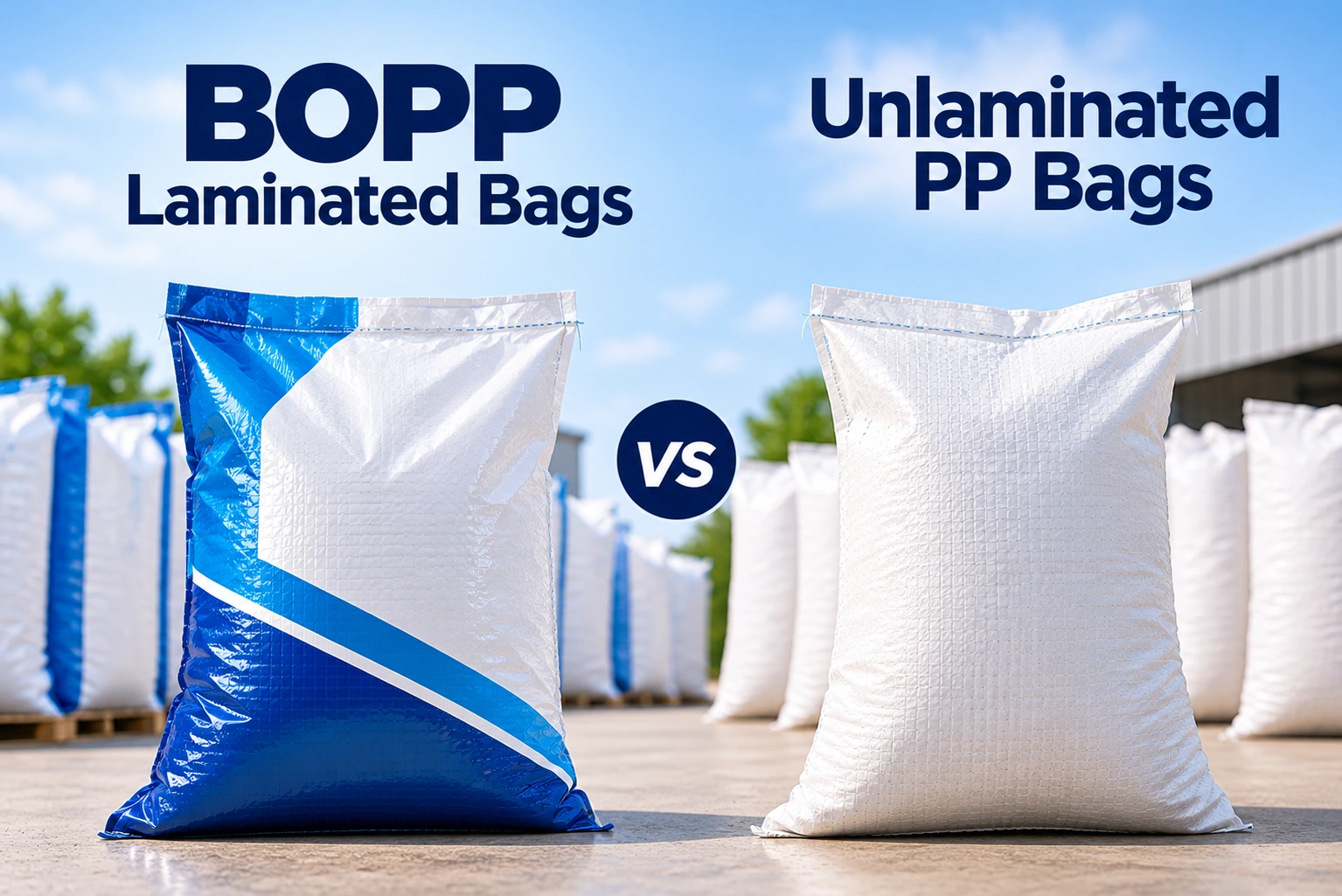
Unlaminated fabric is useful where breathability is required. PP or BOPP lamination can add moisture resistance, improve printability and reduce dust passage. The required side and coverage should be stated rather than assumed. If the end product is a printed, laminated sack, see our BOPP laminated woven bags.
Quality checks for incoming rolls
- Measure GSM across samples and compare with the agreed tolerance.
- Check width at multiple points for variation.
- Inspect for broken tapes, holes, contamination, weaving defects and edge problems.
- Test warp and weft strength where required.
- Check roll winding, core integrity and labeling.
- Keep lot or batch traceability for production investigations.
Why roll consistency affects finished bags
Variation in fabric can affect cutting, stitching, printing registration, lamination and finished dimensions. Consistent extrusion and weaving therefore matter as much as the nominal GSM. A supplier capable of both fabric and finished bag production can discuss the fabric specification in the context of the final packaging.
RFQ checklist and sample approval
A strong RFQ contains end use, width, GSM, weave density, tape/denier, color, lamination, roll dimensions, strength requirements, tolerances, quantity, packaging and destination. If the fabric will be converted on a particular machine, include the relevant equipment constraints. Review a pre-production sample against the approved specification, not only by appearance, and define acceptance criteria before the production run. Keep the approved specification with the purchase order, inspect incoming rolls against the same criteria and review any field failures before changing the specification on repeat orders.
Quick Comparison / Buyer Checklist
| Parameter | Why it matters | Specify |
|---|---|---|
| GSM | Mass and material consistency | Target + tolerance |
| Width | Machine and conversion fit | Finished width + tolerance |
| Denier/tape | Tape construction | Agreed tape specification |
| Weave density | Cover and mechanical structure | Warp/weft density or performance |
| Lamination | Moisture/print surface | Type, side and requirement |
Get Your PP Woven Fabric Specification Right Before You Order
A fabric roll that matches your width, GSM, weave and lamination needs prevents rejected lots, converting waste and repeat procurement problems. Approve the construction in writing, confirm testing requirements and let the supplier translate your application into a practical fabric specification.
Planning a fabric order or a custom roll specification? Share your end product, width, GSM, lamination and quantity with our team and get a clear recommendation before you commit. Contact Aeroflex Neu today, or explore our PP woven fabric range and see why buyers choose Aeroflex Neu for consistent rolls.
Frequently Asked Questions
Is higher GSM always stronger?
No. GSM is only one factor. Tape properties, orientation, weave and construction also affect strength.
What GSM should I use?
There is no universal value. The target depends on bag capacity, dimensions, product and handling requirements.
Why does weave density matter?
It affects cover, strength, permeability and appearance and must be selected for the end use.
Can PP woven fabric be laminated later?
Some converting operations can laminate fabric, but compatibility with equipment and the desired performance should be confirmed.
How do I control roll variation?
Use defined tolerances, batch traceability, sampling and incoming checks for GSM, width, appearance and strength.
Can PP woven fabric be used for FIBCs?
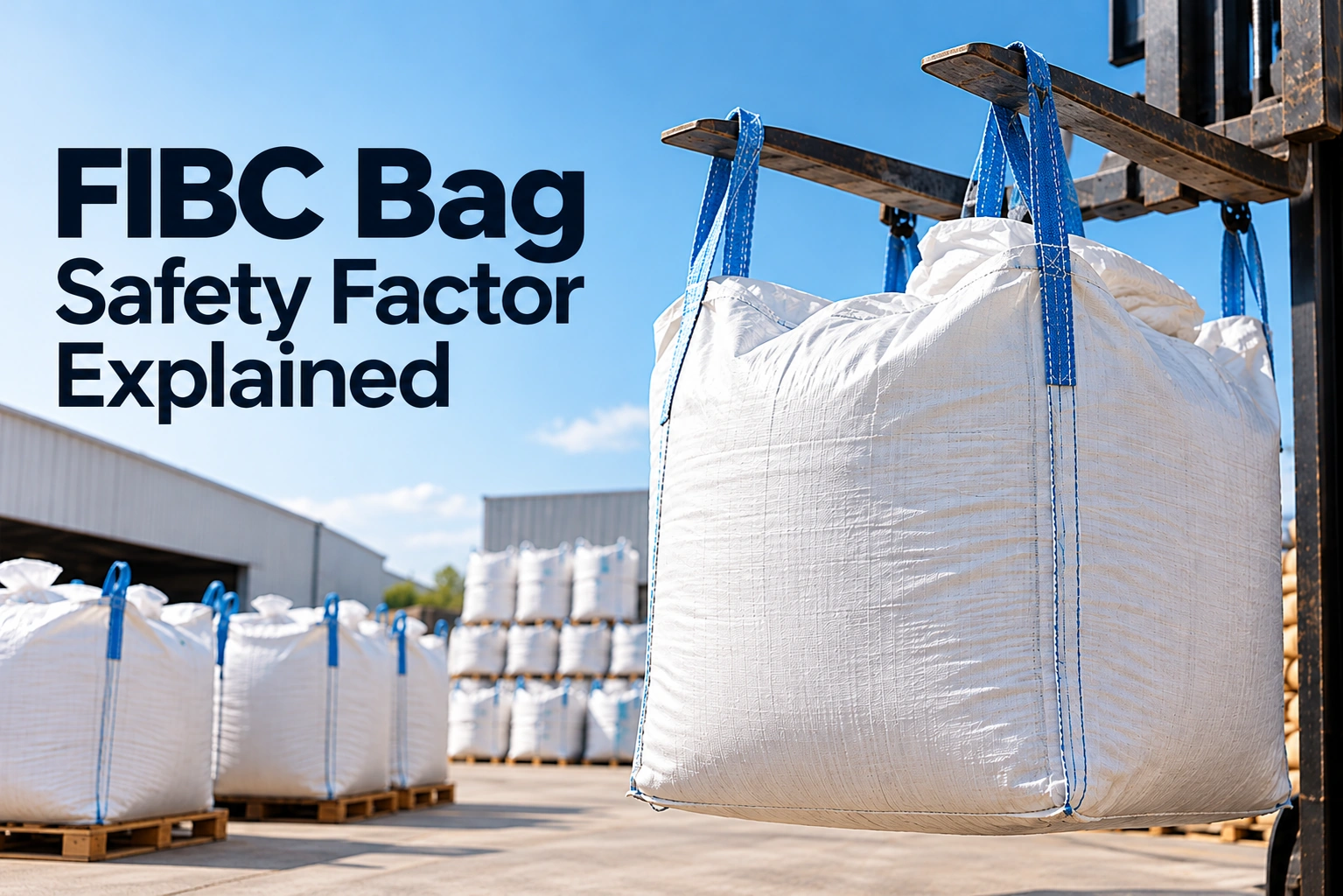
Yes, but FIBC fabric requires construction and reinforcement appropriate to the declared SWL and lifting conditions. See our FIBC bags page for details.