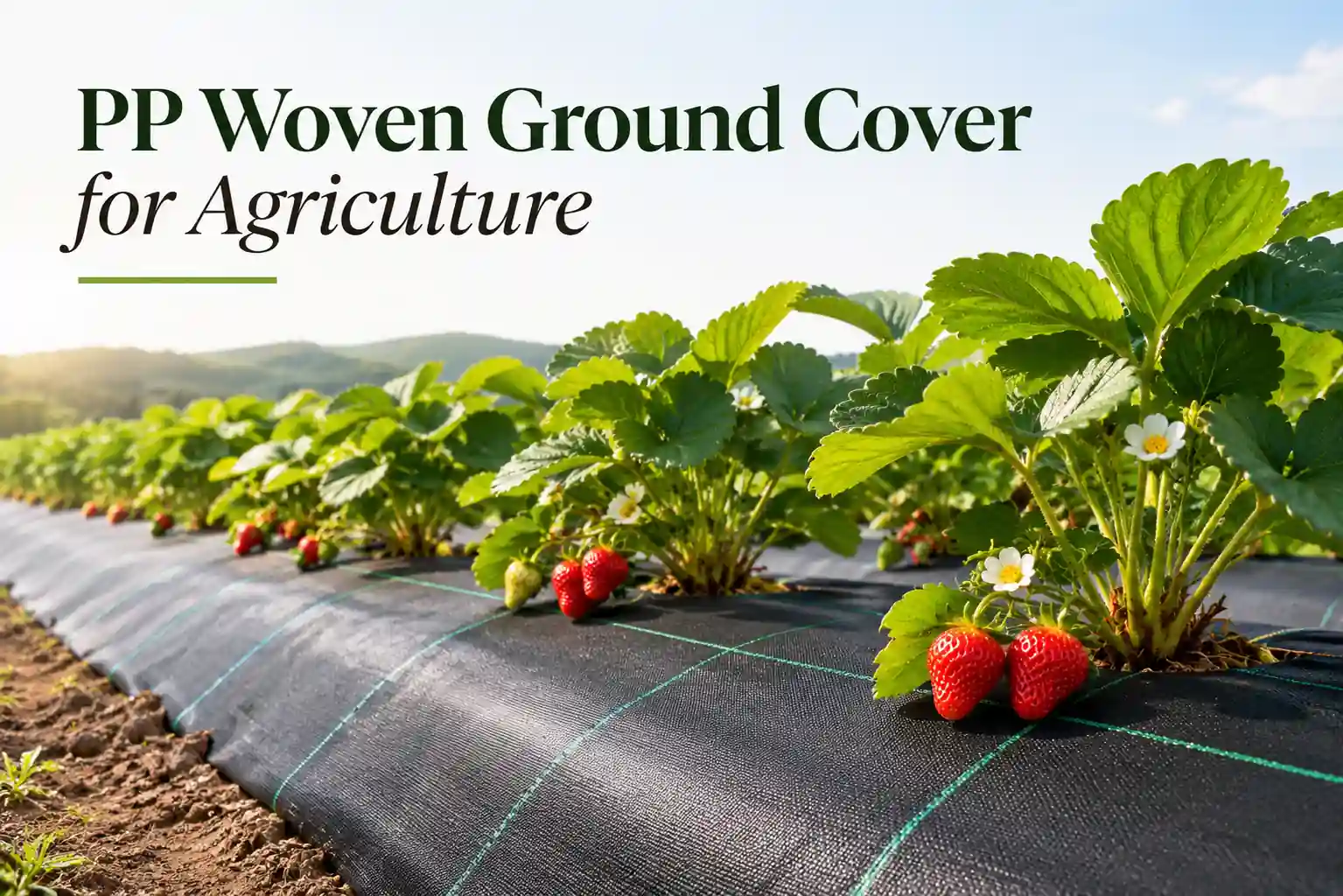
PP woven ground cover for agriculture is a simple way to control weeds, hold soil moisture and keep beds tidy without relying on constant hand weeding or chemicals. The fabric blocks sunlight from reaching the soil, so weeds struggle to grow, while still letting water and air pass through to the soil below. This guide explains how PP woven ground cover works in farms, nurseries and greenhouses, where it fits best and how to install and care for it. You can view the product on Aeroflex Neu’s PP woven ground cover page.
Table of Contents
ToggleWhat is PP woven ground cover for agriculture?
PP woven ground cover is a landscape fabric made by weaving polypropylene tapes into a durable sheet. Aeroflex Neu describes its ground cover as UV stabilised for long-lasting performance, lightweight and easy to cut to size, and suitable for agricultural, horticultural and landscaping uses. It is commonly used as an alternative to traditional mulch. Unlike a plain plastic film, a woven fabric is designed to let water and air through, which is why it is widely used on soil where plants and roots are growing. For background on the product type, see this overview of landscape fabric.
How PP woven ground cover for agriculture controls weeds
Weeds need light to germinate and grow. The woven fabric blocks sunlight from reaching the soil, which prevents most weed growth under the cover. Seeds that land on top of the fabric cannot easily root through it, and those that start below are starved of light. This reduces the need for manual weeding and, in many cases, for herbicide use. Weed control works best when the fabric is laid on cleared ground, with edges overlapped and secured so that light and weed seeds cannot enter at the seams.
Other benefits of PP woven ground cover for agriculture
- Moisture retention: water and air pass through while the cover helps keep the soil moist and healthy.
- Soil stabilisation: helps prevent erosion and keeps soil in place, which is useful on slopes and walkways.
- UV resistance: UV-stabilised fabric resists degradation from sunlight.
- Lightweight handling: rolls are easy to carry, cut and lay.
- Cost-effective: a long-lasting alternative to repeated mulching or labour-heavy weeding.
- Cleaner surface: reduces mud and keeps paths and beds neater.
Where to use PP woven ground cover for agriculture
Aeroflex Neu names nurseries, greenhouses and outdoor gardens among suitable uses. The table below shows common ways the fabric is used on farms and growing sites.
Tier | Use | How it helps | Things to plan |
Tier 1 | Nursery floors and plant beds | Keeps weeds down and reduces mud around pots and trays | Slope the ground so water drains |
Tier 1 | Greenhouse floors and walkways | Gives a clean working surface and limits weed growth | Overlap seams and secure edges |
Tier 2 | Orchard and tree rows | Controls weeds around trees and helps hold moisture | Cut holes or slits for the plants and leave space for growth |
Tier 2 | Raised beds and vegetable plots | Reduces weeding and tidies the planting area | Cut planting holes to match crop spacing |
Tier 3 | Slopes and access paths | Helps stabilise soil and limit erosion | Pin firmly and cover edges with soil or stones |
How to install PP woven ground cover for agriculture
- Clear the area of weeds, stones and sharp debris, and level the soil.
- Water the soil if it is very dry, and apply any base fertiliser before covering.
- Roll out the fabric and cut it to size, allowing overlap at seams and edges.
- Secure the fabric with pins or staples at regular intervals, and bury or weigh down the edges.
- Cut planting holes or crosses where plants will grow, keeping cuts as small as practical.
- Water the plants and check that the fabric lies flat and water flows through.
Specifications such as width, weight and colour depend on the supplier and project. Aeroflex Neu says a range of sizes and specifications is available and can be customised to specific needs, so share your site details when you ask for a quote.
Choosing PP woven ground cover for agriculture
Consider the crop, the ground, the climate and how long you want the cover to last. Ask the manufacturer about fabric weight, roll width and length, colour, UV stabilisation and edge finish. For permanent use outdoors, UV stabilisation is important. For short-term use, a lighter fabric may be enough. Request a sample roll to check how it feels, how it cuts and how it handles water on your own soil before ordering at scale.
Care and maintenance
Ground cover needs little care, but a few checks help it last. Remove soil, leaves and debris that build up on the surface, since weeds can root in them. Check edges and pins after heavy rain or wind, repair small tears early and avoid dragging sharp tools across the fabric. Lift and reposition the cover when beds are replanted, and store spare rolls out of direct sun.
Ground cover compared with other weed control methods
Hand weeding is labour-heavy and recurring. Herbicides need careful use and repeated application. Organic mulch improves soil as it breaks down but needs topping up. Woven fabric offers a durable, physical barrier that works day after day, and it can be combined with organic mulch on top where appearance matters. For a wider view of options, see this overview of weed control.
Related products from Aeroflex Neu
If your site also needs erosion control during construction or land development, look at the PP woven silt fence, and for packing produce, grain or inputs, see PP woven bags and PP woven fabric.
Mistakes to avoid with ground cover on farms
Most failures come from poor preparation and loose fixing. Laying fabric over existing weeds lets perennial roots push up through cuts. Leaving gaps at seams lets light and weed seeds in. Using too few pins lets wind lift the fabric, and cutting oversized planting holes gives weeds an entry point next to the crop. Take time to clear and level the ground, overlap seams, pin firmly and keep planting holes small. Walk the area after the first heavy rain and fix anything that has shifted, so the cover keeps working through the whole season.
Explore More from Aeroflex Neu
Use these links to go straight to the products and guides mentioned in this article.
- Products: PP woven bags | PP woven fabric | BOPP laminated woven bags | PP box bags | FIBC bags | PP woven silt fence | PP woven ground cover
- Guides: How to specify PP woven fabric rolls | Bulk packaging for fertilizers
Start with PP woven ground cover for agriculture
PP woven ground cover for agriculture reduces weeds, helps hold moisture and keeps beds and walkways neat, with little upkeep once installed. Prepare the ground, overlap and secure the fabric, cut planting holes carefully and choose a UV-stabilised product for long-term use. Aeroflex Neu supplies PP woven ground cover in sizes and specifications that can be customised to your site.
Planning a nursery, greenhouse or farm project? Share your area and requirement. Call +91 294 2490534, email customer.care@aeroflexneu.com or contact Aeroflex Neu online with your requirement and our team will guide you on specification, customisation and quotation.
Frequently Asked Questions
What is PP woven ground cover for agriculture?
It is a woven polypropylene fabric laid over soil to block weeds, keep moisture and stabilise the ground in farms, nurseries and greenhouses.
How does PP woven ground cover control weeds?
It blocks sunlight from reaching the soil, so weeds cannot grow under the cover.
Does water pass through PP woven ground cover?
Yes. The fabric allows water and air to pass through, which helps keep soil moist and healthy.
Is it UV resistant?
Aeroflex Neu states that its ground cover is UV stabilised for long-lasting performance.
Can it be used in greenhouses and nurseries?
Yes. Nurseries, greenhouses and outdoor gardens are listed uses.
Is it better than mulch?
It is a durable alternative to traditional mulch for weed control. Some growers combine it with organic mulch on top for appearance and soil benefits.
How do I install ground cover around plants?
Lay and secure the fabric first, then cut small holes or crosses for each plant, keeping cuts as small as practical.
Can it help on slopes?
It helps stabilise soil and reduce erosion, and should be pinned firmly with edges buried or weighted.
Are custom sizes available?
Aeroflex Neu says a range of sizes and specifications is available and can be customised, so share your requirement.
How do I get a quote?
Call +91 294 2490534, email customer.care@aeroflexneu.com or use the contact page with your area and use.