
The Rise of FIBC Jumbo Bags in Indian and Global Manufacturing
FIBC Jumbo Bags have moved from a niche industrial packaging format to an essential supply chain tool – and in 2026, their adoption is accelerating faster than ever. Across India’s most competitive manufacturing, agricultural, and export sectors, businesses of every scale are switching to Flexible Intermediate Bulk Containers as the smarter, safer, and more cost-effective solution for bulk material handling.
The numbers tell a compelling story. The global jumbo bags market is valued at US$6.9 billion in 2026, and is projected to reach US$10.4 billion by 2036, growing at a steady CAGR of 4.2%. India sits at the heart of this growth – accounting for more than 25% of global FIBC exports, supplying buyers across the US, Europe, the Middle East, and Africa with high-quality, competitively priced bulk containers.
For Indian manufacturers, exporters, and logistics operators exploring high-performance FIBC Jumbo Bag solutions, 2026 is the year to act. This comprehensive guide covers everything you need to know – from FIBC types and applications to pricing, innovations, sustainability, and how to choose the right manufacturing partner.
What Are FIBC Jumbo Bags and How Do They Work?
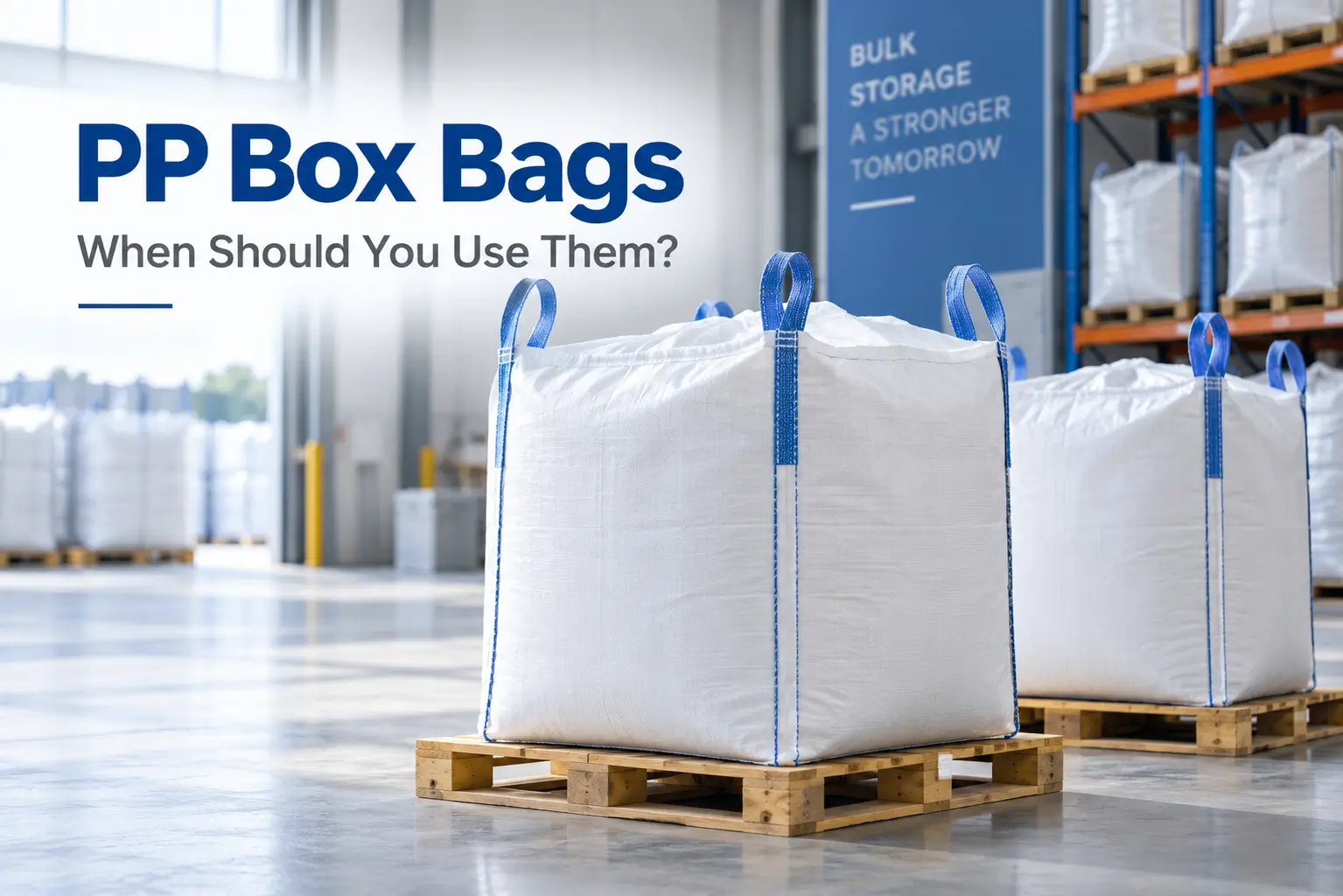
FIBC Jumbo Bags – also referred to as bulk bags, big bags, super sacks, one-ton bags, or flexible intermediate bulk containers – are large industrial packaging units made from woven polypropylene (PP) fabric, designed to store and transport bulk materials weighing between 500 kg and 2,000 kg in a single container.
Their construction is engineered for strength, safety, and efficiency:
- Woven PP or HDPE fabric body with high GSM for load-bearing performance
- Lift loops (1, 2, or 4 loops) for crane, forklift, or hoist handling
- Customisable top and bottom closures – open top, duffle top, spout top, flat bottom, discharge spout
- Optional inner liners – LDPE, aluminium, conductive, or EVOH – for moisture, oxygen, and contamination barriers
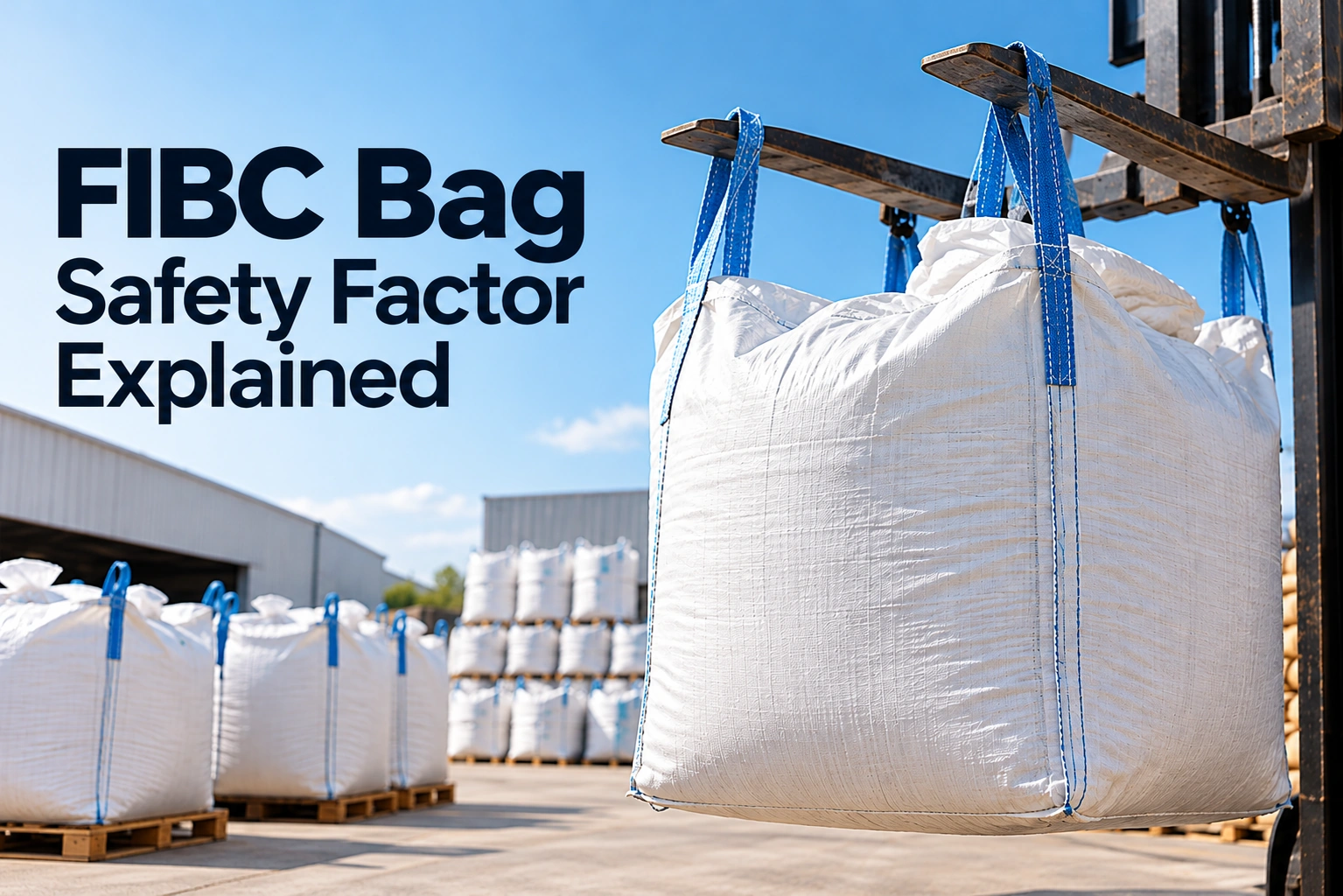
- Safety Factor Ratio (SFR) of 5:1 or 6:1, ensuring the bag can handle multiples of its rated load before failure
Polypropylene represents the leading material segment, accounting for approximately 78% of global FIBC demand – valued for its tensile strength, chemical resistance, light weight, and recyclability.
What Types of FIBC Jumbo Bags Are Available for Different Industries?
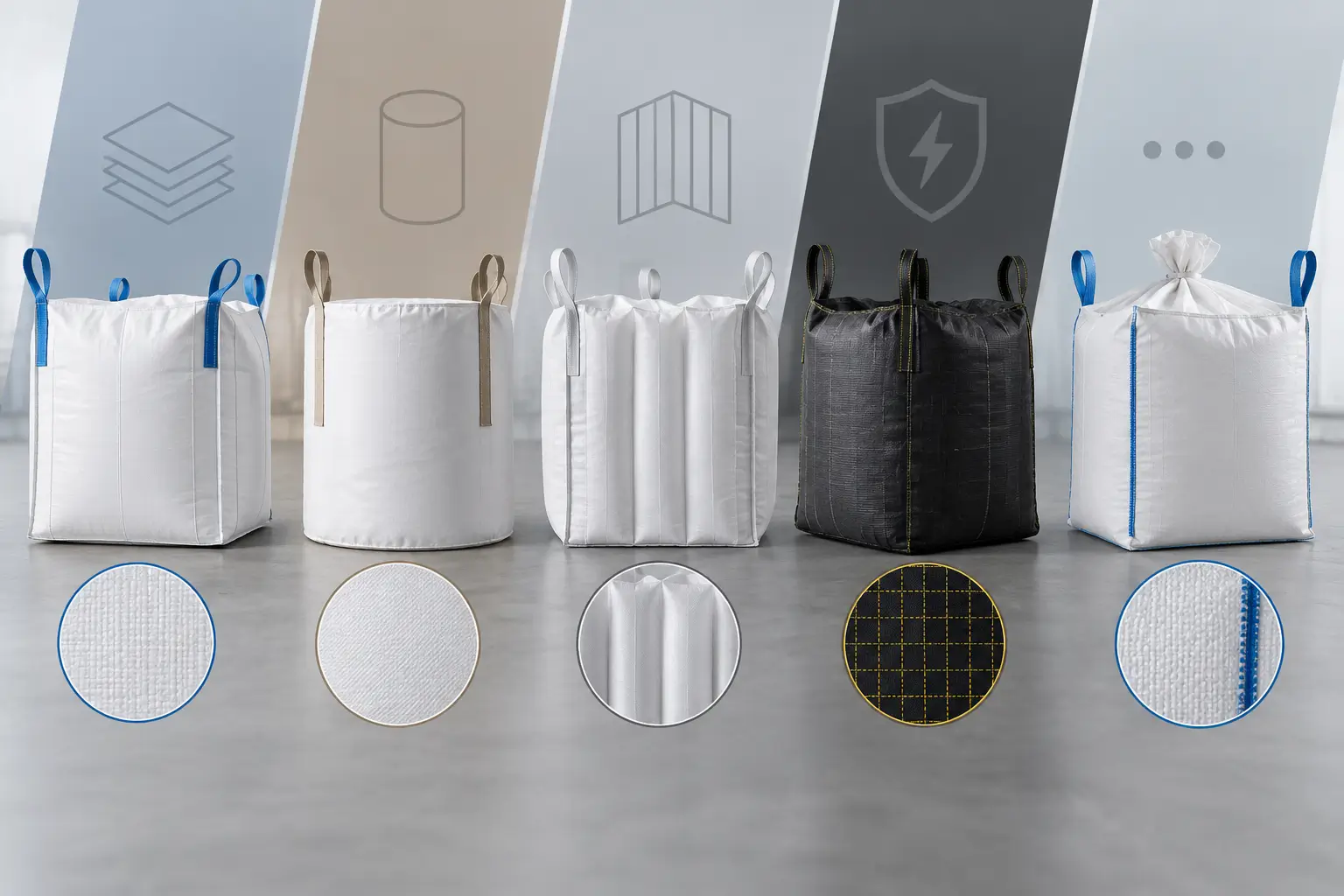
FIBC Jumbo Bags are not a single product – they are a highly configurable packaging platform with multiple types designed for specific industrial applications and safety environments.
Type A FIBC – Standard Industrial Use
FIBC Jumbo Bags classified as Type A are manufactured from plain woven PP fabric with no anti-static properties. They are suitable for non-flammable products – grains, sand, gravel, minerals, and general industrial materials – where electrostatic discharge is not a concern.
Type B FIBC – Dry Flammable Powders
FIBC Jumbo Bags of Type B construction use fabrics with a low breakdown voltage, preventing propagating brush discharges that could ignite surrounding flammable dust atmospheres. They are used for dry, flammable powders in environments without flammable solvents or gases.
Type C FIBC – Conductive Anti-Static Bags
FIBC Jumbo Bags of Type C design incorporate conductive threads woven into the fabric in a grid pattern, which must be earthed during filling and discharge. They are essential for handling flammable powders, chemicals, and materials in environments where combustible solvents or gases may be present.
Type D FIBC – Dissipative Anti-Static Bags
FIBC Jumbo Bags of Type D construction use special dissipative or anti-static fabrics that safely prevent incendiary sparks without requiring earthing connections – making them particularly practical for outdoor or complex handling environments in chemical and pharmaceutical manufacturing.
Food-Grade FIBC Bags
FIBC Jumbo Bags manufactured for food-grade applications are produced in clean-room environments using virgin PP resin, with no risk of contamination from direct contact with food material, animal feed, or pharmaceuticals. Certifications such as FSSC 22000, BRC/BRCGS, and ISO 21898 are standard for food-grade FIBC production.
UN-Certified FIBC Bags
FIBC Jumbo Bags carrying UN certification have undergone rigorous drop and topple testing to confirm compliance with United Nations regulations for the legal and safe international transport of hazardous materials. These are mandatory for exporters of certain classified chemical and industrial goods.
Baffle (Q-Bag) FIBC
FIBC Jumbo Bags with internal baffle panels maintain a square cross-section when filled, improving container utilisation by 20–30% compared to round-form bags – a critical advantage for maximising container loads on international export shipments.
Why Are FIBC Jumbo Bags Essential for Indian Manufacturers in 2026?
FIBC Jumbo Bags address several critical operational and commercial challenges that Indian manufacturers face in 2026 – from rising logistics costs to export compliance demands and sustainability targets.
1. Dramatic Labour and Handling Cost Reduction
A single FIBC Jumbo Bag replaces 20–25 standard 50 kg woven sacks. For a manufacturer filling, stitching, stacking, and transporting 500 MT of product per month, switching from individual sacks to FIBC bags can reduce packaging labour costs by 40–60% – a transformative operational saving at scale.
2. Superior Load-Bearing Efficiency
FIBC Jumbo Bags are rated for safe working loads from approximately 500 kg to 2,000 kg with an SFR of 5:1 or 6:1. This concentrated load capacity reduces packaging material per tonne of product handled – lowering both packaging material costs and freight weight per unit of cargo.
3. Container and Warehouse Space Optimisation
FIBC Jumbo Bags – particularly baffle and form-stable designs – fill container space far more efficiently than individual sacks. This directly reduces the number of containers required per shipment and cuts per-unit freight costs, which is a significant advantage for Indian exporters competing on price in global markets.
4. Compliance-Ready for Global Export Markets
The India domestic bulk bags market is forecast to grow from US$820 million in 2025 to US$1.42 billion by 2031 at a CAGR of 9.2%. This domestic growth is being driven in part by export-linked manufacturers who require FIBC packaging that meets international safety, food-grade, and hazardous goods transport certifications.
According to Aeroflex Neu’s 2026 India market insights, FIBC Jumbo Bag enquiries from Indian exporters targeting EU, US, and GCC markets have grown substantially – driven by buyer specification requirements that increasingly mandate certified, documented bulk packaging.
Which Indian Industries Are Adopting FIBC Jumbo Bags Most Rapidly?
FIBC Jumbo Bags are transforming bulk handling across a wide spectrum of Indian industries:
| Industry | FIBC Application | Key Requirement |
| Agriculture & Food | Rice, wheat, maize, flour, sugar, spices | Food-grade liner, FSSAI compliance, moisture barrier |
| Fertilisers & Agrochemicals | Urea, DAP, NPK, micronutrients | UV resistance, chemical compatibility, vented options |
| Construction & Infrastructure | Cement, sand, gravel, aggregates, demolition waste | High SWL, tear resistance, builder bag design |
| Chemicals & Petrochemicals | Industrial powders, resins, pigments, polymers | Anti-static (Type C/D), UN certification, liner |
| Pharmaceuticals | API (Active Pharmaceutical Ingredients), excipients | Clean-room manufacture, BRCGS/FSSC 22000 |
| Minerals & Mining | Silica, calcite, talc, ores, pellets | Abrasion resistance, high GSM, discharge spout |
| Aquaculture & Pet Food | Fish meal, shrimp feed, animal nutrients | Food-grade, moisture-proof liner, ventilation |
The food processing sector has been a dominant growth driver – as the expanding food processing industry, fuelled by rising per capita income, is anticipated to drive FIBC bulk bag adoption throughout the forecast period.
What Does FIBC Jumbo Bag Pricing Look Like in India in 2026?
FIBC Jumbo Bags are priced based on fabric GSM, SWL rating, liner specification, loop configuration, print requirements, and order volume. Here is a realistic 2026 pricing guide for the Indian market:
| FIBC Type | Approximate Price (₹) | Notes |
| Standard Type A FIBC (500 kg SWL) | ₹350 – ₹550 per bag | Plain, uncoated, 4-loop, flat bottom |
| Standard Type A FIBC (1,000 kg SWL) | ₹500 – ₹750 per bag | High GSM, 4-loop, discharge spout option |
| Food-Grade FIBC with PE Liner | ₹750 – ₹1,100 per bag | Clean-room manufacture, FSSC 22000 compliant |
| Type C Anti-Static FIBC (1,000 kg) | ₹900 – ₹1,400 per bag | Conductive threads, earthing attachment |
| Baffle/Q-Bag FIBC (1,000 kg) | ₹800 – ₹1,200 per bag | Form-stable, container-optimised design |
| UN-Certified Hazardous Goods FIBC | ₹1,200 – ₹2,000 per bag | Drop/topple tested, compliance documentation |
| Custom-Printed FIBC (2–4 colour) | ₹100 – ₹250 extra per bag | Brand print, regulatory text, QR code |
Prices are indicative 2026 market estimates. Final pricing depends on GSM, capacity rating, liner type, order volume, and delivery location.
Minimum order quantities typically start at 500–1,000 bags for standard FIBC types. Bulk orders above ₹5 lakh routinely attract volume discounts of 8–15%. For export shipments, FOB India pricing for standard 1,000 kg FIBC bags generally ranges from US$4.50 to US$14.00 per bag depending on specification. Freight to major destinations (UAE, UK, US, Netherlands) adds approximately US$0.80–US$2.50 per bag depending on container load optimisation.
How Does Aeroflex Neu Manufacture FIBC Jumbo Bags to International Standards?
At Aeroflex Neu, we manufacture FIBC Jumbo Bags across a comprehensive range of types, capacities, and specifications – from standard industrial Type A bags to food-grade, anti-static, and UN-certified variants. Our manufacturing process is built on four pillars that ensure consistent, export-ready quality on every order.
Precision Fabric Engineering: Our PP woven fabric for FIBC production is manufactured and tested in-house for GSM consistency, denier accuracy, and tensile performance before being cut and assembled into finished bags.
Certified Construction: Every FIBC bag is assembled with stitched seams tested to the specified SFR, with lift loops load-tested to confirm rated capacity. Our quality documentation supports buyer compliance requirements for ISO, food-grade, and export certifications.
Customisation Capability: Aeroflex Neu’s FIBC Jumbo Bag product range supports the full spectrum of customisation – liner type, closure configuration, loop style, UV stabilisation, anti-static threads, and multi-colour branding print.
Export-Ready Logistics: Aeroflex Neu’s high-strength FIBC Jumbo Bags are packed, palletised, and documented for seamless international export to the UAE, GCC, UK, EU, Africa, and Southeast Asia – with all relevant shipping, compliance, and material certificates provided.
Are FIBC Jumbo Bags a Sustainable Packaging Choice?
FIBC Jumbo Bags are emerging as a strong choice for manufacturers with sustainability mandates – and in 2026, this is a decisive commercial advantage with global export buyers.
Key sustainability credentials include:
- Multi-trip reusability: Reusable multi-trip FIBC bags are growing in popularity in 2026, with companies implementing circular economy packaging practices to minimise waste and cost. Quality FIBC bags with a 6:1 SFR can be reliably reused 3–5 times before recycling, dramatically reducing per-tonne packaging waste.
- Material recyclability: PP woven fabric is classified under resin code #5 and is recyclable through industrial PP recycling streams.
- Reduced packaging material per tonne: A single 1,000 kg FIBC replaces 20 × 50 kg individual sacks – reducing total packaging material consumption, stitching thread, and label stock per tonne of product handled.
- Carbon footprint reduction: Higher container utilisation through baffle FIBC design means fewer container movements per tonne shipped – directly reducing logistics-related carbon emissions.
- Recycled-content availability: Sustainable FIBC bags made with PET/PCR (recycled PET) and recycled PP content are increasingly available from Indian manufacturers aligned with circular economy principles.
India’s EPR (Extended Producer Responsibility) framework under the Plastic Waste Management Rules is creating active commercial incentives for buyers to specify recyclable and multi-trip bulk packaging – a direct tailwind for premium FIBC adoption.
People Also Ask
What is a FIBC Jumbo Bag used for?
FIBC Jumbo Bags are used for storing and transporting bulk materials weighing between 500 kg and 2,000 kg. Common applications include agriculture (grains, seeds, fertilisers), food processing (flour, sugar, spices), construction (cement, sand, aggregates), chemicals, pharmaceuticals, and minerals. They are widely used by Indian manufacturers and exporters to improve bulk handling efficiency.
What is the difference between Type A, B, C, and D FIBC bags?
Type A FIBC bags have no anti-static properties and are used for non-flammable products. Type B bags prevent brush discharges for dry flammable powders. Type C bags use conductive threads and must be earthed – suitable for flammable chemical environments. Type D bags use dissipative fabric requiring no earthing, ideal for complex handling environments. The choice depends on the product’s flammability and the surrounding atmosphere.
What do FIBC Jumbo Bags cost in India in 2026?
FIBC Jumbo Bag prices in India range from approximately ₹350 to ₹2,000 per bag depending on type, capacity, liner specification, anti-static construction, and order volume. Standard 1,000 kg bags are priced between ₹500 and ₹750, while food-grade and UN-certified variants range from ₹750 to ₹2,000 per bag.
Are FIBC Jumbo Bags food-grade safe?
Yes. Food-grade FIBC Jumbo Bags are manufactured in clean-room environments using virgin PP resin, with food-safe PE inner liners. They are certified under FSSC 22000, BRC/BRCGS, and ISO 21898 standards. Buyers should confirm relevant certifications with their supplier before ordering for food or pharmaceutical applications.
How many times can an FIBC Jumbo Bag be reused?
A multi-trip FIBC Jumbo Bag manufactured with a 6:1 Safety Factor Ratio can typically be reused 3–5 times when handled and stored correctly. Reusable FIBC bags are increasingly popular in 2026 as businesses adopt circular economy packaging to reduce waste and packaging costs.
Does India export FIBC Jumbo Bags internationally?
Yes. India is one of the world’s largest FIBC exporters, accounting for more than 25% of global FIBC export shipments. Indian manufacturers supply FIBC Jumbo Bags to major markets including the US, Bahrain, Canada, UK, Netherlands, UAE, Kenya, and across Southeast Asia. Indian suppliers offer competitive pricing, international certifications, and flexible logistics support.
Conclusion: FIBC Jumbo Bags Are the Bulk Packaging Standard for 2026 and Beyond
FIBC Jumbo Bags have earned their status as a manufacturing essential – not through marketing, but through measurable performance. They cut labour costs, reduce packaging waste, optimise logistics, enable compliance with international standards, and support sustainability goals that increasingly determine supplier selection for global buyers.
For Indian manufacturers operating in agriculture, food processing, chemicals, construction, or any bulk commodity sector, the question in 2026 is no longer whether to adopt FIBC Jumbo Bags – it is which type, specification, and manufacturing partner will deliver the best return on your packaging investment.
Whether you need standard industrial FIBC bags, food-grade clean-room manufactured units, anti-static Type C or D bags, or UN-certified hazardous goods containers, Aeroflex Neu’s FIBC Jumbo Bag manufacturing programme is equipped to deliver – at the quality, scale, and compliance level your business requires.
Request samples, certifications, and 2026 bulk pricing by visiting aeroflexneu.com/fibc-jumbo-bag-manufacture or contacting our packaging specialists today.