Best FIBC Bags selection has become a genuine procurement challenge in 2026, not just a packaging afterthought. As chemical, agricultural, and construction supply chains grow more complex, choosing the wrong bulk bag can mean spillage, contamination, safety violations, or a rejected export shipment.
Best FIBC Bags are not one-size-fits-all products – the right choice depends on the material being carried, safe working load, hazard classification, and whether the cargo is travelling domestically or across an ocean. This guide walks Indian manufacturers, exporters, distributors, and retailers through exactly how to choose the right FIBC in 2026, with current pricing, standards, and export context. If you’re comparing specifications for an upcoming order, Aeroflex Neu’s FIBC jumbo bag range is built around the same selection criteria covered below.
What Exactly Is an FIBC Bag?
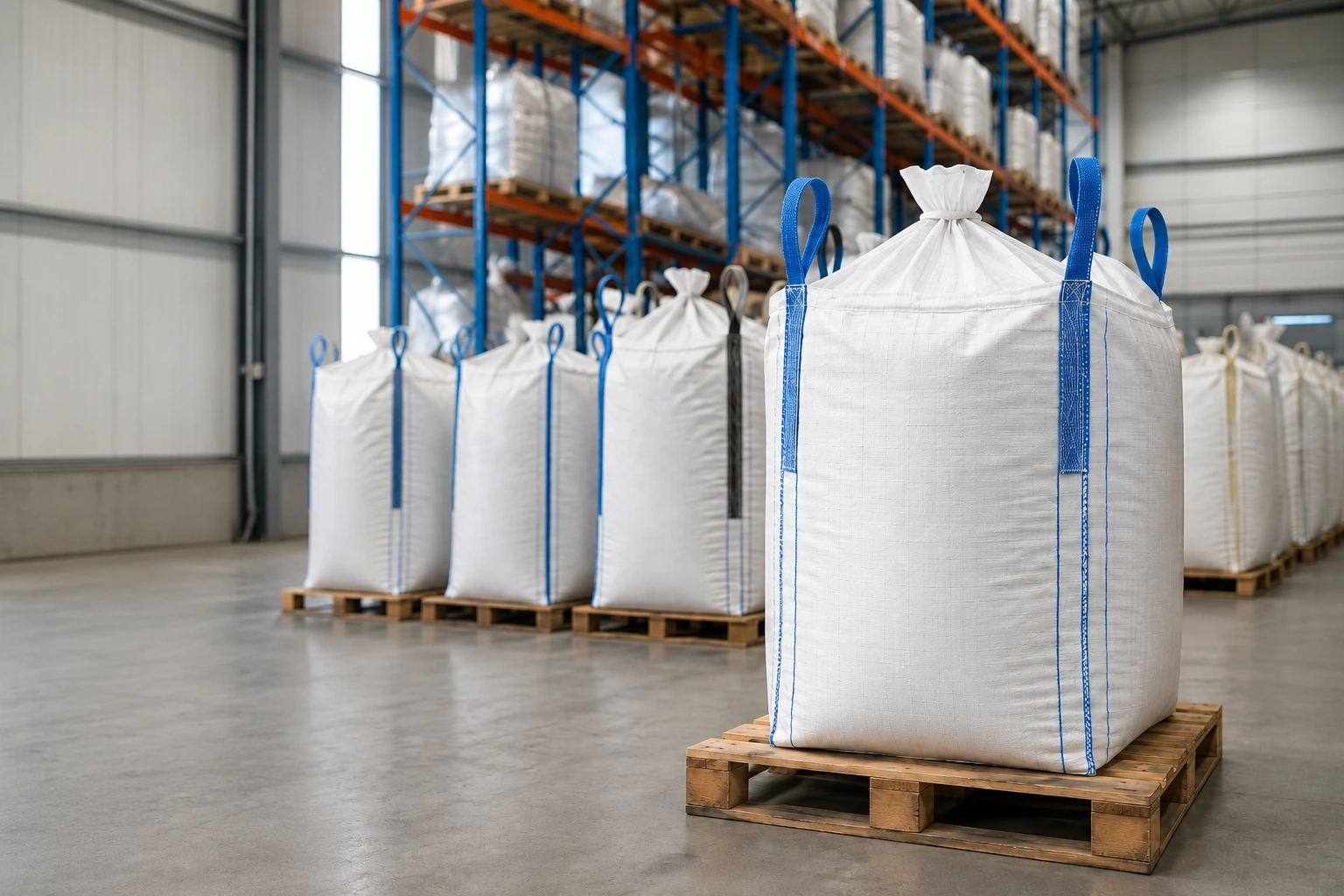
Best FIBC Bags, short for Flexible Intermediate Bulk Containers, are large woven polypropylene sacks designed to store and transport dry, flowable materials in bulk – anywhere from 500 kg to 3,000 kg per bag depending on design. They’re also commonly called jumbo bags, bulk bags, big bags, or super sacks.
Best FIBC Bags matter because they replace heavier, costlier alternatives like steel drums or rigid plastic bins for granular and powder logistics, while remaining lightweight, stackable, and often reusable across multiple trips.
Why Are FIBC Bags Important for Indian Exporters in 2026?
Best FIBC Bags sit at the centre of India’s bulk-commodity export economy. India is one of the largest global exporters of FIBC jumbo bags by shipment count, competing closely with China and drawing demand from the United States, Tanzania, Peru, and other agricultural and industrial import markets.
Best FIBC Bags demand in India is being reinforced by regulatory formalisation. BIS IS 16008 certifications now enforces safe working load and UV-stability testing for both domestic and export-bound FIBCs, which is steadily shifting volume away from unorganised, uncertified weaving units toward larger compliant manufacturers.
Best FIBC Bags also benefit from India’s “Make in India” export incentives and large-scale capacity expansions underway across the sector, positioning Indian manufacturers to compete directly with established Chinese exporters on quality certification rather than price alone.
How big is the global and Indian FIBC market in 2026?
Industry trackers place the global FIBC market between roughly USD 6–9 billion in 2026, with mid-single-digit compound annual growth projected through the early 2030s. Food and agriculture remains the largest application category, accounting for roughly a quarter to a third of total demand, while chemicals and fertilisers form the second-largest use case. Within Asia-Pacific, India is expanding faster than the global average, driven by agrochemical distribution, cement, and export-oriented agriculture.
How Do You Choose the Right FIBC Type for Your Product?
Best FIBC Bags are classified into four types based on electrostatic protection, and choosing the wrong type is one of the most common – and dangerous – procurement mistakes.
- Type A: Standard, non-conductive bags for non-hazardous, non-combustible materials; the dominant category globally, holding roughly 44% share in 2026
- Type B: Non-conductive but designed with low breakdown-voltage material to reduce risk of igniting flammable dust; used for chemical intermediates and pigment powders
- Type C: Conductive bags that must be grounded during filling and discharge, required wherever combustible dust risk exists, common in chemical, pharmaceutical, and mining sectors
- Type D: Static-dissipative bags without grounding, increasingly specified for pigments and fine chemicals in safety-critical contracts
Which FIBC type is right for food and agricultural products?
Type A bags are typically sufficient for grains, rice, sugar, seeds, and similar non-combustible commodities. Roughly a fifth of food-grade FIBC orders globally now include FDA- or FSSAI-aligned liners to preserve hygiene and prevent contamination during storage and transit.
Which FIBC type is right for chemicals and hazardous powders?
Type C or Type D bags are generally required wherever combustible dust or flammable solvent exposure is possible. Buyers sourcing for European or North American chemical contracts should confirm grounding and static-control specifications before finalising an order, since roughly a fifth of high-value bulk bag purchases in these markets now specify Type D.
How Does Aeroflex Neu Ensure High-Quality, Export-Ready FIBC Bags?
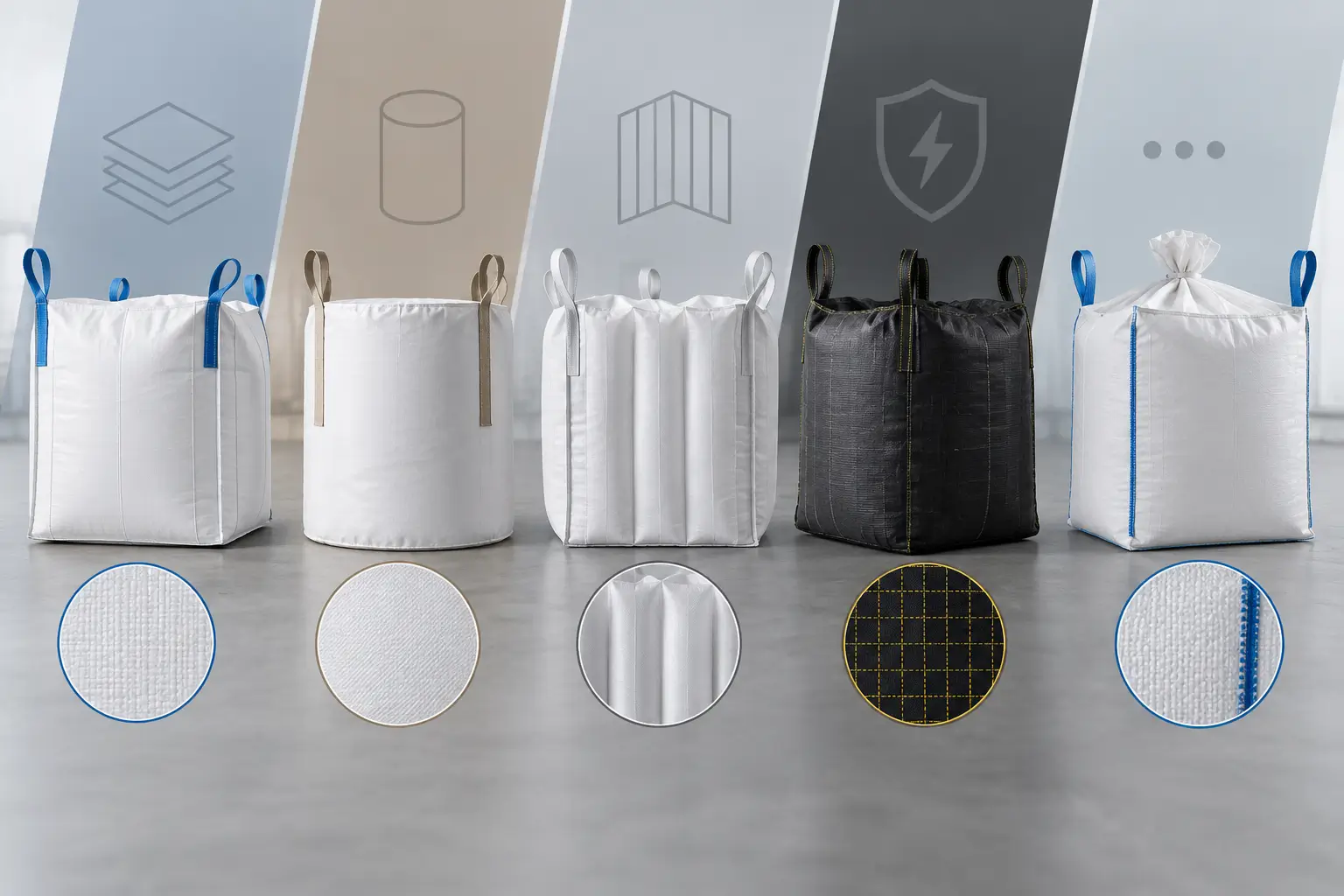
At Aeroflex Neu, we manufacture FIBCs across U-panel, circular, baffle, and four-panel designs, matching fabric GSM and stitching pattern to the declared safe working load rather than defaulting to a single generic specification. This is the detail that most often separates a reliable bag from one that fails mid-transit.
Best FIBC Bags performance depends heavily on seam integrity and loop strength, which is why our production process includes load testing and safety-factor verification – typically to a 5:1 or 6:1 ratio – before any batch is cleared for dispatch. A bag rated for 1,000 kg that hasn’t been tested to several times that load under controlled conditions is a liability, not a packaging solution.
Aeroflex Neu’s high-strength PP woven bags ensure consistent tensile performance, UV stabilisation for extended outdoor storage, and food-grade liner options that meet FSSAI-aligned hygiene expectations for grain, sugar, and agro-commodity exports. According to Aeroflex Neu’s 2026 India market insights, buyers are increasingly requesting conductive Type C and Type D variants even outside traditional chemical accounts, as customers extend safety protocols across their broader packaging portfolio.
What certifications should buyers verify before ordering FIBCs?
- BIS IS 16008 – mandatory safe working load and UV-stability compliance for Indian-manufactured FIBCs
- ISO 21898 – international testing protocol for flexible intermediate bulk containers
- UN certification – required for FIBCs carrying hazardous or dangerous goods
- FSSAI-aligned food-grade declarations – necessary for grain, sugar, and spice packaging
- ISO 9001 – general quality management system certification
How Much Do FIBC Bags Cost in India in 2026?
Best FIBC Bags pricing depends on fabric GSM, panel design, safe working load, liner type, and certification level, so the figures below are realistic 2026 Indian market estimates rather than fixed quotes.
- Standard Type A FIBC (500–1,000 kg SWL, U-panel, uncoated): approximately ₹180–₹280 per bag at bulk order volumes
- Food-grade FIBC with liner: approximately ₹230–₹350 per bag, depending on liner gauge and certification
- Conductive Type C/D FIBC: approximately ₹280–₹450 per bag, reflecting the added conductive thread and testing costs
- UN-certified FIBC for hazardous goods: approximately ₹350–₹550 per bag, given the additional compliance testing involved
- Custom printing/branding setup charges: typically ₹8,000–₹30,000 as a one-time charge depending on colours and design complexity
Best FIBC Bags bulk orders typically see the strongest per-unit pricing above 5,000–10,000 pieces, which is why Aeroflex Neu structures tiered bulk pricing for manufacturers, cooperatives, and export houses ordering at scale. For international buyers, landed cost also depends on freight: a 20-foot container of FIBCs shipped from Indian ports such as Mundra or Nhava Sheva to Middle Eastern or African destinations generally carries a lower per-bag freight component than shipments to North America or Europe, given the shorter transit distance.
Are there export incentives for Indian FIBC manufacturers?
Yes. FIBC exports may qualify for duty remission benefits under RoSCTL and related schemes administered through DGFT’s shipping bill and ICEGATE systems, and recent notifications have adjusted applicable rates for FIBC HS classifications – making correct documentation an important margin lever for exporters.
How Does Sustainable Packaging Fit Into FIBC Procurement?
Best FIBC Bags are moving firmly toward multi-trip, reusable designs rather than single-use formats. Multi-trip woven PP FIBCs, engineered to a 6:1 safety ratio for repeated reconditioning and reuse, represent a growing multi-billion-dollar segment globally as facility managers reject disposable bulk formats that create unmanageable waste streams.
Best FIBC Bags are also seeing genuine innovation in recycled-content manufacturing. Some Indian producers have launched FIBC lines using recycled PET-to-bag conversion technology, reflecting a broader industry shift toward circular-economy packaging as extended producer responsibility frameworks tighten globally.
Aeroflex Neu’s high-strength PP woven bags are engineered with reuse in mind wherever the application allows it, helping exporters reduce total packaging spend across multiple shipment cycles while meeting the traceability expectations increasingly demanded by European and North American buyers.
What Industries Rely Most Heavily on FIBC Bags?
Best FIBC Bags serve a wide industrial base, but usage concentrates around a handful of high-volume sectors:
- Food and agriculture: The largest application category globally, covering grains, rice, sugar, flour, and seeds
- Chemicals and petrochemicals: The second-largest segment, requiring conductive or static-dissipative variants for many product lines
- Fertilisers and agrochemicals: A major end-use in India, given the scale of domestic and export agrochemical distribution
- Cement, minerals, and construction aggregates: High safe-working-load bags built for heavy, abrasive contents
- Pharmaceuticals: Clean-room-grade FIBCs where contamination control is non-negotiable
Frequently Asked Questions
What is the safe working load of a standard FIBC bag?
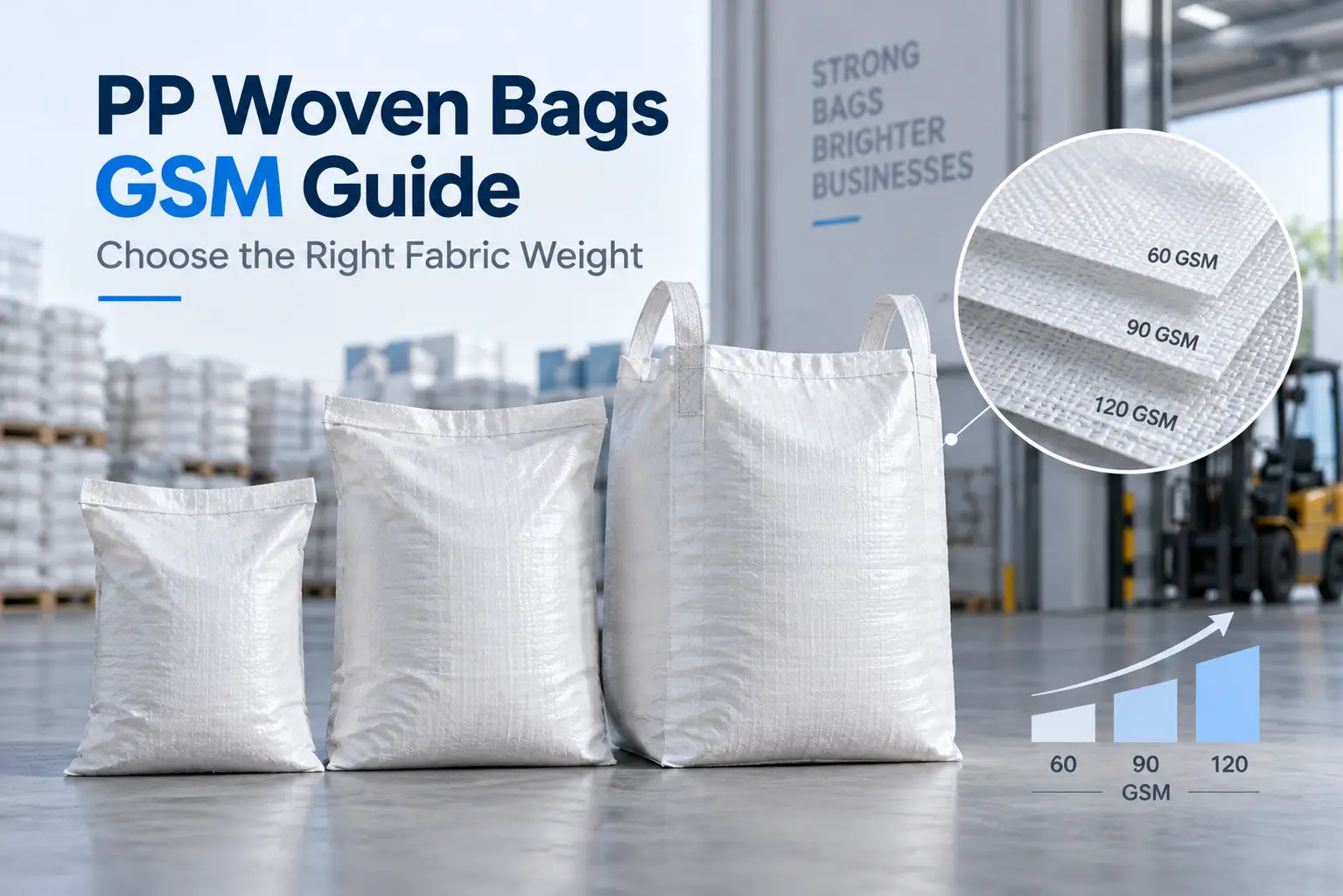
Most standard FIBCs are rated between 500 kg and 2,000 kg, though heavy-duty designs can handle up to 3,000 kg. The rated load should always include a safety factor, commonly 5:1 or 6:1, verified through testing.
How do I know if I need a conductive FIBC bag?
If your product generates combustible dust or you’re handling chemicals near flammable materials, you likely need a Type C (grounded) or Type D (static-dissipative) FIBC rather than a standard Type A bag.
Can FIBC bags be reused multiple times?
Yes, multi-trip FIBCs are specifically engineered with reinforced seams and higher safety factors to withstand repeated loading, inspection, and reconditioning cycles, unlike standard single-trip bags.
Are FIBC bags suitable for food-grade export shipments?
Yes, when fitted with FDA- or FSSAI-aligned liners and manufactured under hygienic conditions, FIBCs are widely used and accepted for grain, sugar, and agro-commodity exports worldwide.
What documentation do exporters need for FIBC shipments to the EU or US?
Exporters typically need BIS or ISO test certificates, UN certification for hazardous cargo, and compliance documentation aligned with destination-market rules such as REACH in Europe or DOT/PHMSA requirements in the United States.
How long does it take to get a bulk FIBC order manufactured and shipped from India? Lead times vary by order size and customisation, but established Indian manufacturers with in-house testing infrastructure typically manage production and dispatch more predictably than smaller unorganised weaving units, especially for certified or liner-fitted bags.
Final Word
Best FIBC Bags selection ultimately comes down to matching bag type, safe working load, and certification to the actual cargo and destination market – not simply choosing the cheapest quote available. Getting this wrong risks spillage, safety incidents, or shipments held up at customs for missing compliance documentation.
At Aeroflex Neu, we manufacture the full spectrum of FIBCs – from standard Type A agricultural bags to conductive, UN-certified variants for hazardous chemical exports – backed by consistent testing and bulk pricing designed for both Indian buyers and international importers. If you’re planning your next bulk packaging order, explore Aeroflex Neu’s FIBC jumbo bag range for specifications, certifications, and volume pricing suited to your industry.